


February 7, 2026, 7:09 am | Read time: 4 minutes
Almost everyone knows the great tit or blue tit. Both species are easy to distinguish, but what about the less conspicuous tits that seem almost identical at first glance? PETBOOK editor and biologist Saskia Schneider explains which species live in Germany, how to identify them, and why some birds are called tits even though they are not biologically classified as such.
What Types of Tits Are There in Germany?
Few bird groups are as present in our daily lives as tits. They frolic through gardens, hang upside down on branches, are regulars at bird feeders, and often seem surprisingly tame. In Germany, six species belong to the so-called “true” tits from the family Paridae.1
The most well-known are the great tit and blue tit, which many people regularly observe up close. Both have adapted significantly to humans and are found not only in forests but also in the middle of cities. Additionally, the crested tit and coal tit, originally typical forest birds, now also inhabit parks and larger gardens.2
Less conspicuous but no less fascinating are the marsh tit and willow tit. They are considered true specialists regarding their habitat, making them much harder to spot. This very fact makes them particularly appealing to many nature enthusiasts.
How Do You Distinguish the Tits?
At first glance, many tits look similar, but with a few characteristics, identification is quick:3
- Great tit: Black head with white cheeks, bright yellow breast with a black longitudinal stripe. Males usually have a broader black belly stripe than females.
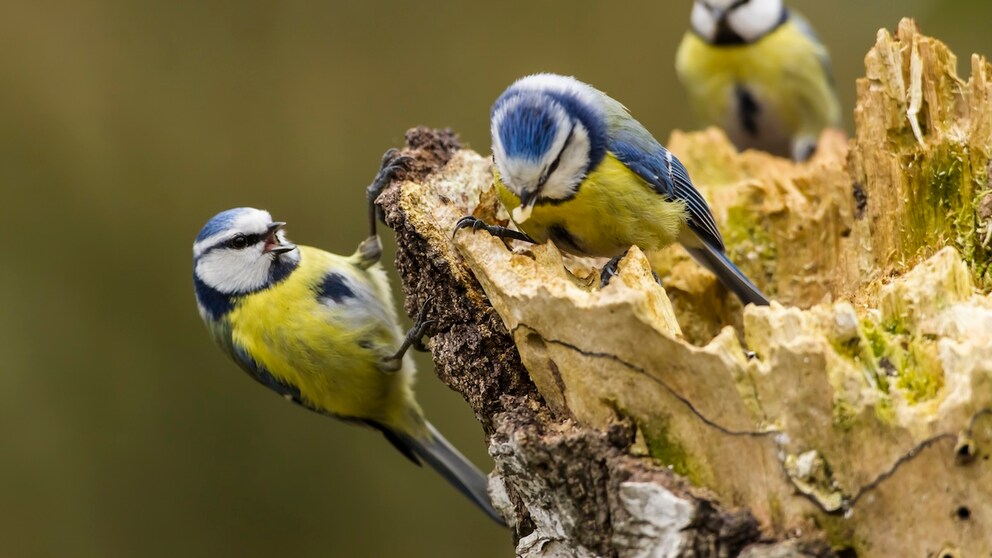
- Blue tit: Smaller than the great tit, with a blue head, blue wing feathers, and a black eye stripe. Appears overall more “delicate.”
- Crested tit: Unmistakable with its black-and-white speckled feather crest. Usually found in coniferous forests.
- Coal tit: Small, with a black-and-white head and a distinctive white nape spot. Often in spruce and pine forests, but also at feeders in winter.
- Marsh and willow tit: The most challenging candidates. Both have brown plumage, a black cap, and a black chin spot.
- The marsh tit has a glossy black cap and no light spot on the wing coverts.
- The willow tit appears duller, with a light wing covert patch and a slightly stronger head.
A practical tip: Don’t just focus on colors, but also on habitat and behavior—this often helps more than any detail in the plumage.
Interesting Facts About Chickadees That You Didn’t Know Yet
Why Woodpeckers Don’t Get Concussions When Pecking
What Do Tits Eat?
Tits are remarkably flexible when it comes to their diet. In spring and summer, they primarily feed on insects, spiders, and their larvae. Caterpillars play a central role, providing a lot of energy for the rapid growth of young birds. During this time, tits are valuable helpers in the garden, consuming large amounts of potential plant pests.
With autumn, the diet changes significantly. As insects become scarce, tits increasingly turn to seeds, berries, buds, and nuts. By winter, many species make regular visits to feeding stations. Especially great tits and blue tits show little shyness and can be observed skillfully cracking seeds or feeding on suet. The quality and cleanliness of the food are more important than the quantity.
Careful! These Are Not “True” Tits
As familiar as the name “tit” is to us, not every bird with this designation actually belongs to the tit family:4
- Long-tailed tit: A round, tiny bird with an extremely long tail, often traveling in small flocks. Its artistic nest made of moss, lichen, and feathers is a true natural wonder.5
- Bearded tit: A specialist of reed beds. The male sports a distinctive black “beard.” It is almost never seen in gardens.6
- Penduline tit: Known for its pouch-shaped hanging nests, which it builds on willows or poplars. Very rare and tied to wetland areas.
- Nuthatch: Often called the “woodpecker tit” in the past, although it is not closely related to either woodpeckers or tits. It resembles tits visually but stands out with its ability to climb down tree trunks headfirst.7
Zoologically, these species belong to their own families—the name is more historical and describes external similarities.