
November 5, 2025, 2:24 pm | Read time: 5 minutes
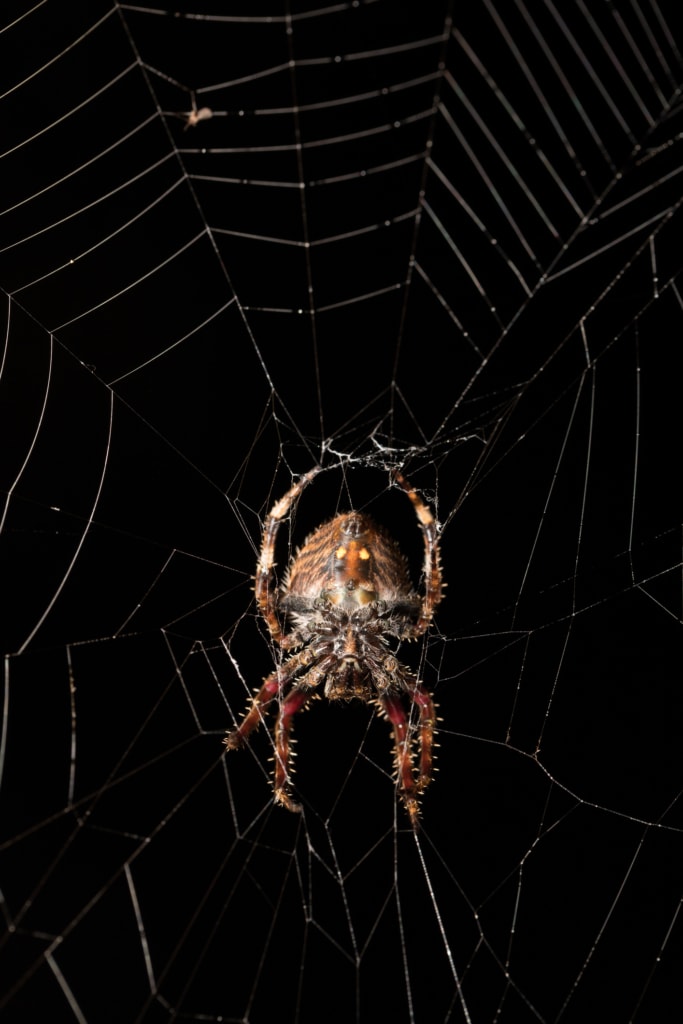
Some see them as architectural marvels of nature, while others can hardly bear to look at them: Spider webs both fascinate and frighten. While they usually measure only a few inches in Central European gardens, there are spider species whose webs span entire landscapes–and now even fill caves. A spectacular discovery on the border between Albania and Greece has now broken all previous records.
New Record: Spider Colony with Over 111,000 Creatures Discovered
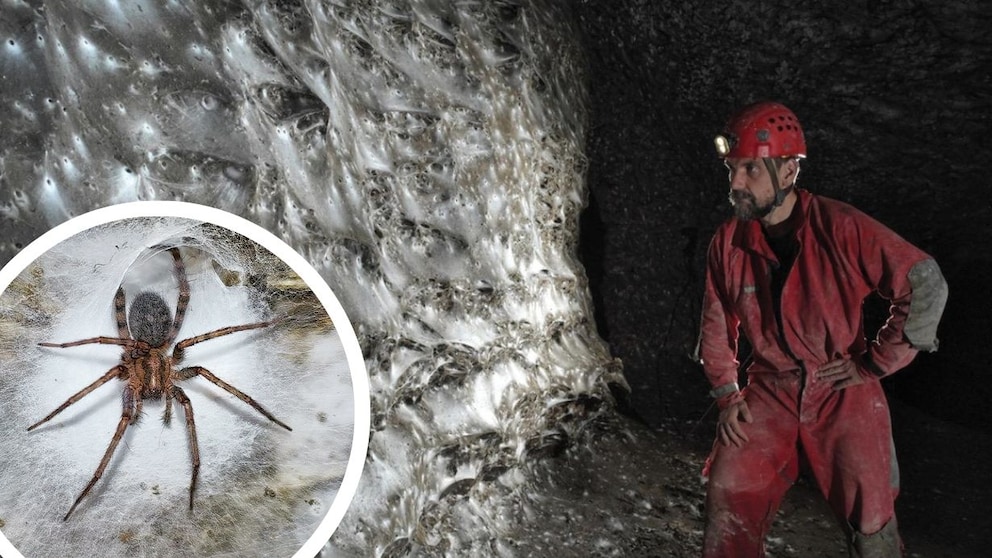
According to the Guinness Book of Records, the webs of the so-called Darwin’s bark spider were considered the largest in the world. But a spectacular new find surpasses everything seen before: In the “Sulfur Cave,” a sulfur-rich cave on the Albanian-Greek border, researchers discovered a gigantic spider web covering an area of over 1,000 square feet. The colony includes more than 111,000 spiders–spread across two species: About 69,000 individuals of Tegenaria domestica and over 42,000 specimens of Prinerigone vagans were counted.
“We report on the discovery and detailed analysis of an extraordinary colonial spider aggregation in the Sulfur Cave,” states the study published on October 17 in the journal “Subterranean Biology.” The researchers believe that the cave’s unique chemical environment–characterized by sulfur-oxidizing microorganisms–has facilitated the spiders’ coexistence in this unusual density.1
The first hints of the mega-colony came from members of the Czech Speleological Society, who discovered the web in 2022. Comprehensive investigations by an international research team began in spring 2024.
Unique Adaptation to Sulfur-Rich Environment
The Sulfur Cave is located in an area of complete darkness, shaped over centuries by sulfuric acid erosion. The spider web structure consists of funnel-shaped interlocking webs that extend in a low, narrow cave passage. Study author István Urák from Sapientia University in Transylvania described his impressions to the science magazine “LiveScience” with the words:
“If I had to put into words all the emotions that arose in me [when I saw the web], I would primarily mention admiration, respect, and gratitude. You have to experience it yourself to truly understand how it feels.”
Stable isotope analyses show that the spider colony benefits from a so-called chemoautotrophic food chain, based on microbes that feed on sulfur. These microorganisms form the food base for midge larvae, which in turn serve as prey for the spiders. Genetic analyses revealed that the populations of Tegenaria domestica in the cave are genetically distinct from surface occurrences of the same species. This is a unique spider species that–unlike many we know–lives in huge colonies, making the record web possible.
Spider Mega-Project in Texas: 180-Meter Web from Teamwork
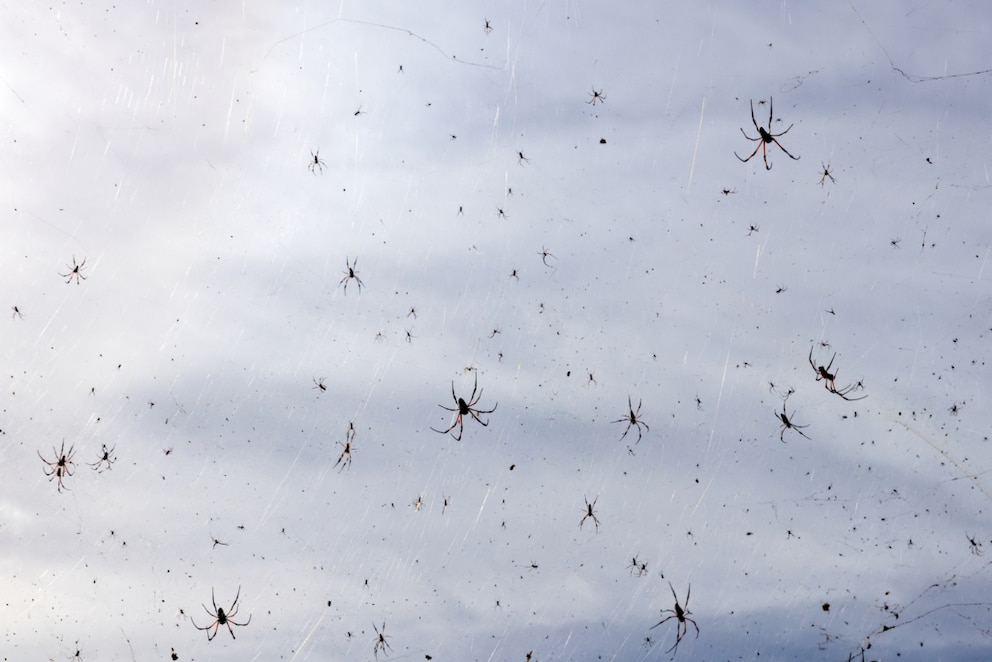
But even above ground, there are spiders that weave gigantic webs in social groups. These include species like Stegodyphus mimosarum, but it is extremely rare for different species to share a web. In 2007, researchers discovered a spider web of incredible size in Lake Tawakoni State Park in Texas: It stretched over 590 feet through trees and bushes–a collaborative work of about 250 spiders from twelve different species. The family of long-jawed orb weavers (Tetragnathidae) was particularly well represented.2,3
Such social networks are an exception in the spider world, which is usually dominated by loners. Researchers suspect that a particularly high food supply caused territorial boundaries to fade into the background.
Also interesting: Why Spiders Don’t Stick to Their Own Webs
How Toxic Is the Wolf Spider Really?
This giant spider is faster than many joggers
Silk Spiders: Artists with Strong Silk and Large Web Radius
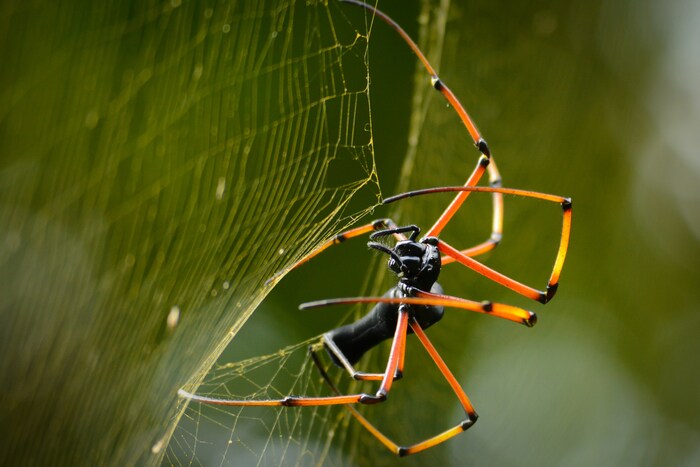
The previously mentioned webs were created as a large project by several spiders. When considering the work of individual creatures, spiders of the genus Nephila, also known as silk spiders, are among the most famous large web builders. Their webs are not only impressively large but also extremely robust. They are so strong that they occasionally even catch small birds. In some regions, their particularly tear-resistant spider silk is even harvested by fishermen to make fishing nets.
The largest representative of this genus is Nephila pilipes. Female creatures reach up to two inches in body length–making them the largest web spiders outside the tarantula family. Their webs reach diameters of up to three feet. Other silk spider species can even achieve spans of more than six feet.
Small but Record-Breaking: The “Darwin’s Bark Spider”
A top spot in web building belongs to a completely different spider: Caerostris darwini, known as the “Darwin’s bark spider,” lives in Madagascar–and weaves webs up to 82 feet wide. This allows it to span entire river courses.4
Remarkable is not only the size but also the quality of the silk: According to researchers, it is considered the toughest biomaterial ever studied–twice as strong as other spider silk. The animals span their webs over rivers or lakes, where particularly many insects are found–ideal hunting grounds that require an exceptionally durable and expansive web.5,6
Experts say the spider spans its webs directly over the water of a river or lake, a habitat no other spider can use. But especially on and over water surfaces, many insects are usually found. To bridge an entire lake, the webs must be correspondingly large.7