


April 27, 2026, 3:07 pm | Read time: 4 minutes
Wolf spiders are among the most well-known spider species worldwide, fascinating with their hunting techniques as well as their unusual brood care. With numerous species found in almost all habitats, they belong to one of the largest spider families. In Germany, many species are native, ranging from inconspicuously small to noticeably large representatives. Their role in the ecosystem and adaptability make them a significant part of the local wildlife. But are these spiders dangerous or rather harmless eight-legged creatures? PETBOOK clarifies.
Overview
How Big Do Wolf Spiders Get?
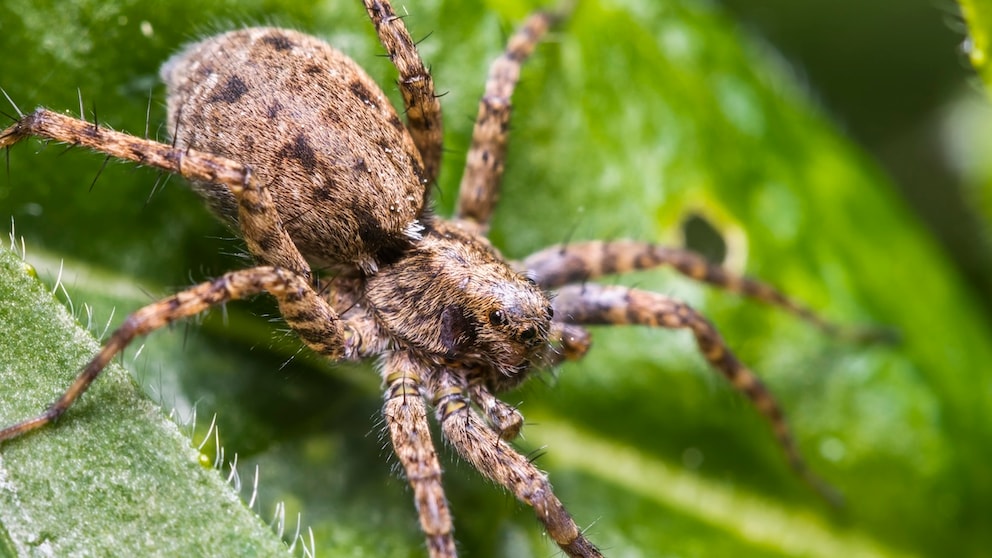
Wolf spiders (Lycosidae) belong to the order of web-building spiders, but unlike many other spider families, they usually do not build webs. They actively hunt on the ground, relying on their strong legs and keen eyesight. Eight eyes, four of which are particularly large and arranged in a trapezoid, allow them to quickly spot prey such as insects or other spiders, explains NABU Mecklenburg-Vorpommern. Depending on the species, wolf spiders reach a body length of three to 45 millimeters, excluding the legs. Their coloration ranges from gray-brown to black, often with characteristic patterns.
Where Do Wolf Spiders Live?
The wolf spider family is distributed worldwide and inhabits a variety of biotopes. Some species prefer dry grasslands, others live in forests or along riverbanks. In Germany, they can be found in deciduous forests, gardens, or riverbanks. The forest wolf spider (Pardosa lugubris), one of the most common native species, is active during the day and can be seen scurrying in large groups across the forest floor, writes BUND Naturschutz. The riverbank wolf spider (Arctosa cinerea), also known as the sand tarantula, inhabits sandy and gravelly shores of rivers and lakes but has become rare in many places due to river regulation, explains NABU.
Are Wolf Spiders Dangerous?
Wolf spiders are carnivorous and catch their prey with sudden jumps or from ambush. Some species dig burrows lined with silk and wait there for prey. They can be beneficial to humans by reducing pests such as aphids or beetle larvae. Despite their name and often fearsome appearance, they are not dangerous. Although larger specimens can pierce the skin with their strong jaws, medically significant consequences of a bite are extremely rare.
What to Do if They Come into the House
If wolf spiders enter living spaces, it usually happens accidentally while searching for prey or a hiding place. Since the animals are not aggressive and pose no threat to humans, it is sufficient to carefully capture them with a glass and a piece of paper and release them outside. Killing them is neither necessary nor sensible, as spiders act as beneficial organisms in nature.
Fascinating Brood Care
A distinctive feature of wolf spiders is their intensive brood care. After mating, the female carries the egg sac attached to her spinnerets. Shortly after hatching, the young climb onto the mother’s back, where they remain for several days before becoming independent. During this time, the mother largely refrains from eating and thus protects her offspring. This care sets wolf spiders apart from many other spider species.

Is There a Difference Between a Tarantula and a Bird Spider?
106 Square Meters! World’s Largest Spider Web Discovered
Are Wolf Spiders Endangered?
The diversity within the wolf spider family is vast. While some species, like the forest wolf spider, are common, others, like the riverbank wolf spider, are threatened and depend on natural habitats. In certain regions of Germany, they have already disappeared. Substitute habitats, such as gravel pits or quarries, can help maintain their populations if the banks are kept open.
How Useful Are the Spiders?
Wolf spiders play an important role as natural pest controllers and contribute to the balance in various habitats. Their adaptability ranges from moist moors to dry meadows and coastal regions. They remain active even in winter, sometimes under a blanket of snow. Their worldwide distribution and ecological significance make them a key family among spiders.