

November 28, 2025, 9:42 am | Read time: 3 minutes
How old mice get is a question many only ask when considering keeping the small rodents. After all, you want to know how long you can accompany the animals. But their life expectancy varies more than you might think. PETBOOK explains what it depends on and how good mouse care contributes to a long life.
How Old Do Mice Get as Pets?
When mice live under human care, they usually live significantly longer than their counterparts in the wild. In nature, the lifespan of a house mouse is between nine and 18 months—sometimes even less. Compared to mice kept as pets, that’s a relatively short life.
If mice are kept appropriately and are healthy, and also regularly visit the vet, they can live between one and a half and two years. In some cases, the small rodents can even reach a proud age of up to four years.
Which Mice Can Be Kept as Pets?
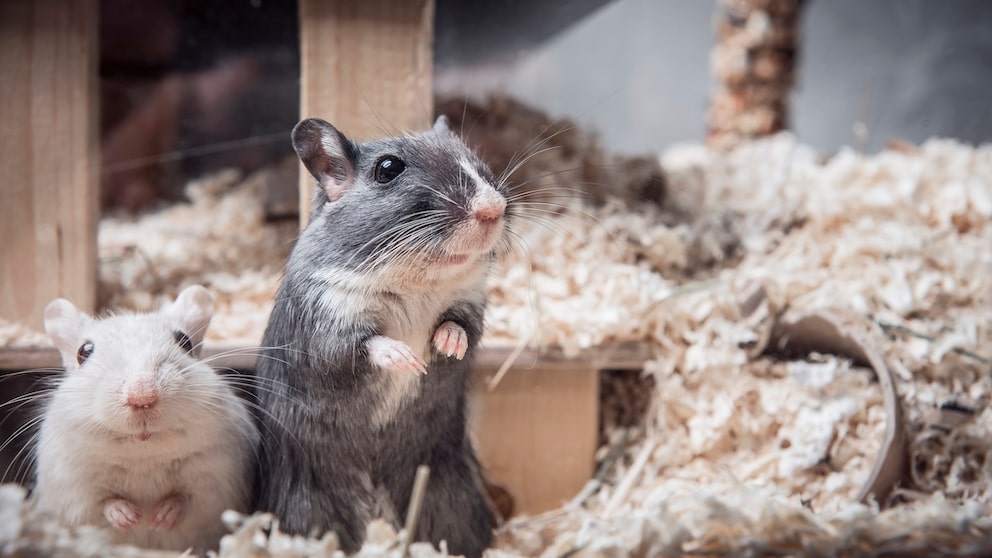
The most well-known mice for pet keeping are the fancy mice and Mongolian gerbils. Their life expectancy is relatively similar, although gerbils generally have a higher life expectancy—they can even live up to five years in some cases.
Both types of mice require a large cage with enough bedding, many climbing opportunities, and plenty of hiding places. Equally important is a balanced diet consisting of seeds and grains, daily fresh food, and occasionally animal protein sources like dried mealworms. 1

How to Properly Care for Mice

How Long Do Guinea Pigs Actually Live?
Why Some Mice Die Earlier
Whether mice really reach an old age is not always controllable. Even if you set up the cage appropriately, create enough retreats, and adjust the diet, some mice die much earlier than expected. Often, early death is due to diseases or even genetic effects from breeding or inbreeding.
In fancy mice, the so-called Ay gene is problematic, among other things. This gene leads to obesity. In such cases, no amount of exercise or optimized diet helps. Affected animals often suffer from joint pain, limited movement, and are more prone to tumors. The Ay gene is mainly found in red, orange, and yellow fancy mice. 2
Appropriate Care for a Long Mouse Life
If you want to provide your mice with a good and balanced life, you should pay attention to a few things. The animals are very social and need companions. However, you shouldn’t just randomly put together a group—that can have serious consequences. Gerbils, for example, prefer to live in pairs. Since mice can reproduce quickly and frequently, you should either keep two females or two males.
Fancy mice can be kept in larger groups with plenty of space. However, owners should also pay attention to gender distribution. Several females can be kept together without issue. Males, on the other hand, should only be kept mixed. If you want to keep females and males together, you should have the males neutered. Ideally, you should keep only one male per group to prevent territorial fights.
Only when groups are carefully assembled, and their social behavior is considered, can mice live harmoniously together and lead a healthy, stress-free life.3,4,5