

December 7, 2025, 2:48 pm | Read time: 4 minutes
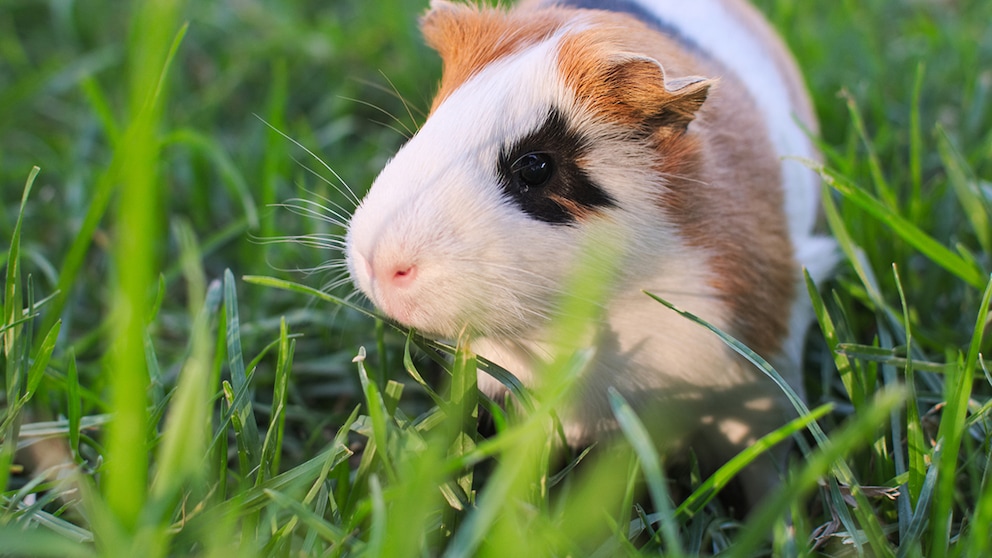
They are among the most popular pets. Yet, they are often still kept incorrectly. Guinea pigs are sensitive animals with high demands. Poor living conditions and improper diet can lead to them dying prematurely. But how old do guinea pigs actually get?
How Old Can Guinea Pigs Get?
The life expectancy of guinea pigs can only be generalized. Most guinea pig breeds live between four to six years. However, depending on the breed and care, this can vary—some guinea pigs can live up to eight years under good conditions.
The oldest guinea pig in the world lived to an astonishing 14 years and 10 months. “Snowball” died in the United Kingdom on February 14, 1979, at an advanced age and still holds the Guinness World Record for the oldest guinea pig. 1
How Old Is My Guinea Pig in Human Years?
Also intriguing is the comparison of the lifespan of these rodents to humans. One year in the life of a guinea pig corresponds to about ten human years, depending on the life stage:
- 3 weeks = 6 months in human years
- 6 months = 12 years in human years
- 1 year = 18 years in human years
- 2 years = 30 years in human years
- 3 years = 40 years in human years
- 4 years = 50 years in human years
- 5 years = 60 years in human years
- 6 years = 70 years in human years
- 7 years = 80 years in human years
- 8 years = 90 years in human years
Increase Life Expectancy with the Right Diet
What does a species-appropriate diet for guinea pigs look like? It’s worth taking a look at nature. There, the main diet of guinea pigs consists mainly of wild grasses, herbs, bark, and roots. For us humans, grasses are hardly digestible—the digestive system of guinea pigs is designed to efficiently process raw fibers and extract energy from them. Chewing on fiber-rich food is not only important for nutrition but also for the teeth of guinea pigs. Since their teeth grow continuously throughout their lives, chewing activity acts as a natural grinding mechanism.
Guinea pigs should always have hay available. Another important part of their diet is fresh food, consisting of greens, vegetables, fruits, and herbs. Owners should offer their guinea pigs fresh food twice a day, with greens making up the largest portion. Fruits should be offered a bit less frequently. It’s also important to provide enough gnawing material, like willow or birch, in their enclosures. Since guinea pigs cannot produce vitamin C naturally, owners should ensure they feed vitamin C-rich vegetables like bell peppers or carrots.
Even though they are colorful and smell delicious, yogurt drops should not be part of a guinea pig’s diet. They contain sugar, which is unhealthy for the animals. The same goes for grain products like nibble sticks. 2

Which Fruits and Vegetables Guinea Pigs Can Eat
What Guinea Pigs Should Never Eat
Guinea Pigs Must Be Kept in Groups
A guinea pig rarely comes alone—at least in the wild. Guinea pigs naturally live in groups. They are very social animals and feel comfortable when surrounded by their kind. At home, owners should ensure that guinea pigs are never kept alone, as no rabbit or extra human attention can replace a companion.
However, there are some points to consider when forming guinea pig groups. Primarily, males should be neutered to prevent uncontrolled breeding. Ideally, a neutered male should be kept with two females. In a group of four, the best combination is two neutered males and two females. 3
Veterinary Care for a Long Guinea Pig Life
Guinea pigs communicate through a variety of sounds, which you can also read about at PETBOOK. However, they cannot precisely convey pain or discomfort. This is where owners come in. How long guinea pigs can live depends not only on their care and diet but also on their physical health—especially as they age. Guinea pigs are considered seniors at around four years old, which corresponds to about 50 to 60 human years. From then on, owners should have their senior guinea pigs regularly checked. This includes palpating, weighing, and examining all body openings. If you notice any changes, you should take the animal to the vet.
If your guinea pig is ill or in pain, ensure that the treating veterinarian is well-versed with these animals. Sometimes, veterinarians may be more familiar with other animals, and the rodents might not receive the best care. 4