


March 28, 2026, 3:44 pm | Read time: 5 minutes
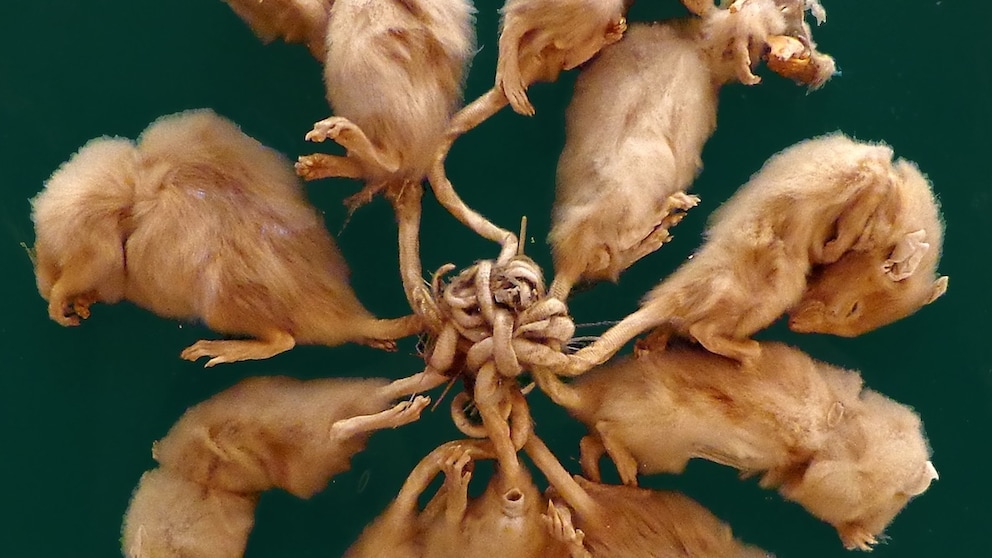
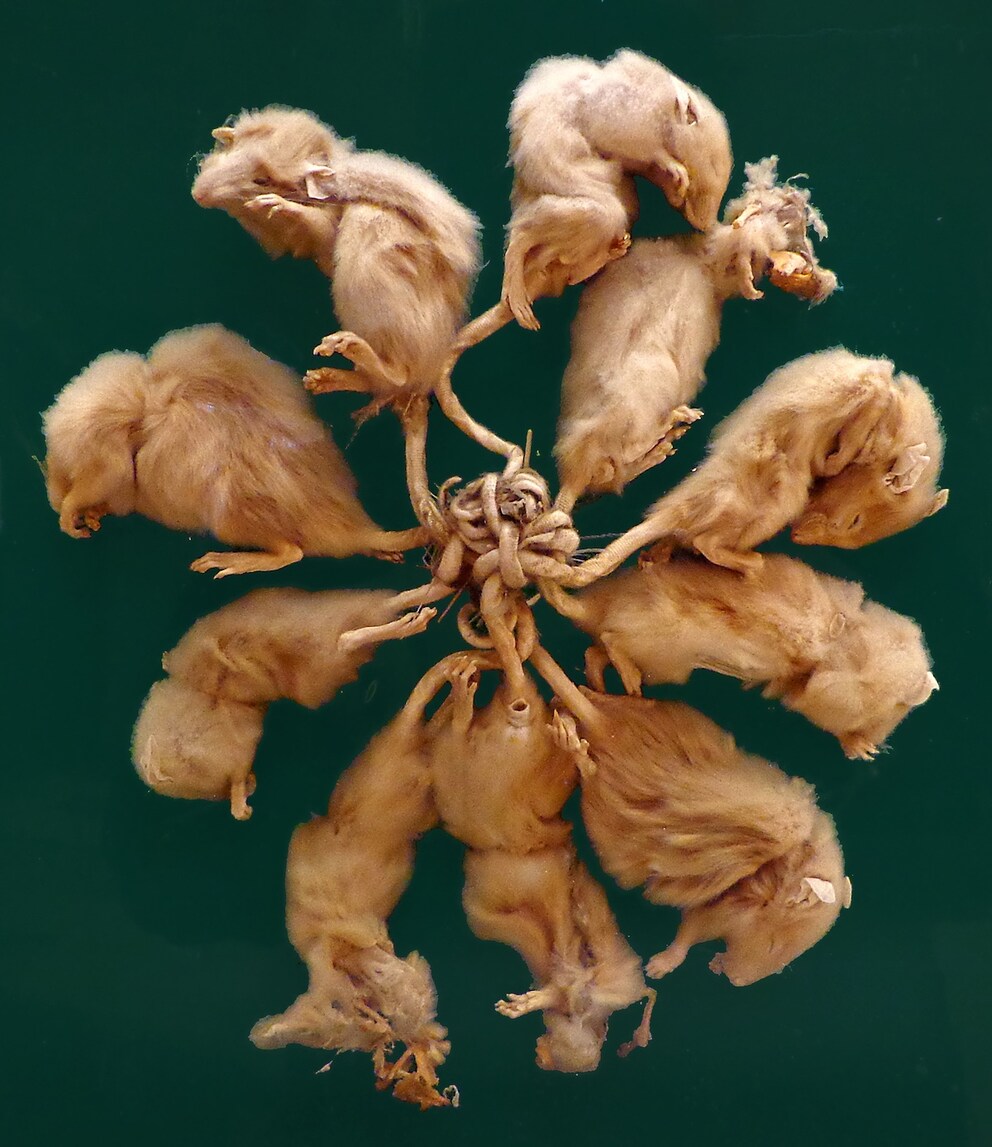
A “rat king” refers to a cluster of rats whose tails are tangled together, making them inseparable. What initially seems like a myth from dark times turns out, upon closer inspection, to be a rare but real natural phenomenon. PETBOOK editor and biologist Saskia Schneider explains how such a formation occurs and what lies behind the name “rat king.”
Rats tangled by their tails? That can’t possibly exist. For a long time, it was thought that such formations were man-made—or that the devil was involved. Yet, despite all the legends, there are plausible biological explanations for this eerie phenomenon.
How Does a Rat King Form?
Rat kings almost exclusively form among black rats (Rattus rattus), which have particularly long, thin, and graspable tails. In tight nests or burrows, the tails of several young rats may touch while crawling and climbing, reflexively entwine, and—assisted by moist or sticky substances like urine, feces, blood, or nesting material—adhere together. If an attempt to escape is made, the cluster tightens. The resulting knot is so tight that the animals can no longer separate from each other. 1
The phenomenon occurs particularly often in winter—possibly facilitated by the freezing together of wet tails. Some hypotheses, such as rats intentionally tangling themselves, are now considered disproven. Manipulations or arrangements made after death cannot be ruled out in individual cases.
Why Is It Called “Rat King”?
The term “rat king” originates from the German-speaking world. It likely stems from the notion that every group has a king—even in the rat realm. In old depictions, this king sits on a throne made of rat tails, equipped with a crown and scepter. A particularly vivid image that has persisted in literature and pop culture to this day.
“Rat king” was originally used metaphorically: Sometimes it referred to a particularly large rat ruling over others, sometimes it served as an insult for greedy people. Only later did the term refer to the actual phenomenon of rats tangled together. 2
Myths and Beliefs Surrounding the Rat King
In the Middle Ages, finding a rat king was considered a bad omen—a harbinger of disease, death, and especially the plague. This belief is not entirely unfounded: A high rat density can indicate poor sanitary conditions, which in turn increased the risk of epidemic diseases. The “rat king” was therefore viewed with suspicion and fear. In literature, it was demonized—as a multi-headed monster like in Julius Wolff’s “Pied Piper of Hamelin” or as a supernatural being carried by its subjects.
Can the Rats Survive?
Surprisingly: yes—at least for a certain time. There are documented cases of live rat kings, where individual animals even showed signs of being cared for by other rats. Although the affected animals cannot move, they may feed on leftover food in the nest or grains trickling through the ground. 3
Nevertheless, a rat king is an evolutionary dilemma: The tangled animals are easy prey for predators and usually die from hunger, injuries, or infections. The fact that many rat kings have been found mummified, such as wedged in tight building structures, is explained by the dry environment and lack of decay.
Historical Evidence
The most famous and largest rat king was found in 1828 in Buchheim near Altenburg, Thuringia—a cluster of 32 black rats, mummified in a chimney. This specimen is still on display at the “Mauritianum” Natural History Museum in Altenburg. 4Globally, about 50 to 60 finds are documented—most from Central Europe, particularly Germany, France, the Baltics, and Denmark. 5
Since the 20th century, rat kings have been found less frequently—likely due to better hygiene, declining rat populations, and the displacement of the black rat by the more robust brown rat (Rattus norvegicus), whose shorter tail makes tangling less likely.

Dangerous Parasite Spreads Worldwide
Why These Pumas Suddenly Eat Penguins and What It Does to Them
Phenomenon Also Occurs in Squirrels
Less known but equally astonishing is the comparable phenomenon of the so-called “squirrel king.” Here, the tails of young squirrels become glued together—usually by tree resin, nesting material, or human waste—into an inextricable knot. Unlike rats, this condition is almost always discovered while the animals are still alive, such as when they fall from the nest together.
In North America and Canada, several such cases have been documented in recent decades, where the animals were successfully separated with human help. Without intervention, they would hardly have been able to survive.
Conclusion:
The rat king is a rare and fascinating natural phenomenon that has captivated scientists and laypeople alike for centuries. Its story lies between superstition, horror, and astonishing biology—and it reminds us of how surprising and curious nature can sometimes be. Whether as a warning signal for poor living conditions or as a biological curiosity, the rat king remains a phenomenon that captivates our imagination as much as it challenges our research.
About the Author
Dr. Saskia Schneider is a Ph.D. biologist. During her studies at the Free University of Berlin, she focused primarily on zoology and animal behavior.