

August 5, 2025, 3:43 pm | Read time: 5 minutes
As a child, when I collected grasses and herbs for my small pets, I was meticulous about ensuring all the greens were dry. I was told: Wet grass gives rabbits and guinea pigs stomachaches. And if there was even a little dew on the leaves, I would carefully dab each drop with a paper towel—concerned about my pets’ sensitive stomachs. This was a rule instilled in me early on—and one I never questioned for many years. But how much truth is there really behind this widespread dietary belief?
Water in the Feed = Stomach Problem?
The notion that wet fresh food—be it grass, herbs, or vegetables—harms rabbits or guinea pigs persists stubbornly. It is often said that the moisture can lead to bloating, diarrhea, or even fatal digestive disorders. However, this statement cannot be generalized.
Scientific findings and the experiences of many owners and breeders tell a different story: If animals are accustomed to fresh food, it hardly matters whether it is dry or wet. On the contrary, wild rabbits, for example, consume wet plants without hesitation when it rains.
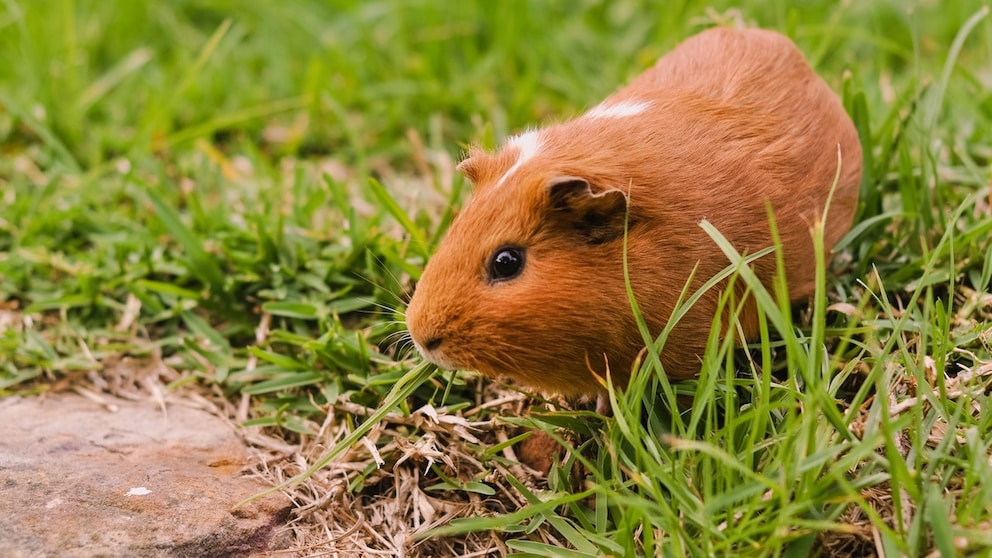
Guinea pigs that live in outdoor conditions also regularly eat wet grass—simply because it is unavoidable in nature. The additional moisture even ensures that the animals get enough water.
Also interesting: The Biggest Pet Food Myths Debunked
So, Where Does the Myth Come From?
The warning against wet fresh food is not entirely wrong—it’s just too broadly stated. Wet grass can indeed become problematic for guinea pigs and rabbits if it is stored improperly or left warm for too long. Moisture combined with warmth and lack of air (such as in compacted piles) causes the food to start fermenting. Such fermented food is intolerable for rabbits and guinea pigs—it can lead to gastrointestinal issues and, in the worst case, even become dangerous.
The real reason, however, is that many guinea pigs and rabbits were long fed primarily with hay, even though fresh greens are more in line with their natural diet. If owners want to treat their pets after winter and suddenly switch from hay to fresh, protein-rich grass, it can indeed lead to digestive issues, especially in guinea pigs.
In spring, many commonly planted grasses are very rich. However, small animals rely on a diet rich in structure and fiber. Therefore, grasses with high protein content and low fiber, such as ordinary lawn clippings, can cause bloating and soft stools if offered too quickly and in large quantities. 1

Which Fruits and Vegetables Guinea Pigs Can Eat
What Guinea Pigs Should Never Eat
A Matter of Appropriate Diet
The key is acclimatization: Animals that regularly receive fresh food can also digest wet food without problems. However, if new types of food are introduced suddenly and in large quantities, it can cause irritation, regardless of whether the food is wet or dry.
Especially for guinea pigs, it is advisable to keep the diet varied but rich in fiber. Grasses with a high fiber content—such as timothy grass or meadow fescue—are particularly suitable and also promote dental wear.
Edible Grasses for Guinea Pigs and Rabbits—Even Wet
Many grasses are generally safe to feed. If unsure, you can use various apps for identification, such as iGräser, Flora Incognita, or PlantNet. Edible grasses include:
- Blackgrass (Alopecurus myosuroides)
- Bristlegrass / Foxtail millet (Setaria)
- Perennial ryegrass / English ryegrass (Lolium perenne, Lolium multiflorum)
- False oat-grass (Arrhenatherum elatius)
- Barnyard grass (Echinochloa crus-galli)
- Crested dog’s-tail (Cynosurus cristatus)
- Cocksfoot (Dactylis glomerata)
- Quackgrass (Elymus)
- Bluegrass—Rough-stalked (Poa trivialis) or Kentucky bluegrass (Poa pratensis)
- Sweet vernal grass (Anthoxanthum odoratum)
- Fescue—Tall fescue, Red fescue (Festuca arundinacea)
- Bentgrass—Creeping, Redtop, Colonial (Agrostis alba / tenuis / stolonifera)
- Brome—Sterile, Soft, Hairy (Bromus sterilis, Bromus hordeaceus)
- Wood reedgrass (Calamagrostis arundinacea)
- Meadow foxtail (Alopecurus pratensis)
- Timothy grass (Phleum pratense)
- Yorkshire fog (Holcus lanatus)
- Quaking grass—Common quaking grass (Briza media)
Sedges like pendulous sedge (Carex pendula) are also edible but less popular. Wetland grasses like cattail (Typha latifolia) or common reed (Phragmites australis) can also be tried as feed.
Caution is advised with golden oat grass (Trisetum flavescens), as frequent feeding can lead to an oversupply of vitamin D. Awns on flowering grains or grasses can also be dangerous, as they can penetrate and migrate through the skin.
In general: Young grass is rich in protein and energy and should be introduced slowly. Older grass contains many fibers and is particularly good for overweight animals or for dental wear. Flowering grass is relatively low in energy because the flowers contain most of the nutrients. Feed only in moderation.
Conclusion: Wetness Is Not the Problem—Fermentation and Improper Feeding Are
The misconception that wet grass harms guinea pigs and rabbits is self-made. If the animals primarily eat hay—which was long considered the staple food—then the appropriate supply of green food is unfamiliar. Wet greens themselves are not a problem for healthy rabbits and guinea pigs—provided:
- the animals are accustomed to it,
- the food remains fresh and does not start to ferment,
- a structured, balanced diet is maintained. 2
The myth of the “evil wet grass” is thus a misunderstanding with a kernel of truth—like so many myths in rabbit and guinea pig care. And yet, I still think of the dandelion-filled kitchen towel from my childhood with every rain shower.