

August 11, 2025, 4:10 am | Read time: 6 minutes
The American Quarter Horse, with over five million registered animals, is the world’s most popular horse breed—and for good reason: It combines strength, speed, and calmness in a compact body. Whether in Western competitions, for leisure, or as a reliable partner in the field, the Quarter Horse is a true all-rounder with a fascinating history. But what makes it so special—and what should you consider when buying one?
Origin
The American Quarter Horse developed in the 18th century in North America from a genetically diverse background. As early as the 16th and 17th centuries, Spanish conquerors brought horses such as Barbs, Arabians, and Andalusians to the New World. During further colonization, European settlers added English Thoroughbreds, Percherons, and Irish ponies to the mix. From this blend emerged a nimble, strong horse that excelled particularly over short distances.
The name comes from the “Quarter Mile Race,” a popular horse race over about 400 meters, where the future Quarter Horse stood out for its tremendous sprinting ability. At the same time, the breed proved to be a versatile workhorse in ranch life—fast, resilient, and intelligent. In 1940, the American Quarter Horse Association (AQHA) was founded, and it is now the world’s largest breeding association.
After initial imports to Switzerland by Jean-Claude Dysli in 1964, targeted Quarter Horse breeding began in Germany in 1970. The German Quarter Horse Association (DQHA) has since been responsible for breeding supervision in the German-speaking region.
Appearance & Coat
The American Quarter Horse is characterized by a compact, muscular build with a rectangular frame. It reaches a height between 145 and 165 cm and weighs 450 to 650 kg. Particularly striking are the strong chest, pronounced hindquarters, and stable back, which can easily carry heavier riders.
The head appears noble and is wedge-shaped with a straight nasal line, large dark eyes, and small, pointed ears—features that emphasize intelligence and alertness. The legs are short, with solid cannon bones and stable joints. The hooves are medium-sized, firm, and well-shaped.
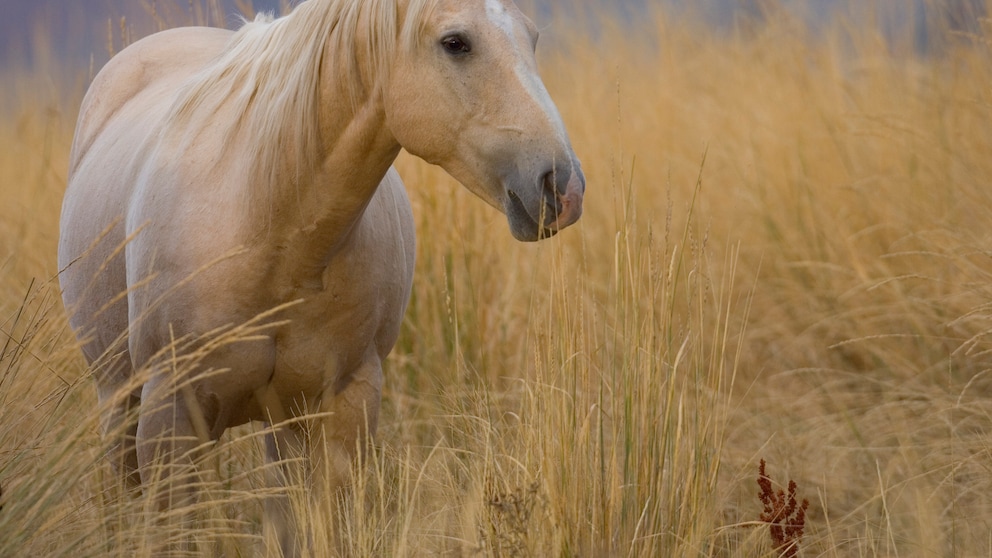
The breed comes in a variety of colors—17 color variations are officially recognized, including chestnut, buckskin, red roan, and dun. Markings are not allowed and are considered a breeding criterion for the related Paint Horse. The coat is dense, shiny, and easy to care for.
Temperament
American Quarter Horses are considered strong-nerved, friendly, and balanced. Their cooperative nature and high affinity for humans make them valued partners—especially for beginners or insecure riders. They exhibit good social behavior, are eager to learn, and possess a high level of concentration and memory performance.
In addition to their calm demeanor, Quarter Horses are characterized by lightning-fast reactions—especially in interaction with cattle. This so-called “Cow Sense” enables them to independently separate animals and respond precisely to their movements. Their combination of calmness and performance makes them versatile—from Western riding to dressage to recreational sports.
Training
Thanks to their high intelligence and eagerness to learn, training and daily exercises with the American Quarter Horse are usually straightforward. Even young animals can be introduced to exercises for dexterity and surefootedness with patience and positive reinforcement. A respectful, non-violent approach is particularly important—Quarter Horses react sensitively to harshness.
Their willingness to cooperate makes them suitable for both ambitious riders and beginners. Early socialization and varied training stimuli promote their development and contribute to a reliable riding partner.
Disciplines
Quarter Horses can carry a lot of weight due to their sturdy build. This makes them particularly popular in Western riding—after all, a typical Western saddle can weigh up to 20 kg. Once the horses are familiar with their rider, all doors are open in any discipline. In skill tests (trails), they demonstrate their surefootedness, calmness, and strong nerves—this is especially successful when horse and rider have a strong trust relationship.
With their cooperative traits and calm nature, Quarter Horses also perform well in the so-called Western Pleasure. The horses are expected to complete the three basic gaits on a loose rein, relaxed, and respond finely to the rider’s aids.
If you’re not enthusiastic about Western riding, Quarter Horses can also be equipped with English saddles—whether in the field, on the jumping course, or in the dressage arena, the breed proves to be a lively all-rounder.
Proper Care & Maintenance
American Quarter Horses are considered robust, uncomplicated horses that require appropriate care with plenty of movement and social contact. Open stable housing with access to pasture or paddock suits their natural urge for movement. Individual housing should be avoided, as they are very social animals.
The weather-resistant coat makes them insensitive to weather, yet a clean shelter is essential. In terms of care, regular grooming and hoof cleaning, as well as veterinary checks, are sufficient. Balanced activity in leisure or sport ensures physical and mental well-being.
Nutrition
Quarter Horses are easy keepers—a legacy of their frugal development history. High-quality roughage like hay should form the basis of their diet, supplemented by protein-rich components such as hemp seeds. The use of concentrated feed should be individually adjusted, as excessive energy intake can lead to obesity and subsequent diseases like laminitis or colic.
Many Quarter Horses react sensitively to grains. Therefore, a low-grain diet is recommended if necessary. Regular weight control and a feed ration adjusted to workload are essential to minimize health risks.

Appaloosa: This Horse Breed Has the Most Spots in Its Coat

Why the Barb Is the Oldest Horse Breed in the World
Susceptibility to Certain Diseases
Due to genetic overbreeding, several breed-specific hereditary diseases occur in the American Quarter Horse. These include:
- PSSM (Polysaccharide Storage Myopathy): a muscle disease where carbohydrate metabolism is disrupted.
- HYPP (Hyperkalemic Periodic Paralysis): leads to muscle cramps and paralysis.
- HERDA (Hereditary Equine Regional Dermal Asthenia): causes abnormally sensitive skin due to disturbed collagen formation.
- GBED (Glycogen Branching Enzyme Deficiency): usually fatal within the first eight weeks of life for affected foals.
- MH (Malignant Hyperthermia): a rare, anesthesia-related metabolic disorder.
Therefore, breeders recommend mandatory genetic testing before breeding or purchase. Regular veterinary care helps to identify and treat potential symptoms early.
The American Quarter Horse at a Glance
- Size & Weight: Height 145–165 cm, Weight 450–650 kg
- Build: Compact, muscular, strong back and hindquarters
- Colors: 17 approved colors, no markings
- Character: Calm, friendly, eager to learn, strong-nerved
- Suitable for: Beginners, Western riding, leisure riding, competition disciplines
- Special Feature: “Cow Sense”—instinctive behavior in cattle handling
- Life Expectancy: 25–30 years