

September 1, 2025, 8:53 am | Read time: 8 minutes
Sure-footed, weatherproof, and equipped with a unique gait–the Icelandic horse is much more than a pony in Northern Lights attire. As direct descendants of Viking horses, Icelandics are considered one of the purest and most original horse breeds worldwide. Their special aptitude for tölt and pace, along with their friendly, balanced nature, make them ideal leisure and trekking horses–both for beginners and experienced riders.
Origin
The history of the Icelandic horse begins in the 9th century when Vikings and Celts brought their robust small horses to Iceland. These original animals–a mix of Celtic and Germanic pony breeds–formed the foundation for today’s breed. Due to Iceland’s isolated location and strict breeding regulations, the Icelandic horse developed over more than 1,000 years without crossbreeding with other breeds–a globally unique case in horse breeding.
Since 1909, the import of foreign horses to Iceland has been legally prohibited. Even exported Icelandics are never allowed to return. The main reason is disease prevention: there are hardly any known horse diseases on the island. This centuries-long genetic isolation makes the Icelandic one of the purest horse breeds in the world.
From the mid-19th century, the Icelandic horse also became popular beyond its homeland. In Germany, the “Immenhof” films of the 1950s contributed to its growing popularity. Today, around 60,000 Icelandics live in Germany–after Iceland itself, this is the second-largest breeding and export country.
Appearance & Coat
Icelandic horses combine robust physical strength with an expressive appearance. Their exterior ranges from the compact “pony type” to the somewhat slimmer riding horse type. With a height of 1.25 to 1.50 meters and a weight of 300 to 500 kilograms, they officially fall under the “small horse” category, but due to their sturdy build and use as riding horses, they are still classified as horses.
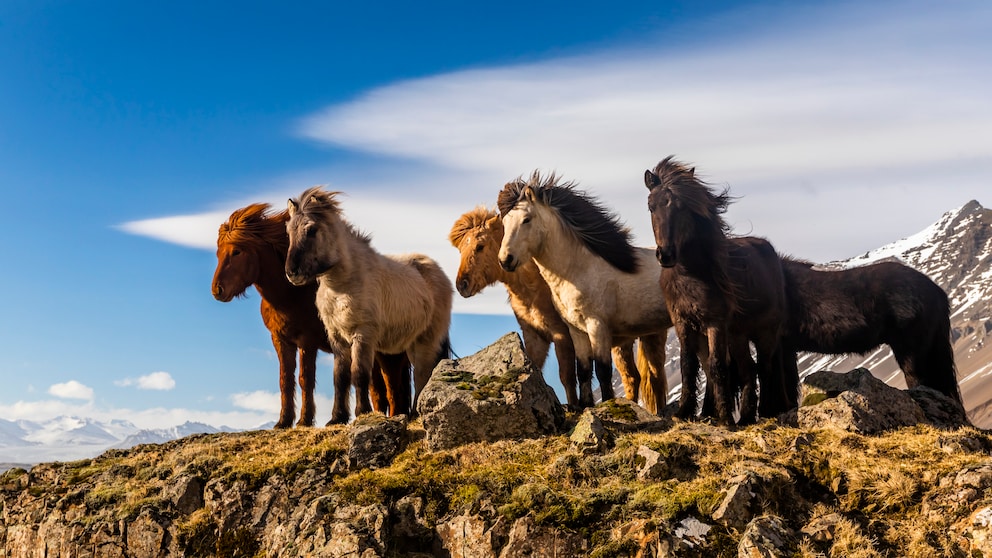
A particularly striking feature is their lush, often shaggy mane and thick tail. Additionally, they have a weatherproof, double-layered coat that reliably protects them from the harsh weather conditions of their homeland. Icelandics come in almost all color variations–over 40 base colors with more than 100 shades–except for spotted patterns. In Iceland, it is even believed that the coat color reflects the animal’s personality.
Character & Temperament
The Icelandic horse is known for its good-natured, strong-nerved, and friendly character. Due to their origin in the wild and semi-wild upbringing in Iceland, they have a pronounced social behavior, are self-confident, and at the same time, people-oriented.
They are considered spirited yet always balanced, making them reliable partners in the field. Due to their sensitive nature and willingness to cooperate, they can adapt well to different riders–from children to professionals. Their inner calm and high endurance also make them ideal trekking horses. Despite their calmness, they have a lively side, which is especially evident when riding their special gaits.
Why the Irish Connemara Pony Captivates the World
Haflinger – More Than Just a Pretty Pony
Gait & Discipline
Icelandics are considered eager to learn, cooperative, and intelligent, which is why they can be well-trained with appropriate consistency. Their sensitivity requires a delicate but clear communication. A solid basic education is essential–especially since they are often broken in between the fourth and fifth year of life.
Early socialization in the herd is indispensable, as is a consistent but loving approach. An experienced trainer is particularly helpful when learning and refining the gaits tölt and pace. Their adaptability and affinity for people foster a close horse-human relationship, making them ideal family and leisure horses.
Their gait makes Icelandics special–most other horses can only perform the three basic gaits. But what lies behind the tölt and flying pace? The additional gaits developed evolutionarily. The tölt is a walk-like gait, but faster and without a stepping motion. The tölt may seem a bit bumpy, but it is actually rather smooth. The flying pace, on the other hand, is about speed. Horses can reach up to 45 kilometers per hour. Due to their unique features, there are special competitions for Icelandics, focusing mainly on the speed and cleanliness of the additional gaits.
Proper Care & Maintenance
The Icelandic horse is an exceptionally robust outdoor horse that should be kept year-round in an open stable or on pasture. Pure box housing does not suit its nature and can lead to behavioral issues.
In their homeland, they live under the harshest weather conditions–accordingly, they are also frugal. Regular hoof checks, dental care, and parasite treatments are part of their care. In their homeland, they live under the harshest weather conditions–accordingly, they are also frugal. Regular hoof checks, dental care, and parasite treatments are part of their care. In their homeland, they live under the harshest weather conditions–accordingly, they are also frugal. Regular hoof checks, dental care, and parasite treatments are part of their care. In their homeland, they live under the harshest weather conditions–accordingly, they are also frugal. Regular hoof checks, dental care, and parasite treatments are part of their care. In their homeland, they live under the harshest weather conditions–accordingly, they are also frugal. Regular hoof checks, dental care, and parasite treatments are part of their care. In their homeland, they live under the harshest weather conditions–accordingly, they are also frugal. Regular hoof checks, dental care, and parasite treatments are part of their care. In their homeland, they live under the harshest weather conditions–accordingly, they are also frugal. Regular hoof checks, dental care, and parasite treatments are part of their care. In their homeland, they live under the harshest weather conditions–accordingly, they are also frugal. Regular hoof checks, dental care, and parasite treatments are part of their care. In their homeland, they live under the harshest weather conditions–accordingly, they are also frugal. Regular hoof checks, dental care, and parasite treatments are part of their care. In their homeland, they live under the harshest weather conditions–accordingly, they are also frugal. Regular hoof checks, dental care, and parasite treatments are part of their care. In their homeland, they live under the harshest weather conditions–accordingly, they are also frugal. Regular hoof checks, dental care, and parasite treatments are part of their care. In their homeland, they live under the harshest weather conditions–accordingly, they are also frugal. Regular hoof checks, dental care, and parasite treatments are part of their care. In their homeland, they live under the harshest weather conditions–accordingly, they are also frugal. Regular hoof checks, dental care, and parasite treatments are part of their care. In their homeland, they live under the harshest weather conditions–accordingly, they are also frugal. Regular hoof checks, dental care, and parasite treatments are part of their care. In their homeland, they live under the harshest w…
Regular hoof checks, dental care, and parasite treatments are part of their care. In their homeland, they live under the harshest weather conditions–accordingly, they are also frugal. Regular hoof checks, dental care, and parasite treatments are part of their care. In their homeland, they live under the harshest weather conditions–accordingly, they are also frugal. Regular hoof checks, dental care, and parasite treatments are part of their care. In their homeland, they live under the harshest weather conditions–accordingly, they are also frugal. Regular hoof checks, dental care, and parasite treatments are part of their care. In their homeland, they live under the harshest weather conditions–accordingly, they are also frugal. Regular hoof checks, dental care, and parasite treatments are part of their care. In their homeland, they live under the harshest weather conditions–accordingly, they are also frugal. Regular hoof checks, dental care, and parasite treatments are part of their care. In their homeland, they live under the harshest weather conditions–accordingly, they are also frugal. Regular hoof checks, dental care, and parasite treatments are part of their care. In their homeland, they live under the harshest weather conditions–accordingly, they are also frugal. Regular hoof checks, dental care, and parasite treatments are part of their care. In their homeland, they live under the harshest weather conditions–accordingly, they are also frugal. Regular hoof checks, dental care, and parasite treatments are part of their care. In their homeland, they live under the harshest weather conditions–accordingly, they are also frugal. Regular hoof checks, dental care, and parasite treatments are part of their care. In their homeland, they live under the harshest w…
Insgesamt ist das Islandpferd ein vielseitiger und anpassungsfähiger Begleiter, der sich sowohl für den Freizeitreiter als auch für den ambitionierten Sportreiter eignet. Mit seiner einzigartigen Gangveranlagung und seinem freundlichen Wesen erobert es die Herzen von Pferdefreunden weltweit.
Translate the text above into English.