

October 8, 2025, 4:03 am | Read time: 5 minutes
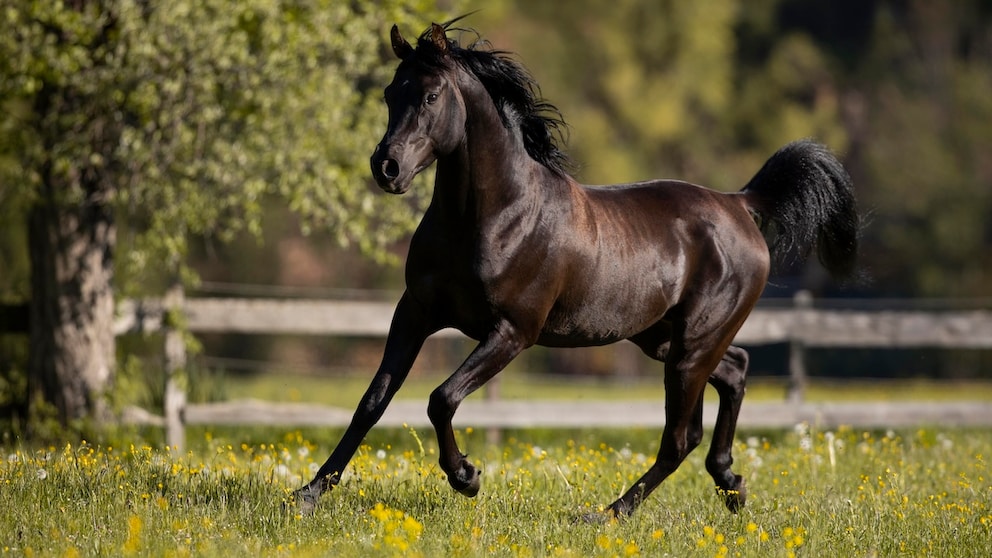
Few other horses embody as much elegance, endurance, and history as the Arabian. Its graceful movements, high-carried tail, and distinctive head shape with a concave profile make it an icon among horse breeds. But this horse is far more than just a pretty face—it is one of the oldest horse breeds in the world and has influenced countless other breeds. What makes it so unique?
Origin
The Arabian horse originally comes from the Arabian Peninsula and is considered one of the oldest, purebred horse breeds worldwide. Its origins can be traced back to the breeding lines of the Bedouins, who selectively bred these animals in the harsh desert conditions. Arabians were not only used as riding and pack animals but were also closely integrated into the lives of the people, shaping their human-oriented nature. Many legends surround their origin—from divine creation to accompanying the Prophet Muhammad.
Over the centuries, Arabian horses made their way to Europe—mostly through trade and conquest—and were deliberately used to refine other breeds due to their toughness, speed, and endurance. Trakehners, English Thoroughbreds, American Quarter Horses, and many others still carry Arabian blood. Thus, the Arabian became one of the most influential genetic pillars of modern horse breeding.
Appearance & Coat
The Arabian horse is characterized by an elegant and slender build. With a height between 140 and 160 cm and a weight of about 350 to 550 kg, it is among the lighter breeds. The body is often square-shaped, with well-defined muscles and a high-set tail.
Characteristic is the so-called “dished” head: a concave profile line with large expressive eyes, wide nostrils, and a fine, small mouth. The eyes are set high and wide apart, giving the face great expressiveness. An anatomical peculiarity is the reduced skeleton: Arabians have only 17 ribs (instead of 18), five lumbar vertebrae (instead of six), and 15 tail vertebrae (instead of 16 to 18), contributing to their typical appearance.
Gray is the dominant color, but chestnuts, bays, and blacks are also present. In Partbred Arabians, special colors or markings occasionally appear.
Character & Temperament
Arabians are considered spirited, sensitive, and very human-oriented. Their keen perception makes them particularly receptive to moods and signals, which is why they respond strongly to their caregivers. Many Arabians develop a close bond with humans, making them cooperative and cautious in handling.
They are often said to be prone to skittishness—this is often the result of improper handling or training. Properly treated, Arabians are extremely friendly, curious, and eager to learn. Their liveliness and drive make them ideal partners for experienced riders with a gentle touch.
Gait & Discipline
Training an Arabian requires patience, consistency, and above all, empathy. Due to their intelligence and sensitivity, Arabians learn quickly—both positive and negative. Clear, calm communication and a trusting relationship form the basis for successful training. In equestrian sports, they excel particularly in endurance riding but are also versatile in disciplines such as dressage or jumping.
Dominance or pressure often leads to withdrawal or nervousness. Instead, positive reinforcement and varied training sessions are recommended. Early socialization and targeted stimuli help improve stimulus processing and reduce the tendency to be skittish. Arabians usually integrate seamlessly into families, provided their emotional and physical needs are met.
Proper Care & Maintenance
Arabians are adaptable horses with a high need for movement. As former desert horses, they require daily exercise, ideally on pastures with social contact in open stable housing. Box housing is also possible, but it should ensure all-day free movement.
Due to their fast metabolism, they tend to gain weight as a result of a lack of exercise or energy-rich feeding. A balanced diet, regular exercise, and social integration are essential for physical and mental well-being.
Easy to care for in terms of coat, Arabians still require regular hoof checks, parasite prevention, and dental care. Their sensitivity to cold makes wind- and weather-protected shelters sensible in winter.
Nutrition
The nutrition of the Arabian should be based on its natural needs: high-quality roughage, such as hay or fresh pasture grass, forms the basis. Concentrated feed is only necessary with increased energy requirements (e.g., in training or sports) and should be individually adjusted.
Due to their efficient metabolism, Arabians are prone to overfeeding. An overly energy-rich or unbalanced diet can lead to metabolic problems such as laminitis or insulin resistance. Supplementary feeds should only be used selectively, such as in cases of mineral deficiency or increased performance needs.
Fresh water and fiber-rich food to support digestion are standard.
How the Trakehner Evolved from Military Horse to Dressage Star

Why the Irish Connemara Pony Captivates the World
Susceptibility to Certain Diseases
Despite their robustness, Arabian horses are not free from health risks. Genetically predisposed diseases such as Severe Combined Immunodeficiency (SCID) or Cerebellar Abiotrophy (CA) can occur in certain lines, necessitating strict health management in breeding.
Another issue is detrimental breeding: exaggerated head shape (extreme dished head) can lead to respiratory problems or neurological impairments. Reputable breeders focus on balanced, functional body shapes.
Through appropriate care, balanced feeding, and regular veterinary checks, many health problems can be identified and avoided early.
The Arabian at a Glance
- Character: sensitive, spirited, human-oriented, friendly
- Height: approx. 140–160 cm
- Type: Thoroughbred
- Coat Color: predominantly gray, also chestnut, bay, black; special colors in Partbred
- Gait: lively, expansive, and elegant
- Discipline: leisure riding, English riding
- Special Features: dished head, high tail set, reduced number of vertebrae