

February 21, 2026, 11:03 am | Read time: 5 minutes
Nearly 300 years of breeding history, Olympic gold, and recognition as an intangible cultural heritage: The Trakehner is much more than just an elegant sport horse. PETBOOK explains the origin, character, and care of the breed.
Origin
Trakehners are elegant horses with expressive gaits and have an almost legendary reputation in Germany. Since 2022, their breeding has even been considered an intangible cultural heritage. But how did this come about?
The breeding history began as early as 1732: In East Prussian Trakehnen, Frederick William I, also known as the “Soldier King,” initiated the breeding of robust and capable horses. Initially, the newly bred horses were intended for use as carriage and draft horses. However, the focus soon shifted. From then on, military requirements were paramount, necessitating a particularly enduring, fast, and resilient riding horse. To achieve this more athletic type, English Thoroughbreds, Shagya Arabs, and Anglo-Arabs were crossbred—an influence that still shapes the breed today.
Over time, the breeding was further developed over generations. However, the breeding collapsed during World War II. The stocks dwindled significantly, and breeding nearly came to a halt. It was only in the years that followed that a gradual rebuilding was achieved. As a result, the Trakehner established itself not only as a successful sport horse but was also deliberately used to refine other warmblood breeds.
Today, Trakehners are primarily encountered in dressage sports. For example, the Trakehner mare Dalera BB, under Jessica von Bredow-Werndl, won four Olympic gold medals. Finally, in 2022, the Trakehner breeding was recognized as an intangible cultural heritage by the German UNESCO Commission.
Appearance
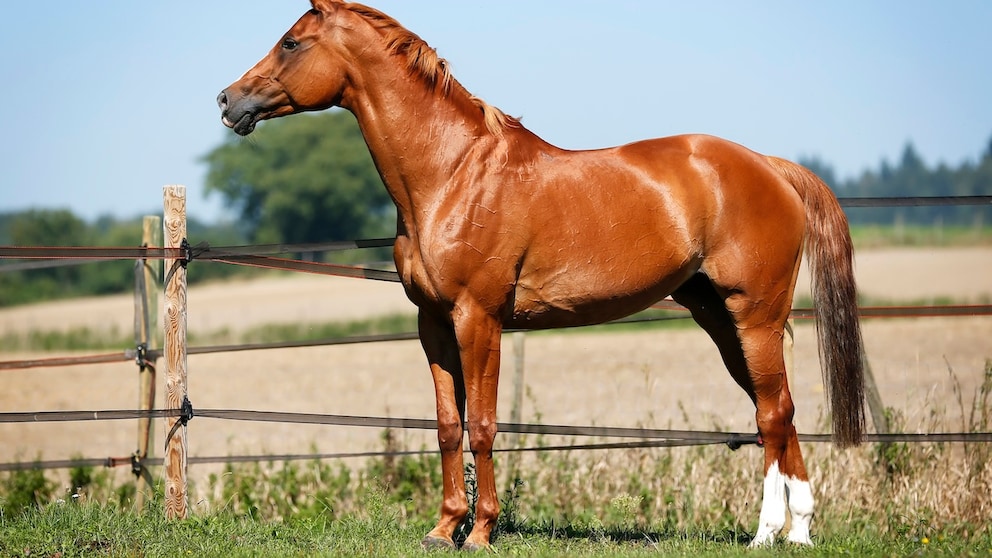
The Trakehner is considered the epitome of the noble sport horse: elegant, motivated, and harmoniously built. With a height of about 150 to 170 centimeters, it is among the medium-sized warmbloods. Particularly striking are the long, finely arched neck and the well-muscled hindquarters, which give it an appearance of dynamism and expression. Additionally, its long, slender legs emphasize the sporty type and provide a springy, ground-covering gait. The head also features a distinctive characteristic: it usually has a straight to slightly concave profile line and large, alert eyes, giving it an attentive expression.
In terms of coat colors, the breed is versatile: chestnuts, bays, and blacks are most common. In contrast, pintos are rare. Additionally, the mane and tail are usually fine and silky rather than particularly lush.
Character & Temperament
Trakehners are primarily known for their athletic talent and great willingness to perform. There is hardly a discipline in which they do not excel: In dressage, they impress with elegance and expansive movements, while in show jumping, they are quick, attentive, and agile.
At the same time, they have a reputation for not being entirely uncomplicated—mainly due to their high percentage of Thoroughbred blood. Many riders describe the “Trakehner character” as sensitive and spirited. They respond well to aids, quickly perceive moods, and require calm, confident leadership. Those who handle their horse sensitively and possess the necessary empathy, as with all other horses, will find a close friend in Trakehners.
Gait & Discipline
With their expansive movements, Trakehners are highly sought after in sports. They are also regularly seen at dressage competitions—here they impress with elegance, rhythm, and expression. Overall, the breed is considered a versatile all-rounder and is also popular with recreational riders.
The hallmark of the breed is its gait. Their expansive and springy gaits are often praised. They carry themselves with verve and have a rhythmically secure gait.
Proper Care & Maintenance
Like all horses, Trakehners need plenty of exercise and contact with their peers. As social herd animals, they should be kept in groups with daily access to pasture or paddock.
Daily care includes thorough grooming before training as well as regular checking and palpating of legs, joints, and hooves. This helps to detect swelling, minor injuries, or warmth early on. Regular hoof care by a farrier is also important at set intervals.
A clean environment significantly contributes to health: stalls or open stables should be mucked out daily so that the horses stand dry and hygienically, preventing diseases such as mud fever.
Why the Barb Is the Oldest Horse Breed in the World
The “Golden” Horse Breed: The Kinsky Horse
Nutrition
When feeding horses, owners must be aware that horses need constant access to roughage. Even if horses have grazed all day in the pasture, there must always be enough hay available in the stall or open stable in the evening.
If your horse is exercised a lot, it is advisable to consult your veterinarian about the possible supplementation of concentrated feed.
Susceptibility to Certain Diseases
Some diseases occur somewhat more frequently in Trakehners, including mud fever, colic, laminitis, or ear infections. Triggers are often errors in husbandry and feeding, such as too much sugar and starch, obesity, lack of exercise, or stress. Therefore, appropriate husbandry and feeding are particularly important.
In recent years, hereditary muscle integrity myopathy (MIM, formerly PSSM2) has also been in focus. This genetic muscle disease can impair performance. Various breeding associations therefore rely on genetic testing to identify affected animals early and maintain the breed’s health in the long term.
Trakehner at a Glance:
- Character: alert, curious, eager to learn
- Height: 150–170 centimeters
- Coat color: all, mostly chestnut, bay, or black
- Gait: spirited, springy
- Discipline: English, primarily dressage
- Special features: alongside Lipizzaners, the only breed recognized as an intangible cultural heritage