

April 17, 2026, 3:46 am | Read time: 4 minutes
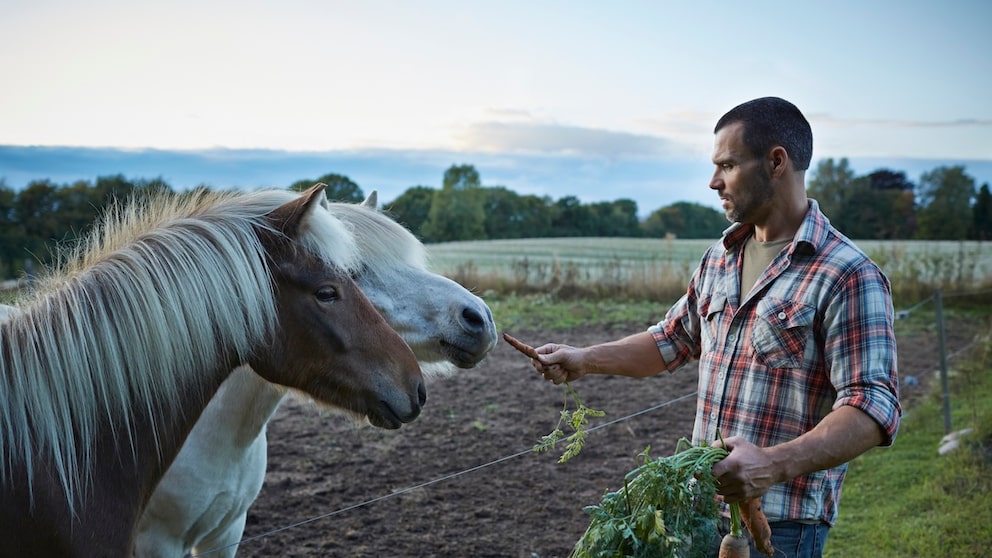
A friendly reach into the pocket, a piece of carrot over the fence—what seems like a harmless gesture to many walkers can have dramatic consequences for horses. Despite clear prohibition signs, animals in pastures are repeatedly fed without permission. The risks behind this are significant—and in the worst case, can lead to the death of the animals.
Overview
Improper Feeding Makes Horses Sick
The health of horses largely depends on how they are fed. Improper feeding can lead to various health problems and behavioral issues. Stomach ulcers or colic—severe abdominal pain caused by digestive disorders—means intense pain for horses and can be life-threatening. This includes intestinal displacements and bloating, where gases accumulate in the digestive tract.
The diet of horses consists of three main components: high-fiber roughage such as grass, hay, or straw; energy-rich concentrate like grains; and so-called succulent feed, such as fruits and vegetables.
Seemingly Harmless Foods Can Be Dangerous for Horses
Household vegetables like apples or carrots, and even grass, could theoretically be fed to horses. However, foods considered safe for horses can still be dangerous. “Even if you think it’s harmless, the horses could suffer from health problems or allergies,” explains Dr. Jo Hockenhull, a scientist at the University of Bristol’s veterinary school, in a university press release.
Unchewed pieces of fruit or vegetables can also lead to esophageal blockages. Besides the uncontrollable amount of feed, quality plays an important role, as moldy bread is often fed. Therefore, even seemingly harmless foods should not be offered to the animals without permission. Additionally, feeding in a herd can lead to unrest and even disputes among the horses. Possible injuries to horses and humans should also be considered.

Is It Safe to Feed Carrots With Black Spots?

Why Horses Love Carrots So Much
Almost a Third of Horses Fall Ill Due to Unauthorized Feeding
Existing data on the health of horses when fed by strangers highlights the problem. A 2021 survey by the British Horse Society and the University of Bristol’s veterinary school found that unauthorized feeding of horses led to severe injuries, illnesses, and in some cases, even the death of the animals. 1
More than a quarter of the 1,017 horse owners surveyed reported that their animals were fed without their permission. Of these horses, almost a third fell ill as a result of unauthorized feeding. Half of the sick horses required veterinary treatment, and a third did not fully recover. Another alarming result of the survey: 16 percent of the sick animals died or had to be euthanized. 2
Horses Are Property, and Damaging Them Is Punishable
In Germany, horses are legally considered property, and damaging them is punishable. This is illustrated by a court ruling from 2008. The Karlsruhe Higher Regional Court fined the defendant several thousand euros after he fed three horses without permission. He gave the animals fresh hay, and the following day they suffered from severe colic. Two horses survived, but a pregnant mare and her unborn foal had to be euthanized.3
The defendant claimed to have acted unknowingly, while the horse owner pointed out that signs on the stalls clearly prohibited feeding the horses. In this case, the court referred to Section 823 of the German Civil Code (BGB) on liability for damages and found the defendant guilty. However, potential fines and the preventable death of the animals should not be the only deterrents against unauthorized feeding of horses.4
A brief moment of carelessness can be fatal for a horse. Therefore, no matter how well-intentioned, strangers should never feed horses without permission.