

December 21, 2025, 2:47 pm | Read time: 4 minutes
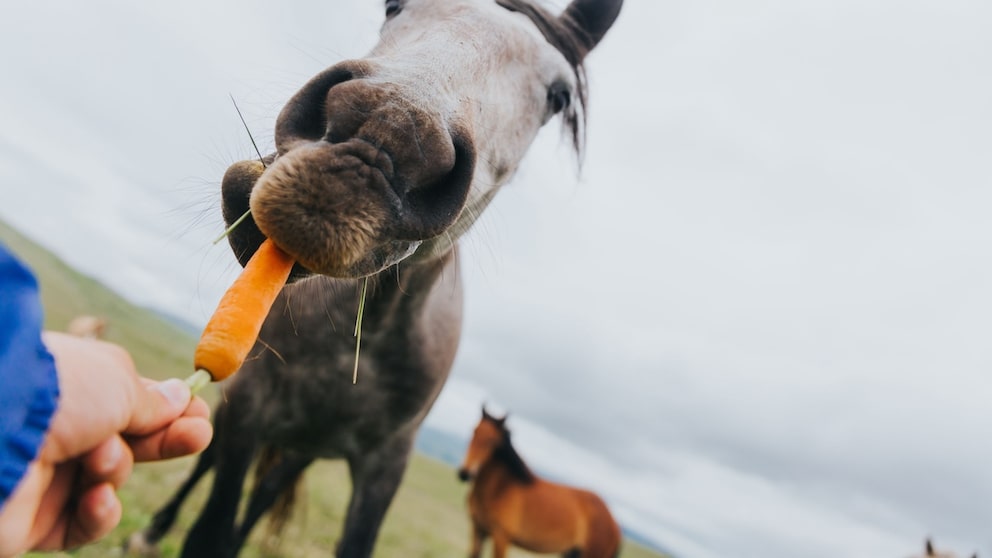
Why do horses love carrots so much? Anyone who has ever pulled a crunchy carrot out of their pocket in the stable knows: Few other animals perk up their ears as quickly as a horse. But why carrots in particular? PETBOOK provides an overview.
What Horses Actually Eat
What does a horse actually eat? If horse owners had to answer this question, they probably wouldn’t know where to start or stop. Horses don’t just eat grass or hay—their diet is much more varied than one might think. Here’s a brief overview of what a horse actually needs. A horse’s diet is divided into three main components:
- Roughage: fiber-rich hay, straw, or grass
- Concentrates: oats, corn, barley
- Succulents: carrots, apples, pears
In addition to these components, mineral and individual supplementary feeds are often added.
Horses should always have an adequate amount of roughage available. Unlike us, they don’t follow three main meals. They have a small stomach that can’t hold much food, so they need to consume several smaller amounts of roughage throughout the day. However, when feeding concentrates, mineral feed, and supplements, it’s advisable to feed at the same times daily. 1,2
Why Horses Prefer Sweets
Horses have an excellent sense of smell and taste. Their tongues have various taste receptors that allow them to detect sweet, salty, sour, and bitter flavors. In a study from 2013, researchers found that horses even react with different facial expressions to bitter and sweet tastes.
In everyday life, owners will also notice that horses particularly enjoy sweet things. This isn’t just about taste: Sweet aromas instinctively signal to horses that the food is energy-rich and safe—a leftover from evolution, where ripe, sweet-tasting plants were often nutrient-rich and non-toxic. In contrast, poisonous plants often contain bitter substances that signal to the horse that it should avoid eating them. 3
Horses also have an excellent sense of smell, and if there’s a hint of carrot, apple, or even banana in the air, some might even get a bit greedy. Carrots are one of the most common snacks for horses. Although many might associate carrots with savory dishes, the root vegetable actually tastes rather sweet. For horses, a carrot is like a piece of chocolate. 4,5,6
Are Carrots Healthy for Horses?
Carrots contain important nutrients for horses, including beta-carotene, which the horse’s body converts into vitamin A. This vitamin is important for the mucous membranes, eyes, and immune system of horses.
Especially in winter, more vitamin-rich succulents, including carrots, are fed because the animals eat more dried hay instead of fresh grass. Unlike grass, hay has fewer vitamins and minerals, which the horse relies on. 7

How Much Hay a Horse Consumes Per Day

Well-Intentioned but Deadly: Why Feeding Horses Is Prohibited
How Many Carrots Can Horses Eat?
Carrots can generally have a positive impact on a horse’s body. However, there are some things owners should consider when feeding them. Carrots contain about four to nine percent sugar. If the root vegetable is fed in moderation, this isn’t a big problem. Still, owners of horses with laminitis or Cushing’s disease should be mindful of how much they feed their animals.
Depending on their size and weight, horses can eat up to two to three kilograms of carrots per day. It’s important to feed only the carrot without the greens. The reason is the cyanide content. Although it’s only present in small amounts in the carrot greens, it should still be removed. Additionally, owners should clean the carrots thoroughly to ensure no dirt is present, preventing sand colic. 8
Why Chopped Carrots Can Be Dangerous
Why shouldn’t carrots be chopped into small pieces? The answer lies in the anatomy of horses. When a horse eats, the food is transported to the stomach via the esophagus. The esophagus is long and quite narrow, so horses chew their food thoroughly and mix it with saliva, as liquid food is easier to transport and process. With particularly small carrot pieces, some horses tend to swallow them without chewing. In such cases, an esophageal obstruction can occur, which can be life-threatening for horses.