

November 19, 2026, 12:11 pm | Read time: 4 minutes
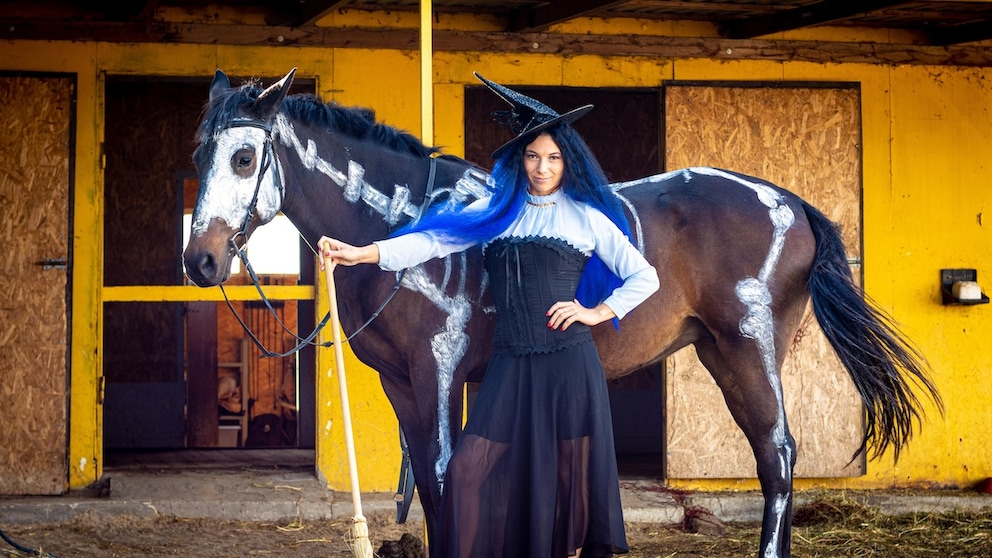
During Carnival or Halloween, some people paint their horses with finger paint. It’s especially popular to paint a skeleton motif on the animal for Halloween. But is painting a horse really a good idea? Are there specific paints that horse enthusiasts can use without worry? PETBOOK addresses these questions.
Painting a Horse Colorfully–Yes or No?
This question is quite divisive. While some see it as a harmless activity, others consider painting a horse to be inappropriate. After all, at first glance, the animal primarily serves the amusement of humans. It’s particularly criticized when a horse has to stand still for a long time, is painted by several people at once, or its reactions are not taken seriously.
Also interesting: Do horses really see the world seven times larger?
However, the question isn’t that easy to answer. Paint on the coat doesn’t automatically mean a horse is suffering. What’s more important is how the painting is done and how the individual animal reacts. Some horses can be groomed and touched for extended periods without stress, while others dislike certain touches altogether.
Therefore, the focus should not be on the finished artwork but always on how the horse is feeling. Time and environment also play a role: A quick painting in a familiar, calm setting is different from when the horse has to stand still for a long time surrounded by a group.
What Paint is Suitable for Painting a Horse?
If you want to paint a skeleton on your horse for Halloween or some colorful patterns for Carnival, you should pay close attention to the choice of paint. It should be non-toxic, skin-friendly, and as easy to wash or brush out as possible. Many horse owners use finger paint. But there are also special equine supplies that sell suitable paint.
Also interesting: Do you know where the fetlocks are on a horse?
Most importantly, paint can come into contact with more than just the skin. Horses nibble on each other during grooming and can ingest components through their mouths. Therefore, the paint should be removed before the next pasture outing. For horses with sensitive skin, known allergies, or skin issues, it’s better to avoid painting altogether.
Areas Horse Owners Should Not Paint
Even with suitable paint, not the entire horse body is a canvas. Eyes and nostrils, as well as mucous membranes and other particularly sensitive areas, should be generously avoided. This includes the insides of the ears. Especially with the popular Halloween skeleton, it’s better to skip some details if the drawing would come too close to a sensitive area.
How Mauke Develops in Horses and What Owners Should Know

Does Your Cat Groom Itself After Being Petted? Here’s What It Really Means
How Do I Know If My Horse Has Had Enough?
This requires knowledge of horses. Owners should pay attention to their animal’s body language throughout the activity. If the horse shows discomfort or tries to escape the situation, the painting should be stopped.
Also interesting: Horses can actually smell our fear
One should not wait until a horse clearly shakes its head or threatens to take it seriously. Even smaller changes in its behavior can indicate that it no longer finds the situation pleasant.
Special caution is required with children. They should never paint a horse without supervision. Additionally, the group should remain as small as possible so the animal isn’t touched and crowded from multiple sides at once.
Painting a Horse–Yes or No?
There is no outright ban, and a little paint on the coat doesn’t constitute animal cruelty. However, it’s not a free pass either. Whether you should paint your horse depends mainly on the individual animal and the situation. If the horse remains calm, only suitable paint is used, and sensitive areas are avoided, there’s more in favor than against it, especially for a horse that doesn’t mind being touched.
And at the latest, when the horse signals it’s had enough, even the most elaborate Halloween skeleton should remain unfinished. The horse’s well-being always takes precedence over the perfect photo.