

June 26, 2026, 2:56 pm | Read time: 4 minutes
When temperatures rise, so do the water requirements of horses. But how much does a horse actually drink in a day? And how can you tell when heat and lack of fluids become a problem?
How Much Water Does a Horse Drink in a Day?
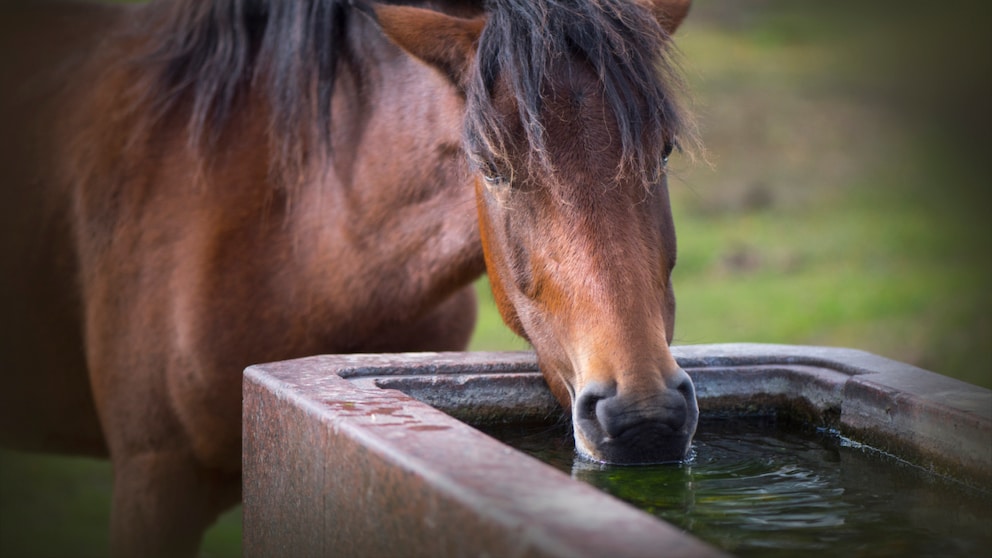
Especially in summer, sufficient water is crucial for horses. After all, their bodies are composed of about 50 to 70 percent water. However, it’s not easy to give a one-size-fits-all answer to how much a horse should drink daily. The requirement depends on factors such as the animal’s size, diet, outside temperatures, and physical activity.1
As a rule of thumb: A horse needs about five liters of water per 100 kilograms of body weight per day. So, a 600-kilogram horse should drink at least around 30 liters. Many animals consume between 30 and 50 liters daily, some even up to 70 liters.2
Diet also affects water needs. Horses that eat a lot of fresh grass already get some of their fluids from food. When fed mostly hay, they need to drink more accordingly.
How Much Water Does a Horse Need in Summer?
As temperatures rise, so does the need for fluids. Just a few degrees more can lead to horses needing significantly more water. Especially when they sweat, they lose a lot of fluids that need to be replenished.
Also interesting: Did You Know? Why Horses Sweat Foam
Therefore, horses should always have access to fresh water on hot days, as they should at all times. It’s also important to regularly check water troughs for cleanliness and functionality.3
How Can I Tell if My Horse Has Drunk Too Little?
Whether a horse is adequately hydrated can be checked with the so-called skin pinch test. To do this, gently lift a fold of skin on the neck or in front of the shoulder blade and let it go.
In a well-hydrated horse, the skin smooths out within about two seconds. If the fold remains longer, it may indicate a lack of fluids. However, in older horses, the test is only partially reliable, as their skin loses elasticity with age. Dry or pale mucous membranes can also indicate dehydration.
If a horse consistently drinks too little, various causes may be behind it. Often, dirty water troughs, insufficient water from automatic drinkers, or unfamiliar-tasting water are the reasons. In open stables, the hierarchy can also lead to lower-ranking animals having less access to water.
Also interesting: Plants Horse Owners Should Protect Their Animals From
Did You Know? Why Horses Sweat Foam

Can Cats Sweat?
How Do I Best Cool My Horse in Summer?
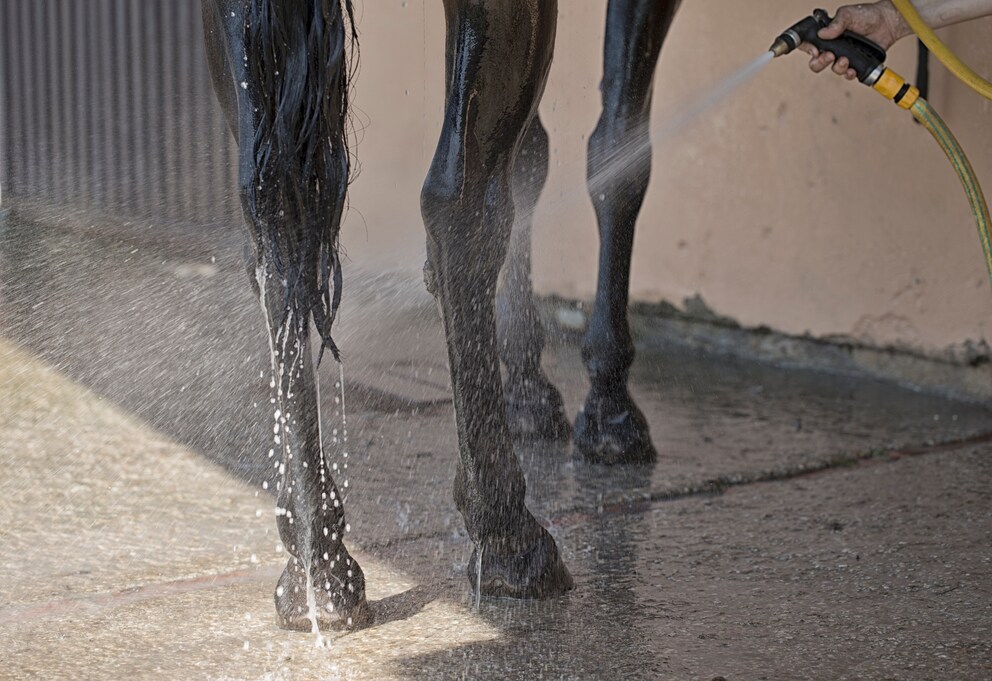
On hot days, regular hosing down can help lower body temperature. However, it’s important to squeegee off the water afterward. Only then can the cooling effect of evaporation take place. If water remains in the coat, heat can build up underneath.
If the horse has been working, it should first cool down at a walk for a few minutes before being hosed down. Start cooling at the legs and gradually move to the chest and croup. A soft water stream and cool water are recommended.
It’s different in an acute heat emergency: If a horse shows clear signs of overheating, its body temperature should be lowered as quickly as possible, and a veterinarian should be contacted. The German Equestrian Federation recommends in this case to pour large amounts of cold water over the entire body.4
Checklist: The Most Important Tips
- Cool legs first, then chest and croup.
- Use cool, but not ice-cold water.
- Use a soft water stream instead of a hard one.
- Avoid the head as much as possible.
- Squeegee off the water afterward.
- Repeat the process several times in extreme heat.
When Should I Call a Veterinarian?
Generally, healthy horses regulate their water intake themselves. On hot days or after physical exertion, they often drink larger amounts to compensate for fluid loss.
It becomes problematic, however, if a horse drinks little despite the heat or shows additional signs such as dry mucous membranes, a skin fold that remains, apathy, staggering, or lack of sweating. In such cases, a veterinarian should be contacted immediately.