

September 9, 2026, 4:03 am | Read time: 3 minutes
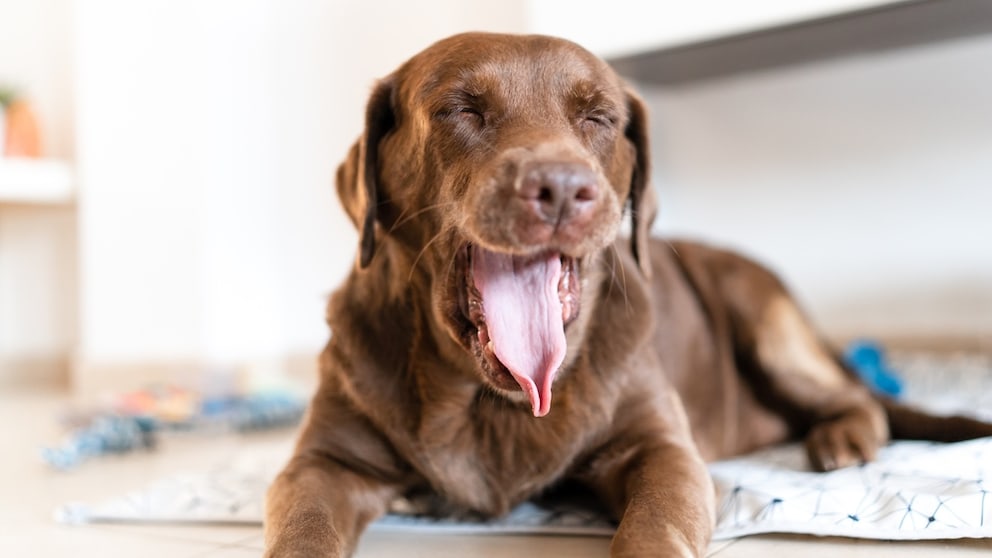
Dogs don’t just yawn right before falling asleep. Many owners observe this behavior during walks, in encounters with other dogs, or even when interacting with people. But what’s behind it? Researchers and dog behavior experts have been exploring this question for years. It’s clear: Yawning in dogs apparently serves more than just one purpose. The role it plays and what dog owners can infer from it is the subject of various theories and studies.
Overview
Do Dogs Yawn Out of Empathy?
Years ago, science delved deeply into whether dogs can be prompted to yawn by their owners. A study in 2013 demonstrated that dogs yawn contagiously when their owner yawns. Since the dogs only exhibited this behavior when they knew the yawning person, researchers concluded that the reason for contagious yawning might be rudimentary forms of empathy.
Swedish scientists found in their studies, however, that the emotional closeness to the yawning person does not affect the strength of the contagion in dogs. A study by New Zealand researchers in 2020 also concluded that contagious yawning is not a signal of empathy. Even if dogs mimic a human’s yawn, it does not equate to empathy toward humans, the scientists wrote.
Contagious yawning does exist, but it cannot be attributed to empathy. This assumption is also supported by dog trainer and behavioral biologist Ariane Ullrich. She considers targeted “contagious yawning” by dogs to be unlikely.
Also interesting: How dogs show they feel threatened
Yawning as a Calming Signal
Dogs naturally display the body signal of yawning not only in their interactions with humans. It is an important part of communication among dogs. When several (unfamiliar) dogs meet, a conflict can arise. In such cases, yawning is used as a calming gesture, explains dog trainer Amy Bender for “The Spruce Pets.” If a dog is very dominant, other, more passive animals signal that they pose no threat. Dogs use yawning as a measure to de-escalate a situation with their peers.
Dogs Yawn to Relieve Stress
Latent stressful situations can also trigger dogs to open their mouths wide and take a deep breath. A Japanese study from 2013 supports this thesis. Sudden, loud traffic noise in the city or other stressors can lead to stress in dogs and trigger yawning. Yawning can thus be used both to relieve stress and to calm peers.

Your Dog Brings Toys? Here’s What’s Behind This Behavior

Did You Know? Cats Meow More at Men
Yawning as a Displacement Activity?
When dogs find themselves in situations they cannot immediately assess and feel overwhelmed, yawning may follow. This reaction occurs unconsciously in this context, explains dog trainer and behavioral biologist Ariane Ullrich upon request from PETBOOK. The dog’s body assesses what to do in that moment. This happens in situations where the dog’s decision involves two rather opposing behaviors, such as choosing between fleeing and attacking. “Then it can happen that a completely different behavior emerges, like yawning.”
Dogs Also Yawn When They’re Happy
Dogs don’t just react with wide-open mouths due to stress or being overwhelmed. They can also express joy this way. An example is an upcoming walk, to which the dog responds not only with tail wagging and excited pacing but also with yawning. If the dog was home alone and greets its owner joyfully upon their return, yawning can also occur as a reaction.