

April 28, 2026, 8:57 am | Read time: 6 minutes
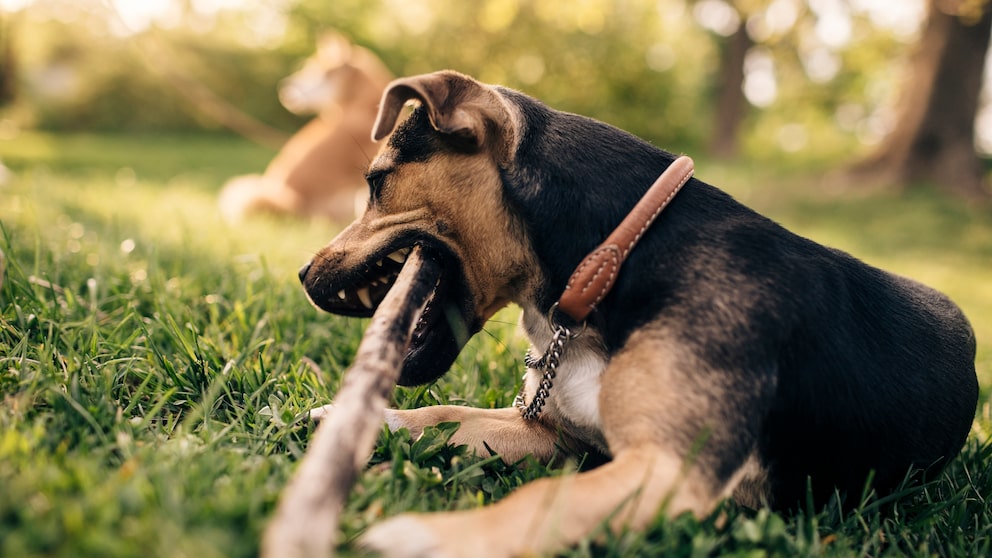
Many dogs enthusiastically carry sticks through the park, gnaw on branches, or break wood with visible joy. While this behavior seems harmless at first glance, it is not entirely without risk: Wood can splinter, get stuck in the mouth, or cause injuries in the digestive tract if swallowed. This can lead to dangerous consequences.
Why Does My Dog Eat Wood?
It’s not unusual for dogs to chew on wood or sticks. Chewing is part of their natural behavior. It helps them explore their environment, relieve excitement, and keep themselves occupied. It becomes critical when the dog not only gnaws but also swallows wood or exhibits this behavior very frequently.
What’s Behind Your Dog Eating Wood?
There are various reasons why dogs might be particularly interested in wood. It’s not always something serious. However, owners should keep an eye on this behavior. Caution is especially advised if the dog regularly eats wood instead of just chewing on it.1
Boredom
Some dogs chew on wood because they lack engagement. Especially active or mentally under-stimulated animals then find a task for themselves. Chewing often serves as a vent for excess energy in such cases.
Teething in Puppies
When puppies are teething, they particularly enjoy chewing on hard objects. The teeth cause itching or a pressure sensation before breaking through the gums. Chewing provides relief for puppies. Chewing on sticks can be risky because splinters can injure the sensitive mouth.
Stress or Anxiety
Some dogs chew on objects to calm themselves in stressful situations. This can occur with separation anxiety, insecurity, or general nervousness.
Attention
The owner can also play a crucial role. If the owner reacts strongly whenever the dog has a stick in its mouth, the dog learns that the behavior is rewarding. For some dogs, chewing on wood becomes a strategy to get attention.
Instinct and Curiosity
Wood smells interesting, feels exciting, and is almost everywhere. Sticks, bark, and twigs particularly encourage many dogs to engage with them. This interest is often simply part of their natural exploratory behavior.
Pica Syndrome
If a dog not only chews on a piece of wood but also actually swallows it, the so-called Pica Syndrome might be behind it. In this eating disorder, dogs repeatedly ingest non-food items like wood, soil, fabric, or feces. Causes can include behavioral problems such as stress, under-stimulation, anxiety, or physical triggers.2
Possible Health Causes
In some cases, medical issues are behind the eating of wood, such as gastrointestinal diseases, metabolic disorders, or other health complaints. If additional symptoms occur or the dog regularly eats other indigestible items, a veterinarian should be consulted.
Is It Dangerous If a Dog Eats Wood?
Yes, eating wood can be dangerous for dogs. While simply carrying a stick seems harmless, chewing—and especially swallowing wood—poses several risks. Splinters can lodge in the mouth and cause injuries in the throat, stomach, and intestines.
Additionally, teeth can be damaged. Dogs that regularly chew on hard, unsuitable objects risk worn-down or even broken teeth. Some wood pieces can also get stuck sideways in the mouth or between the teeth without the dog immediately showing obvious pain.3
What Happens If a Dog Swallows Wood?
Small wood pieces can sometimes pass through the digestive tract without causing major problems. They are simply excreted after a while. However, there is always the risk that splinters will injure the mucous membranes or larger pieces will get stuck in the esophagus, stomach, or intestines. In the worst case, this can lead to internal injuries, bleeding, or a bowel obstruction.
The risk of poisoning should not be underestimated either. Some woods come from plants that can be problematic for dogs. It becomes even more concerning if treated, painted, or otherwise contaminated wood is chewed. Even if the dog initially seems relatively unaffected, such situations should be taken seriously, and the dog should be monitored.
When Should I Take My Dog to the Vet?
If the dog has swallowed wood and subsequently shows symptoms, a veterinarian should be consulted. Signs include gagging, coughing, excessive drooling, vomiting, loss of appetite, pain, blood in the mouth, or noticeable problems with bowel movements. If the dog paws at its mouth, seems unusually quiet, or develops bad-smelling breath, it should be checked out.
The situation is particularly acute if the dog is experiencing difficulty breathing, has obviously swallowed something, or a foreign object is stuck in the mouth, throat, or neck area. Such cases require immediate veterinary attention. Do not attempt to remove wood pieces stuck sideways in the mouth or deep in the throat yourself.

When Dogs Suddenly Eat Objects: Causes and Treatment of Pica Syndrome

Why Some Cats Like to Lick Plastic
How Can I Stop My Dog from Eating Wood?
To stop your dog from eating wood, you should first identify the cause. If the dog chews out of boredom, exercise, mental stimulation, and joint activities can help. If the behavior is due to stress or insecurity, these issues should be addressed rather than just taking the stick away.
In everyday life, it helps to accompany the dog outside attentively and intervene in time before it starts chewing. A swap for something more attractive, such as a treat or a suitable toy, has proven effective. This way, the dog learns that it’s worth giving up the found stick. But be careful: The dog can also adopt this behavior.
If physical causes are ruled out, support from a dog trainer or behavior therapist can help, depending on the case. It’s important not to inadvertently reinforce the behavior. Excitement, chasing, or scolding can make the stick even more interesting for many dogs.
What Alternatives to Sticks Are There?
If your dog eats wood, you can offer a good alternative. This includes safe, robust chew snacks or toys specifically designed for pets. Depending on the dog, toys that can be filled with food or dental care chew items may also be useful. For puppies teething, products that allow chewing without risking splinters in the mouth, such as coffee wood, are suitable.4
It’s important that the material is durable and suitable for dogs. Anything that can be easily bitten and swallowed is not a good alternative. Even with chew toys, it’s best to supervise.