


November 25, 2025, 4:03 pm | Read time: 5 minutes
At home, socks, tissues, or plastic scraps disappear—and later they never reappear? Many pet owners underestimate such scenes: Not only chewing but especially the intentional swallowing of non-food items can indicate the so-called Pica syndrome in dogs. The consequences range from gastrointestinal irritations to life-threatening intestinal blockages. PETBOOK explains how this happens, what signs to look for, and what treatments help.
Overview
What is Pica Syndrome?
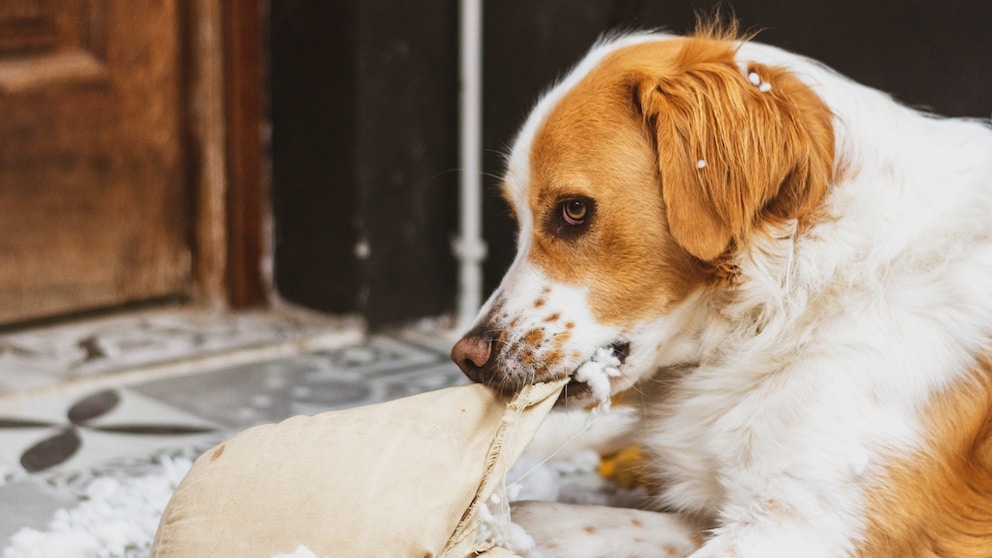
Pica describes the repeated eating of non-edible substances such as plastic, fabric, paper, soil, stones, metal, wood, trash, or even feces. Some dogs swallow “everything,” while others have preferences—often items with the owner’s scent, such as underwear, socks, or wet wipes.1
Causes of Pica in Dogs
Pica can be a symptom of an underlying condition. Commonly involved are chronic gastrointestinal diseases (chronic enteropathy/IBD), parasites (such as Giardia), malabsorption with nutrient deficiencies (such as cobalamin/vitamin B12, iron), liver diseases up to portosystemic shunts, pancreatic diseases, endocrine disorders (such as diabetes mellitus), and anemia. Medications like phenobarbital, used for epilepsy, can increase appetite and may promote Pica.2
Often, stress, anxiety, including separation anxiety, boredom, or under-stimulation are the underlying causes. What starts as nibbling on objects can end in swallowing. Additionally, Pica can persist as so-called attention-seeking behavior. This means the dog steals an object and receives attention or provokes a specific reaction.3
Recognizing Symptoms
Initial warning signs include visible eating of non-food items or repeatedly missing objects. This leads to complications in the digestive tract, which manifest through the following symptoms: 4
- Vomiting, diarrhea, or inconsistent stool
- Loss of appetite or paradoxical ravenous hunger, weight changes
- Mouth problems: broken teeth, mouth pain, halitosis
- Abdominal issues: bloating, pain (curved posture, guarding), lethargy
- Signs of foreign body/obstruction: repeated vomiting, tenesmus (unsuccessful straining), little to no stool, tarry black stool, excessive drooling, retching/gagging
- In severe cases: coughing, breathing problems (bluish mucous membranes), signs of poisoning depending on the material (such as batteries, cleaning agents)
Warning: Persistent vomiting, severe abdominal pain, a bloated or hard abdomen, as well as lethargy and lack of stool, require immediate veterinary attention.
Diagnosis and Treatment of Pica in Dogs
If “Pica” is suspected, the veterinarian first takes a medical history. This includes questions like “What?,” “How much?,” and “When swallowed?” as well as accompanying symptoms, feeding, or possible stressors.
Next, a typical basic diagnostic follows with:
- Complete blood count (CBC), serum chemistry, urinalysis
- Stool examination for parasites/pathogens
- For GI suspicion: Cobalamin (Vit. B12), possibly folic acid; assessment of iron and other nutrients
- Imaging: X-ray (radiopaque foreign bodies), ultrasound (non-radiopaque objects, intestinal wall), endoscopy (diagnosis/removal), or CT if needed
- For chronic cases: Investigation of chronic enteropathy/IBD, liver/pancreatic issues, endocrine causes
How Pica is Treated
The treatment of Pica in dogs follows a clear principle: Possible medical causes must be thoroughly investigated and treated before pure behavioral management is sensible. If the dog has ingested a foreign object, the approach depends on the type, location, and size of the item. Many objects can be removed endoscopically, but in other cases, surgical intervention is necessary. An intestinal blockage is always an emergency that requires immediate veterinary care.
If an underlying condition is present, its therapy takes precedence. This includes anti-inflammatory measures or a special diet for chronic intestinal inflammation, deworming in case of parasite infestation, targeted liver treatment, or correction of nutrient deficiencies like vitamin B12 or iron.
If Pica is behavior-related, treatment primarily involves stress reduction, a structured daily routine, and redirecting to safe chewing behavior. Dogs should be mentally and physically engaged—such as through food puzzles, search games, or scent work. Outdoors, leash guidance or, if necessary, a muzzle can help prevent the ingestion of foreign objects.5
For particularly pronounced or compulsive behavior, behavioral therapy may be advisable, possibly accompanied by a specialized veterinarian or behavior therapist. In severe cases, medications such as selective serotonin reuptake inhibitors (SSRIs) or tricyclic antidepressants can be used, always in combination with targeted training.6
Prevention in Everyday Life
Supporting therapy involves consistent management in daily life. A “Pica-safe” environment is crucial: Laundry, trash, cords, plastic bags, and other swallowable small items should be kept out of reach. In risk situations, such as walks or when the dog is unsupervised, wearing a muzzle can be advisable. In general, consistent supervision and preventive safety measures are the foundation for avoiding relapses. These include:
- Secure the environment: Remove potential “prey,” close trash bins, keep laundry/wet wipes out of reach, exercise caution with batteries, medications, cleaners, and threads/cords.
- Structure & engagement: Fixed daily routines, sufficient exercise, and mental stimulation (several short, intensive sessions daily).
- Offer alternatives: Safe chew toys with varying textures; reward calm, desired chewing, and search behavior.
- Training: Develop “Drop it,” “Give,” “Leave it”; avoid unintentionally reinforcing attention through chase games around forbidden objects.
- Optimize feeding: Balanced complete foods, if needed, several smaller meals, food puzzles for satiety and engagement; avoid deficiencies in diets, especially in young animals.
- Early intervention: Accustom puppies early to appropriate chewing behavior and controlled environmental stimuli; calmly interrupt misbehavior without punishment.
- Documentation: Note incidents (type, time, trigger)—helpful for veterinary/therapeutic planning.

Why Some Cats Like to Lick Plastic

Your Dog Eats Wood? When It Becomes Dangerous
When to See a Vet?
For repeated Pica, always initiate basic diagnostics. If you suspect the dog has swallowed toxic substances, threads, or cords, or shows persistent vomiting, severe abdominal pain, lack of stool, or marked lethargy, you must see a vet immediately.7
Conclusion: Pica Requires Consistent Long-Term Management
Pica is more than a bad habit: Medical and behavioral factors often overlap. The prognosis depends on the cause. If there is a treatable trigger (parasites, enteropathy, deficiency), the chances are good. Purely behavior-related Pica requires consistent long-term management–relapses are possible. A multidisciplinary approach involving veterinary medicine, behavioral therapy, and consistent owner participation, as well as a safe environment, is crucial.