

October 6, 2025, 4:52 am | Read time: 5 minutes
The Irish Water Spaniel is not a dog for everyone—but it’s a well-kept secret for active people with a knack for dogs. With its elegant appearance, curly coat, and distinctive “rat tail,” it stands out from other spaniel breeds. But it’s not just its looks that are unique: Its playful nature, combined with intelligence and a passion for hunting, makes it an exciting companion.
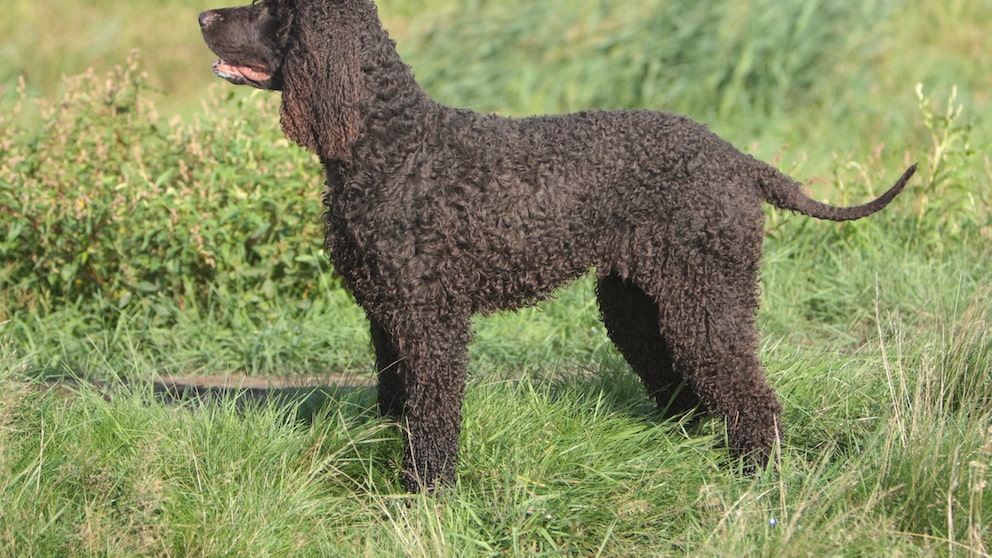
With its long legs, dense, oily curly coat, and smooth, rat-like tail, the Irish Water Spaniel visually resembles a mix of poodle and retriever—a lineage that experts also suspect genetically. In Ireland, hunters specifically used it as an excellent retriever for waterfowl hunting and continued to breed it accordingly.
Today, it is considered a powerful yet headstrong companion that requires engagement and consistent leadership. Its friendliness, humor, and endurance make it a loyal family member—if you’re willing to embrace it.
Origin
The origins of the Irish Water Spaniel go back a long way, but they are not clearly documented historically. It is believed that the ancestors of the current breed came to Ireland from the Middle East via Spain. As early as 1600, there are reports of Irish water dogs used for hunting waterfowl—long before the invention of the shotgun. Its unique feature was and is its smooth, hairless tail, known as the “rat tail.” This peculiarity suggests that the modern Irish Water Spaniel descends from old, native dog breeds.
In the second half of the 19th century, the targeted breeding of these dogs gained momentum. The first Irish Water Spaniel known by name was born in 1834 and was owned by Justin McCarthy from Dublin, who is considered the founder of the modern breed. In 1862, it was recognized by the British Kennel Club. In 1954, it received international recognition from the FCI. Additionally, the Irish Water Spaniel Club was established in 1890 to further promote the breed. Today, the Irish Water Spaniel is extremely rare, especially in German-speaking regions.
Appearance & Coat
The Irish Water Spaniel is a medium-sized, robustly built dog with an elegant, upright posture. Males can reach a height of up to 59 cm at the withers. Its muscular, compact build is covered by a striking coat of dense, firm, naturally oily ringlets, covering the entire body, neck, ears, and legs.
The tail is particularly distinctive: It is thick at the base, tapering to a narrow, almost hairless tip—a clear distinguishing feature from other dog breeds. This so-called “whip tail” or “rat tail” is typical of the breed.
The coat color is a deep, dark liver red. White markings, especially on the chest, are undesirable. The eyes are almond-shaped and relatively small, and the long, floppy ears are covered with curls. Overall, the appearance resembles a mix of poodle and Curly Coated Retriever—an impression partially confirmed by genetic studies.
Character & Temperament
The Irish Water Spaniel is considered a spirited, intelligent, and humorous dog with an independent character. It is proud, eager to work, and has great endurance. Its high performance is particularly evident in retrieving, whether on land or in water. At the same time, it is playful and charming, earning it the reputation as the “clown among spaniels.”
Its close bond with its caregivers is expressed in loyalty and attachment. It often shows a playful and patient demeanor toward children. However, it remains rather reserved to suspicious toward strangers.
Due to its intelligence and independence, it needs clear but loving guidance. Nervousness or hyperactivity are foreign to it. If owners provide the Irish Water Spaniel with appropriate activity, it develops a balanced, people-oriented nature and proves to be a pleasant family dog with alertness and character.
Training
Training an Irish Water Spaniel requires experience, patience, and consistency. Due to its stubbornness, it may tend to make its own decisions; therefore, early socialization and consistent rules from the start are crucial.
Its high “will-to-please” makes it inclined to follow commands, but a firm hand is necessary. Early socialization and consistent rules from the start are crucial.
Attending a puppy school and later a dog school is highly recommended for this breed. It is also important to adhere to feeding times and include treats in the daily routine, as it has a strong hunting instinct. For dedicated dog owners with leadership skills, it is still manageable—even as an ambitious beginner dog with a willingness to learn.
Proper Care & Maintenance
The Irish Water Spaniel has a high energy and protein requirement, especially when active. Suitable options include high-quality dry or wet food, as well as BARF concepts with a high meat content. It is important to provide a balanced nutrient supply with high-quality proteins, healthy fats, and nutrients.

The American Water Spaniel Is Suitable for Hunting and Family
The Kerry Blue Terrier Tests the Patience of Its Owners
Susceptibility to Certain Diseases
The Irish Water Spaniel is generally considered a robust breed. However, there are indications of a certain susceptibility to hip dysplasia (HD), a common joint disease in medium-sized dogs.
Owners should carefully check the breeding history, as the small population size carries an increased risk of inbreeding. Regular veterinary check-ups, hip dysplasia X-rays for breeding animals, and genetic tests are recommended. Owners of dogs with floppy ears must pay special attention to ear care to prevent infections.
The Irish Water Spaniel at a Glance
- Character: intelligent, playful, eager to work, independent
- Size: 51–59 cm at the withers
- Coat: dense, curly, oily curls
- Coat: dense, curly, oily curls
- Tail: distinctive rat tail, rare breed with hunting origins