

September 21, 2025, 1:52 pm | Read time: 6 minutes
The Kerry Blue Terrier is more than just an attractive companion with an unusually silky, blue-gray coat—it is a true original among terriers. Intelligent, strong-willed, and with a storied history full of legends, this Irish breed combines a hunting dog mentality with family friendliness. But what really lies behind the distinctive charm of this rare dog?
The Kerry Blue Terrier, also known as the “Irish Blue Terrier,” is one of Ireland’s most characterful dog breeds. With its impressive appearance, dense, wavy coat, and spirited nature, it was originally valued as a versatile farm and hunting dog. Its tasks ranged from catching rats to flushing out otters and badgers to retrieving. Despite its robust working history, it is now primarily appreciated as a demanding family dog, known for its high intelligence and close bond with its people. At the same time, the Kerry Blue Terrier requires consistent training and intensive care—a dog that demands experience. Its rarity and unique coat color make it an eye-catcher, whose ownership should be well-considered.
Origin
The origins of the Kerry Blue Terrier are steeped in legend—one story in particular persists: A Spanish dog is said to have washed ashore on the Irish coast of Kerry after the sinking of a Spanish Armada ship. There, through dominant breeding, it laid the foundation for the breed. Various versions of this tale also mention Portuguese water dogs or Russian terrier breeds.
Less dramatic but more likely is the theory that the Kerry Blue Terrier was created through crossbreeding with the Irish Soft Coated Wheaten Terrier, Irish Terrier, and the now-extinct shepherd breed “Gadhar.” This mix would also explain its former use as a farm and hunting dog. Reliable in retrieving and effective in pest control, it was long a typical Irish all-purpose dog. The first written mention dates back to 1847, and in 1913, the Kerry Blue was first shown at exhibitions. The Irish Kennel Club officially recognized it the same year. Its status as a symbol of Irish independence contributed to its further spread. Since the 1940s, it has also been present in Germany, though it has always remained a rather rare breed.
Appearance & Coat
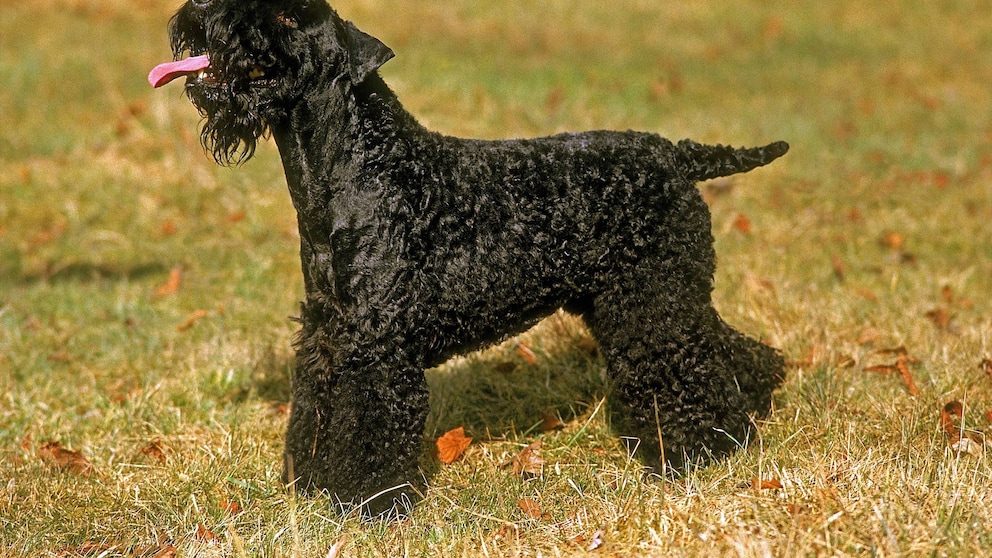
The Kerry Blue Terrier is a medium-sized, compactly built dog with strong muscles and a sporty appearance. Males reach a shoulder height of about 18 to 19 inches and weigh up to 37 pounds, while females tend to be slightly smaller and lighter. Particularly striking is the dense, soft coat, which ranges from wavy to curly structures. The color spectrum ranges from blue to slate gray—newborns are initially completely black. Only over the first few years does the typical blue tone develop, which can take up to three years to fully manifest.
Another feature is the ears, set close to the head and falling forward, which appear relatively small to medium-sized in relation to the head. The movement of the Kerry Blue is expansive and powerful: A straight backline, strong drive in the hindquarters, and coordinated forehand work still reveal its former working capability today.
Character & Temperament
As a typical terrier, the Kerry Blue has a confident and independent nature. It is considered attentive, brave, and intelligent—qualities that make it an excellent guard and family dog. It usually shows affection, loyalty, and cuddliness to its people, while being more reserved with strangers.
Its energy is remarkable: Kerry Blue Terriers need physical and mental stimulation, or they tend to develop behavioral issues. With children, it is patient and playful, provided it is well-socialized. However, its strong hunting instinct can become problematic—especially with small animals or when off-leash. Caution is also advised when dealing with other dogs, as the Kerry Blue Terrier occasionally tends to be dominant. Overall, it is a versatile but demanding breed for active, experienced dog owners.
Training
Training a Kerry Blue Terrier requires patience, consistency, and a good understanding of dog behavior. The breed’s pronounced independence demands clear rules that should be enforced from the start and consistently maintained. A loving but firm leadership is crucial to prevent the dog from appointing itself as the pack leader.
Early socialization and building a stable bond are essential, especially regarding its tendency toward territorial behavior and its strong hunting instinct. Training with a long leash is also recommended to maintain control during walks. The Kerry Blue is well-motivated by positive reinforcement but reacts sensitively to harshness or inconsistency.
Proper Care & Maintenance
The Kerry Blue Terrier is best suited for owners with ample space, time, and experience. Living in an apartment is only possible if the dog is sufficiently exercised multiple times a day. Ideally, it lives in a household with a garden where it can move freely. The Kerry Blue Terrier’s high need for exercise requires at least three walks per day, totaling about three hours, as well as regular dog sports like agility or retrieval training.
Coat care is demanding: Daily brushing after walks prevents matting and protects against skin problems. Additionally, the coat should be professionally trimmed every eight to twelve weeks. Due to the lack of shedding, the Kerry Blue is suitable for people with dog hair allergies—but only with consistent care.
Nutrition
The diet of the Kerry Blue Terrier should be high-quality, balanced, and tailored to its activity level. Particularly active dogs require more energy and protein, while less active dogs can quickly become overweight. Suitable options include both dry and wet food with a high meat content, supplemented by vegetables and essential fatty acids.
Alternatively, a raw diet, known as BARF (Biologically Appropriate Raw Food), can be used, consisting of raw meat, bones, vegetables, and oils. Expert advice from a veterinarian or pet store is essential to avoid nutritional deficiencies. Regular weight checks and age-appropriate food rationing are also important.

Why This Spaniel Is a True Unsung Hero

The Irish Red Setter Loves Exercise and Scent Work
Susceptibility to Certain Diseases
Although the Kerry Blue Terrier is generally considered robust, it is prone to certain health issues. These include eye infections, which can be exacerbated by long forehead hair. Skin problems, chronic ear infections, and allergic reactions are also relatively common.
Additionally, some members of the breed show a genetic predisposition to liver and kidney problems. Consistent care, regular veterinary check-ups, and monitoring for behavioral changes are therefore advisable. Cleaning the ears and trimming the facial area can also help prevent infections early on.
The Kerry Blue Terrier at a Glance
- Character: attentive, willing to work, strong-willed, loyal
- Size: Males approx. 18–19 inches; females slightly smaller
- Weight: up to 37 pounds
- Coat: dense, soft, wavy to curly
- Special Features: minimal shedding–suitable for allergy sufferers
- Exercise Needs: very high–ideal for dog sports