

September 29, 2025, 9:22 am | Read time: 5 minutes
The Wolfsspitz–also known internationally as the Keeshond–is one of Europe’s oldest dog breeds, impressing with its intelligent and alert nature. Despite its imposing appearance, it is a loyal family dog with plenty of charm and zest for life. However, this fluffy four-legged friend also has traits that may not suit every lifestyle. To understand it, one must know its roots and respect its independent character.
Origin
The Wolfsspitz originated in Germany, where it established itself as a reliable guard and farm dog. The breed belongs to the Spitz family, whose history dates back a long way. Archaeological finds suggest a resemblance to Stone Age peat dogs, whose remains were discovered, among other places, at Lake Constance–though a direct connection is not scientifically proven.
In the Netherlands, the Wolfsspitz, known as the “Keeshond,” became a symbol of the patriotic revolution in the 18th century. Named after Cornelis “Kees” de Geyzelar, a leading member of the People’s Party, the Keeshond was their mascot and gained cultural significance. In the Netherlands, the name Keeshond is still used today as a general term for all five German Spitz variants.
Internationally, two types emerged: While the Wolfsspitz dominated in Central Europe, different lines developed in Anglo-Saxon and Scandinavian countries. A standard adjustment by the Verein für Deutsche Spitze e.V. in 1997 ensured that the Keeshond did not become a separate breed, keeping breeding closely linked internationally.
Appearance & Coat
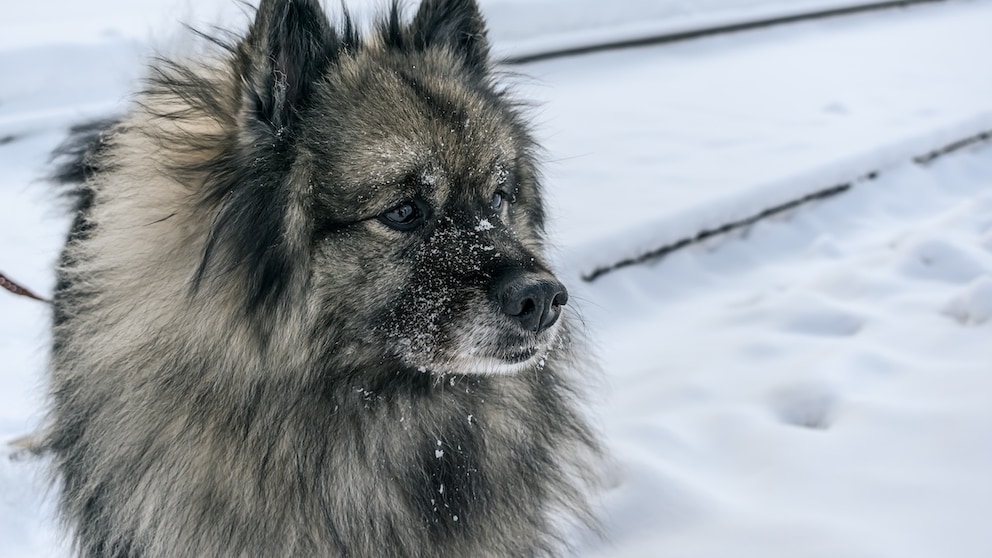
The Wolfsspitz is the largest representative of the German Spitz and reaches a shoulder height of 43 to 55 cm, weighing 16 to 25 kg. Its distinctive silhouette features a fox-like head, small, pointed erect ears, and almond-shaped, lively eyes.
Its coat is striking: a medium-length, straight-standing fur with a dense undercoat gives it a lion-like appearance, especially with the lush neck ruff. The coat color is always “gray-shaded”–a silvery-gray base tone with black hair tips. Typical are the light markings on the tail, trousers, and shoulder ring, as well as a darker coloration on the muzzle and ears. The so-called “spectacle markings” around the eyes emphasize the dog’s alert gaze and add to its charisma.
Character & Temperament
The Wolfsspitz is described as alert, intelligent, and affectionate. Its attentiveness is legendary–nothing escapes its notice. This talent makes it an excellent watchdog, reliably alerting without being aggressive. It initially approaches strangers with reserve but never shows fear.
Within its family, it is a loyal, cheerful, and often playful companion. Its social nature and strong bond make it a pleasant housemate who loves to be in the middle of the action. The Wolfsspitz enjoys being part of a pack and gets along well with children, provided they treat it respectfully. Despite its vigilance, it is generally not a constant barker, provided early socialization occurs.
Training
The Wolfsspitz is considered a teachable dog that enjoys learning–but only if it sees the purpose of a task. It requires patient, empathetic training with positive reinforcement. Clear structures, consistency, and variety encourage its willingness to cooperate. Due to its intelligence, early socialization is recommended to channel its alertness effectively. While suitable for beginners, patience, humor, and creativity are helpful in training.
Proper Care & Maintenance
The Wolfsspitz is adaptable and can thrive in both city apartments and houses with gardens–provided it gets enough exercise and mental stimulation. It loves long walks, sniffing games, and dog sports where it can showcase its abilities.
Close family attachment is important. Being alone is difficult for it and can lead to excessive barking. Therefore, it should be isolated as little as possible.
In terms of coat care, the Wolfsspitz is uncomplicated. Generally, it is brushed once a week–more frequently during shedding. The fine hairs behind the ears tend to mat easily and should be regularly untangled.
Nutrition
In terms of nutrition, the Wolfsspitz is undemanding. High-quality dry or wet food, as well as BARF, are suitable options as long as the food quality is right. Important are a high meat content, little grain, and no artificial additives. Sugar and unnecessary fillers should be completely avoided. A needs-based diet not only supports health but also helps maintain the ideal weight–which should not be underestimated in a robust, medium-sized dog like the Wolfsspitz.

Mittelspitz–once Widespread, Now One of the Rarest Dog Breeds in Germany

The Thai Spitz is a True Unsung Hero Among Dog Enthusiasts
Susceptibility to Certain Diseases
The Wolfsspitz is considered a robust breed with few known hereditary diseases. Its average life expectancy is about 15 years or more. However, like other medium-sized dogs, joint diseases such as hip dysplasia or patellar luxation can occasionally occur. Thyroid problems and progressive retinal atrophy (PRA), a degenerative eye disease, are also possible. Responsible breeding and regular veterinary check-ups help minimize the risk of disease.
The Wolfsspitz at a Glance
- Character: alert, loyal, intelligent, playful
- Size: 43–55 cm shoulder height
- Weight: 16–25 kg
- Coat: medium-length, gray-shaded, with dense undercoat
- Care: weekly coat care, more intensive during shedding
- Exercise needs: relatively high; loves mental engagement
- Special features: very social and family-oriented