

October 2, 2025, 12:46 pm | Read time: 5 minutes
The Korean Jindo Dog is a true unsung hero for lovers of original dog breeds—loyal, alert, and of rare beauty. Revered in its homeland of South Korea, nearly unknown in Europe, it is considered a national treasure with an exceptional character. However, this medium-sized hunting and guard dog is not an all-rounder for everyone: Its care requires experience, patience, and a respectful approach to its primitive nature.
Origin
The exact origin story of the Korea Jindo Dog is largely shrouded in mystery, but it is believed that the breed has developed over several millennia on the isolated island of Jindo in southwestern Korea. The geographical isolation played a crucial role in preserving the Jindo’s original type and character. Written records of its breeding history are absent, but oral traditions and expert opinions confirm its deep roots in Korean culture.
In 1938, the breed was officially declared a national animal by the South Korean government and placed under protection. This regulated targeted breeding in Korea and prohibited export—to this day, Korea Jindo Dogs can only leave the country under strict conditions. Nevertheless, over the years, some specimens have made their way to the U.S., where they are now occasionally bred. In Germany, there are currently no breeding facilities recognized by the VDH, making the Jindo an absolute rarity there.
Appearance & Coat
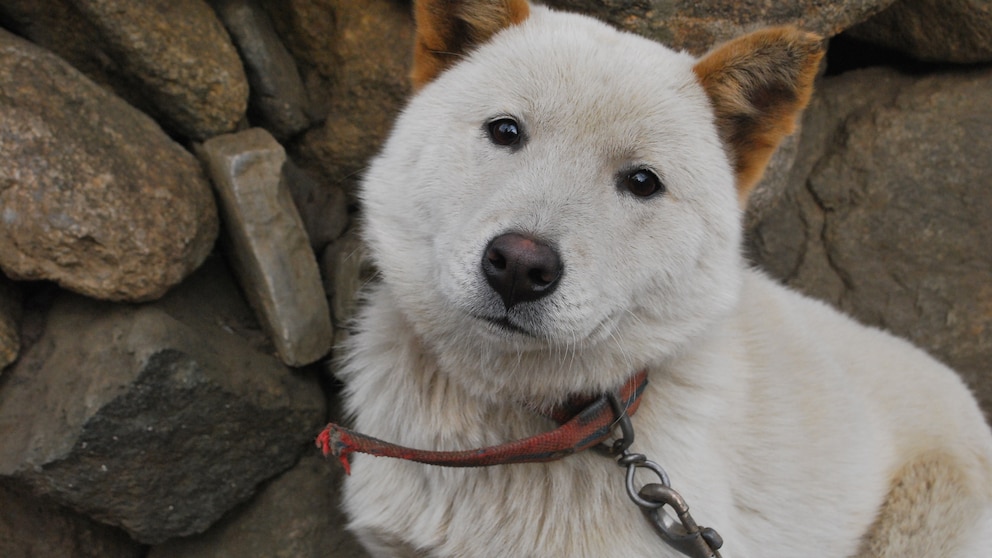
The Korea Jindo Dog is a compact, well-proportioned medium-sized dog with a strong build. Males reach a height at the withers of 50 to 55 cm, females 45 to 50 cm. The weight ranges from 18 to 23 kg for males and 15 to 19 kg for females. Typical of spitz-type dogs, it has a bushy, curled or sickle-shaped tail that rests loosely over the back.
Its head is wedge-shaped with medium-sized, erect, triangular ears. The dark, almond-shaped eyes give it an alert expression. The coat is medium-length, rough, and consists of a dense undercoat that varies seasonally. According to the Korean standard, only the colors white and red are allowed, but internationally, gold-orange, black, black with tan, wolf gray, fawn, and brindle are also considered typical of the breed. Overall, the Jindo exudes dignity, agility, and strength—a reflection of its original hunting and guarding nature.
Character & Temperament
The Korea Jindo Dog is described as an independent, intelligent, and self-assured dog. It tends to exhibit territorial behavior and has a pronounced hunting instinct, which can complicate cohabitation with smaller pets. Despite this independence, it is exceptionally loyal to its human, often referred to as a “one-man dog” that forms a deep bond with its primary person.
It approaches strangers with caution, making it a reliable guard dog. Its protective instinct is strong—it often even refuses food from strangers. Typical traits also include courage, quick comprehension, and a playful character. Due to its complex personality, the Jindo is not suitable for beginners but requires experienced owners who understand and respect its peculiarities.
Training
Training a Korean Jindo Dog requires patience, consistency, and a high degree of sensitivity. Its high intelligence makes it capable of learning, but it also brings a strong willfulness that necessitates clear, confident leadership.
Harshness or pressure is counterproductive with this sensitive breed. Instead, positive reinforcement, consistency, and early socialization are crucial. Especially during the puppy phase, Jindos should be exposed to other dogs, people, and everyday stimuli. Attending a dog school or puppy training is therefore highly recommended.
Proper Care & Maintenance
The Korea Jindo Dog is generally uncomplicated in care but has specific demands on its environment. A house with a securely fenced yard is ideal, as its hunting instinct can make off-leash freedom risky. Adequate mental and physical stimulation is a must—the Jindo requires regular engagement and meaningful tasks.
The coat is easy to care for, but should be brushed several times a week. During shedding, daily brushing is necessary as it sheds heavily. Ears, eyes, and claws should be regularly checked and maintained. Being alone is not in its nature—the Korean Jindo Dog needs a close social bond with its primary person.
Nutrition
In terms of nutrition, the Jindo often shows itself to be a demanding gourmet. It is known for being picky. Therefore, it is advisable to introduce various high-quality food types during puppyhood to avoid later food refusals.
An ideal diet is rich in meat without artificial additives. Fresh meat, high-quality proteins, and natural ingredients form the basis for a balanced diet. A proper BARF diet is also possible, provided the necessary expertise is available.
Bred to Hunt bears — What You Need to Know About the Pungsan

For Professionals Only: The Stabyhoun Needs Tasks and Clear Leadership
Susceptibility to Certain Diseases
The Korean Jindo Dog is considered a robust and healthy breed. No breed-specific hereditary diseases have been documented so far. Regular check-ups at the vet and a balanced diet are still recommended to maintain long-term health.
The average life expectancy is about 14 years, which is quite high for a medium-sized breed. Its original breeding under natural conditions may play a role in the genetic stability of the breed.
The Korea Jindo Dog at a Glance
- Character: loyal, alert, intelligent, independent
- Size: Males 50–55 cm, Females 45–50 cm
- Weight: Males 18–23 kg, Females 15–19 kg
- Coat: medium-length, rough, with dense undercoat