

October 14, 2025, 3:43 am | Read time: 5 minutes
The Stabyhoun, a true well-kept secret among dog enthusiasts, is one of the rarest dog breeds in the world. Its Frisian roots and versatility as a hunting, farm, and family dog make it a fascinating companion. Yet behind the silky-soft coat and gentle gaze lies an independent, intelligent character that requires clear leadership and plenty of engagement. Those willing to embrace this rare four-legged friend will discover a loyal companion for life.
Origin
The Stabyhoun originates from Friesland, a Dutch province with a long farming tradition. Since the 17th century, it was widespread there as a typical farm dog, fulfilling various tasks: guarding the house and farm, hunting vermin such as mice and rats, and accompanying its owner on small game hunts. The name “Stabyhoun” derives from the Frisian expression “Sta mij bij,” meaning “Stand by me”—a fitting reference to its close bond with humans.
The breed developed from various local dog types, likely influenced by French and Spanish spaniels that once reached the region. In the 1940s, a targeted crossbreeding with the Wetterhoun was conducted to enhance certain working traits. However, due to genetic concerns, a return to pure breeding soon followed. Since 1960, the Stabyhoun has been officially recognized by the FCI and belongs to Group 7 (Pointing Dogs), Section 1.2 (Continental Pointing Dogs of Spaniel Type). Today, it is among the five rarest dog breeds worldwide.
Appearance & Coat
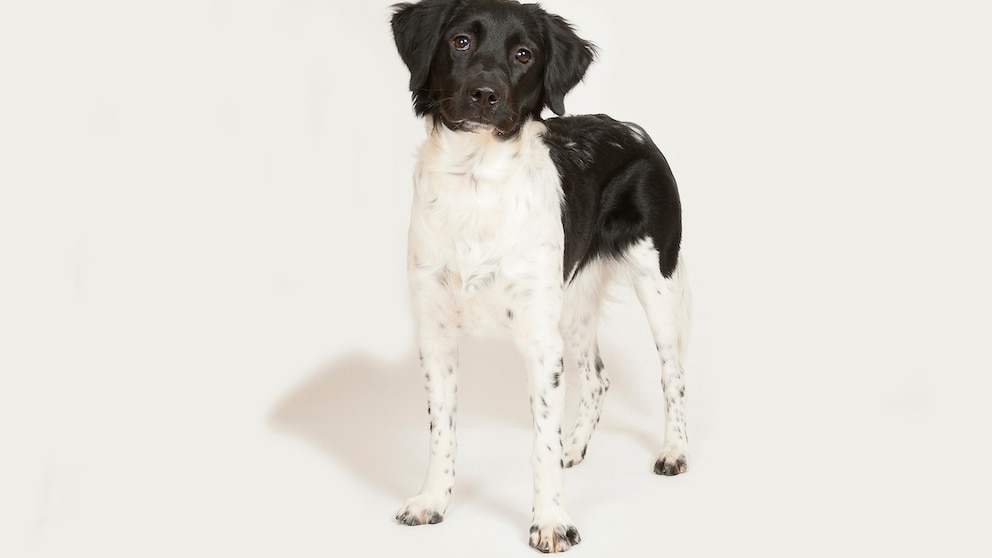
The Stabyhoun is a medium-sized, harmoniously built dog with a strong but not heavy body. Males reach a height of 50 to 53 cm at the withers, females about 48 to 50 cm. The weight varies by gender between 18 and 28 kg. The head is narrow, with a gentle stop, brown almond-shaped eyes, and characteristic trowel-shaped hanging ears.
The medium-length coat is smooth to slightly wavy, particularly silky to the touch, and self-cleaning. It is especially dense on the legs, tail area, and “pants.” Curly hair is undesirable as it indicates unwanted crossbreeding. The typical color distribution is black or brown with white markings, often roan or speckled. Orange with white is also allowed, but rare. Coat care is moderate: regular brushing is sufficient, especially during shedding or on more heavily haired body parts.
Character & Temperament
The Stabyhoun is considered a friendly, sensitive, and exceptionally people-oriented dog. It forms a close bond with its family and is patient, affectionate, and loyal. Despite its attachment, it maintains a certain independence—a trait stemming from its original use as a self-reliant farm dog.
Its nature is calm and balanced, yet alert: it reliably alerts visitors without being aggressive. It is reserved but not distrustful toward strangers. Within the family, it is playful and child-friendly. Early socialization promotes harmonious coexistence with other pets. Despite its hunting instincts, it is well-controllable if its needs are taken seriously and met with appropriate activities.
Training
A Stabyhoun can be well-trained if clear, consistent, and loving rules are conveyed. Due to its intelligence and strong will to please, it learns quickly. At the same time, it has a stubborn character that requires creative and patient training methods.
Excessive pressure or harsh measures quickly lead to withdrawal or refusal. Positive reinforcement, varied exercises, and a trusting relationship promote sustainable learning success. Due to its sensitive nature, the bond with the owner should be strengthened early. The breed is also suitable for ambitious novice dog owners, especially with support from a reputable dog school.
Proper Care & Maintenance
The Stabyhoun needs an environment where it can move freely and fulfill its tasks. Ideally, a house with a garden or a rural living environment where it can safely express its guarding and hunting instincts. Apartment living is possible if combined with sufficient exercise and activities.
Daily exercise, retrieving and search games, or dog sports such as agility and obedience are essential. It loves water and is also suitable for swimming or tracking sports. Without adequate physical and mental stimulation, behavioral problems can develop. Coat care is straightforward: regular brushing is sufficient, with particular attention to the ears and tail. Ears, claws, and teeth should be regularly checked and maintained.
Nutrition
The Stabyhoun is uncomplicated in terms of nutrition but—like any active dog—has certain demands on food quality. High-quality food with a high meat content (at least 80% in commercial food), without sugar, grains, or artificial additives, forms the basis. Both wet and dry food or a balanced BARF diet are suitable, provided the nutrient supply is age- and activity-appropriate.
The food quantity should be individually adjusted to avoid being overweight. Two meals a day are ideal. Feeding should not occur directly before or after intense exercise to minimize the risk of gastric torsion. Chew snacks can be given in moderation as a supplement.
Sussex Spaniel: Why the Nearly Forgotten Hunting Dog Is a Rare Find for Families
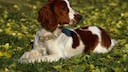
The Welsh Springer Spaniel was specifically bred as a family dog.
Susceptibility to Certain Diseases
The Stabyhoun is considered robust and long-lived, with an average life expectancy of 12 to 14 years. However, as with all rare breeds, there are risks due to genetic bottlenecks. Hereditary diseases such as hip dysplasia (HD), epilepsy, Von Willebrand syndrome (VWS, type 1), or persistent ductus arteriosus (PDA) can occasionally occur.
Responsible breeding, therefore, relies on regular health checks of the parent animals. Buyers should look for proven breeding standards and health certificates. Regular veterinary check-ups and a balanced lifestyle further support the health of this breed.
The Stabyhoun at a Glance
- Temperament: friendly, sensitive, alert, independent
- Size: Males 50–53 cm, Females 48–50 cm
- Weight: 18–28 kg, depending on gender
- Coat: medium-length, silky, smooth to slightly wavy
- Colors: Black or brown with white, also roan variants
- Care Requirement: moderate, regular brushing recommended
- Special Features: rare pointing dog with a strong bond to humans