

August 23, 2025, 6:49 am | Read time: 5 minutes
The Mittelspitz is a piece of living German cultural history—and at the same time an underrated companion for everyday life. Loyal to humans for centuries, it is considered a vigilant, robust, and surprisingly adaptable dog. Despite its long tradition, it is now among the endangered domestic breeds. Those who embrace this clever bundle of energy gain not only a reliable guardian but also a charming, playful partner for life.
Origin
The Mittelspitz is part of the “German Spitz” breed group, one of the oldest known dog breeds in Central Europe. Archaeological finds show spitz-like dogs in human settlements over 4,000 years ago. As descendants of the Stone Age peat dog (“Canis familiaris palustris Rütimeyer”) and later pile-dwelling spitz, spitz dogs have shaped the image of rural farms since the Middle Ages. They served farmers and craftsmen as reliable guard dogs, protecting livestock, farms, and warehouses, and accompanying wagons. Breeding focused on selecting animals without hunting instincts, as hunting was reserved exclusively for the nobility. Thus, over centuries, a loyal, steadfast farm dog emerged.
Modern pedigree dog breeding was organized early: In 1899, the Verein für Deutsche Spitze was founded, which is still responsible for the breed standard today. In 1969, the Mittelspitz was officially recognized as its own variety and has since been considered the standard size among German Spitz. However, with the decline of small-scale agriculture and horse-drawn wagons, it lost its traditional area of use. Today, only about 100 puppies are born in Germany each year. Since 2003, it has been on the list of endangered domestic breeds and is considered “highly endangered.” Nevertheless, enthusiasts appreciate its vigilant, intelligent, and straightforward character, making it an excellent companion and family dog.
Appearance & Coat
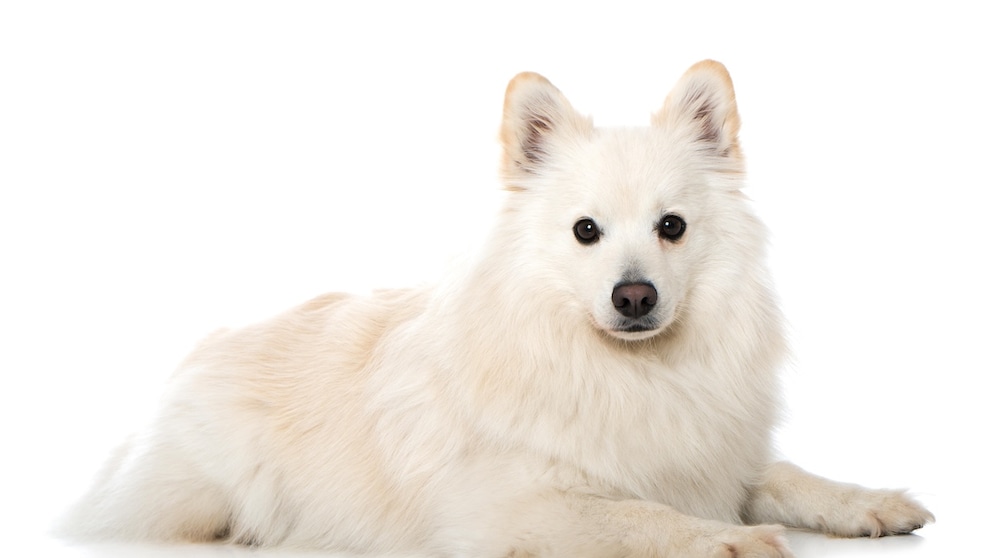
The Mittelspitz is a compact, harmoniously built dog with a shoulder height between 30 and 38 cm. Its coat is typically lush and double-layered: long, straight, and standing outer coat over dense, soft undercoat. The mane around the neck and shoulders is particularly pronounced, and the tail is bushy, carried over the back. The front legs are well feathered, and the hind legs are richly coated up to the hocks. The head, ears, and paws are short and velvety-haired.
The color palette is diverse: black, brown, white, orange, gray-shaded, and “other colors” (such as cream, cream-sable, orange-sable, black-and-tan, or particolored). Each color variant has its characteristics: black Spitz have a deep glossy black, brown are uniformly dark brown, white are pure white without a yellow tint, orange are evenly medium-intense colored, gray-shaded show silver-gray fur with black tips and typical facial markings. Particolored have a white base color with evenly distributed color spots. The overall impression is always elegant, well-groomed, and characterized by the distinctive “Spitz silhouette.”
Character & Temperament
The Mittelspitz combines the traits of a traditional guard dog with the adaptability of a modern family companion. It is attentive, lively, and affectionate, highly intelligent and curious. It initially approaches strangers with suspicion, reliably alerts visitors by barking, but is neither fearful nor aggressive. Its lack of hunting instinct makes free running easier.
The breed is eager to learn and versatile: whether dog sports like agility or dog dance, tricks, or therapy dog visits, the Mittelspitz is enthusiastically involved. It loves to be in close contact with its people and is considered child-friendly. However, if underchallenged, its tendency to bark can increase. Therefore, it needs mental and physical stimulation to maintain its balanced temperament.
Training
Mittelspitz dogs are easy to train if they are consistently, lovingly, and clearly guided from the start. Their “will to please” facilitates training, but their intelligence makes them alert to any inconsistency. Early socialization and attending a dog school lay the foundation for good behavior. Variety is crucial—monotonous repetitions bore them. It’s important to manage barking behavior from a young age. Well-trained, the Mittelspitz proves to be a reliable companion, whether in the city, at a café, or on travels.
Proper Care & Maintenance
The Mittelspitz is adaptable: It can live well in an apartment as well as in a house with a garden. The prerequisite is regular exercise and activity. It loves walks in any weather and is robust against cold and wet conditions. Coat care is straightforward: brushing several times a week is sufficient, slightly more often during shedding. After outings, the coat should be checked for ticks.
Nutrition
The Mittelspitz is undemanding and thrives best on high-quality food—whether dry, wet, or fresh meat portions. An important factor is a balanced mix of proteins, carbohydrates, and fats. Occasional fresh meat and healthy snacks also support vitality and coat quality. Overweight should be avoided as it strains the joints.

Why the Wolfspitz Isn’t a Dog for Everyone

Irish Wolfhound–From Status Symbol to Family Pet
Susceptibility to Certain Diseases
The Mittelspitz is considered a robust breed without prevalent hereditary diseases. With proper care, healthy nutrition, and sufficient exercise, it can live 15 years or older. Regular veterinary check-ups and tick and parasite prevention contribute to its health.
The Mittelspitz at a Glance
- Size: 30–38 cm shoulder height
- Weight: Medium, proportional to size
- Character: Vigilant, intelligent, affectionate, child-friendly
- Coat: Long, straight, standing; dense undercoat
- Special Features: Lack of hunting instinct, highly endangered domestic breed