

November 1, 2025, 7:17 am | Read time: 6 minutes
At first glance, the Lhasa Apso may seem like a small, fluffy lapdog—but this impression is misleading. Beneath its lush coat lies a confident, robust character with a history spanning thousands of years. As a former monastery guardian and good luck charm of Tibet, it charmingly combines pride, alertness, and independence. However, some of its traits are attributed to harmful breeding practices.
The Lhasa Apso is one of the oldest dog breeds in the world, originating in the harsh highlands of Tibet. For centuries, it served not only as a spiritual companion in Buddhist monasteries but also as a reliable guardian of temples and courtyards. Today, it impresses as a smart, independent, and loyal family dog—albeit with a mind of its own. It is important to note that some breeding lines exhibit traits that fall under the term “harmful breeding,” such as an overly long, heavy coat or a snout that is too short, impairing breathing.
Its striking appearance, with its lush coat, may invite petting, but it also requires intensive care and a sensitive understanding of the needs of this proud breed. The long hair can obstruct vision and lead to skin problems if not regularly maintained—a direct result of excessive breeding. Those who meet it on equal terms and respect its independence will find a loyal companion in the Lhasa Apso—provided they earn its trust.
Origin
The history of the Lhasa Apso goes back over 2,000 years. Originally, this breed was bred in the monasteries of the Himalayas, particularly around the Tibetan capital, Lhasa. There, the Apso lived closely with monks, who valued it not only as a good luck charm but also as an attentive guardian. Its keen hearing and watchful nature made it an effective early warning system in monastery complexes and noble residences. Tibetan farmers and nomads also appreciated its services, such as protecting herds or warding off pests. Over the centuries, a robust small dog with a pronounced protective instinct developed.
The Lhasa Apso arrived in Great Britain around 1900. More dogs followed as gifts from Tibetan dignitaries, including specimens personally presented by the Dalai Lama. There, systematic breeding began, with slight modifications to its appearance. Unfortunately, later show breeding in Western countries sometimes led to extreme traits—such as overly dense fur or excessively short muzzles—which are now considered problematic from an animal welfare perspective. The breed was first standardized in 1934 and finally officially recognized by the FCI in 1960. In Germany, the Lhasa Apso has been selectively bred since the 1970s, but it remains relatively rare to this day.
Appearance & Coat
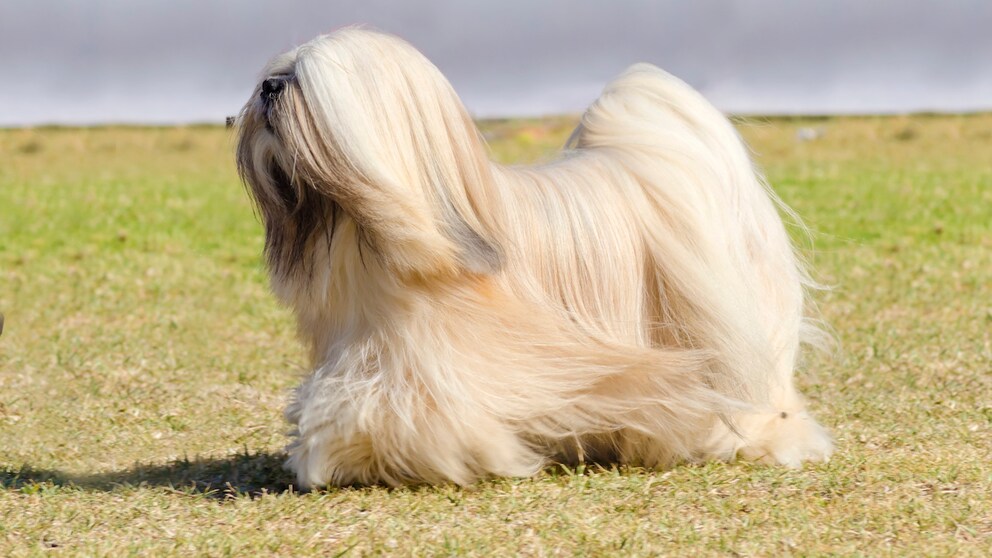
The Lhasa Apso is a compact, small dog with a characteristic silhouette: significantly longer than tall, with a sturdy body and short legs. Males reach a shoulder height of about 25 cm, while females are usually slightly smaller. The weight typically ranges between 5 and 8 kg. Its gait is free, energetic, and brisk.
Particularly striking is the long, dense topcoat, which falls straight and hard—not silky or woolly. A medium undercoat provides additional protection against the cold. The “lion dog,” as the Apso is also called, sports a distinctive mane and dense facial hair, which can extend over the eyes if overbred. This breeding goal is critically evaluated for animal welfare reasons, as it can impair vision and freedom of movement—the standard explicitly rejects such extreme forms.
Permitted coat colors are diverse: including gold, sand, honey, dark grizzle, slate, smoke gray, bicolor, black, white, and brown—all colors are equally recognized.
Character & Temperament
The Lhasa Apso is a true bundle of personality. Despite its small size, it is self-assured, proud, and highly independent. It is intelligent, playful, and alert—often a bit headstrong. It usually meets strangers with reserve but remains calm and observant. Within its family, it develops a deep bond and is loyal and attentive. Its sensitivity to human emotions is remarkably pronounced, making it a compassionate companion.
It likes to take on responsibility, which occasionally manifests as “excessive leadership”—such as controlling visitors or the walking route. Despite its compact size, it is not a dog for everyone: It requires respect, leadership, and mental challenges.
Training
The Lhasa Apso possesses a high learning ability—paired with a pronounced willfulness. Its training, therefore, requires patience, consistency, and empathy. The Apso remembers major mistakes or inconsistent leadership for a long time, and this is difficult to correct later. Early socialization is important, as are clear rules in everyday life.
Reward-based training is effective with this breed. Clear structures help prevent unwanted behavior. Due to its demand for leadership and understanding, the Lhasa Apso is not ideal for beginners.
Proper Care & Maintenance
Although the Lhasa Apso can adapt well to city life, it needs daily exercise and mental stimulation. Walks and small tasks in everyday life promote its well-being. Its thick, long coat provides good protection against the cold but requires intensive care: Owners should thoroughly brush it at least two to three times a week to prevent matting. If the coat is not regularly maintained, it can lead to skin inflammations, heat buildup, or painful matting—also a consequence of excessive breeding for appearance rather than functionality.
Owners should also regularly check and clean ears, eyes, and paws–especially to prevent infections. Trimming the hair around the eyes and paws can significantly improve the quality of life. A moderate short haircut—within the standard—is practical and animal-friendly.
Nutrition
The Lhasa Apso needs high-quality, balanced dog food rich in animal proteins and essential nutrients. Its diet should be adjusted to its activity level—particularly active animals require more energy accordingly. In addition to dry or wet food, fresh meat and occasional chew bones are possible. There is no obligation for raw feeding (BARF).
Adult animals should ideally be fed twice a day. Puppies require smaller but more frequent portions. Fresh water must always be available.

Why the Pekingese Is Considered a Breed of Concern

The Sealyham Terrier is a Great Family Dog—if You Know What You’re Doing
Susceptibility to Certain Diseases
In general, the Lhasa Apso is considered a robust and long-lived breed with an average life expectancy of 12 to 15 years. However, health problems can occur, especially with excessive breeding. These include hip dysplasia (HD), patellar luxation (PL), and various eye diseases. Breathing problems, skin irritations, and chronic eye inflammations can also occur if the muzzle is bred too short and the coat too dense—typical traits of harmful breeding.
Particular attention should be paid to the length of the coat and the shape of the snout. Hair that is too long or a snout that is too short can limit quality of life. Responsible breeders test their animals for hereditary diseases before breeding and strictly adhere to the standard. Future owners should consciously support breeders who value functional anatomy over show appearance.
The Lhasa Apso at a Glance
- Character: confident, independent companion with a strong will and lots of charm
- Size (shoulder height): about 25 cm (males), females slightly smaller
- Weight: 5 – 8 kg
- Coat: long, straight, and dense; regular grooming is essential
- Exercise needs: moderate—loves daily walks and mental engagement
- Average life expectancy: 12–15 years
- Special features: demanding in care, not a beginner’s dog; prone to harmful breeding traits if overbred (e.g., too long coat, too short muzzle, impaired vision or breathing)