

September 6, 2025, 1:58 pm | Read time: 5 minutes
Small, white, and full of spirit: The Sealyham Terrier is a true insider tip among terriers. Originally bred for hunting, today it surprises as a smart, playful companion with a strong guarding instinct and charming independence. Discover what makes this rare Brit so special and who it is suitable for here.
Origin of the Sealyham Terrier
The Sealyham Terrier hails from the southwest of Wales, specifically from the estate “Sealy Ham” in Pembrokeshire. There, Captain John Owen Tucker-Edwardes began breeding a versatile hunting dog in the mid-19th century. The goal was a terrier particularly suited for hunting badgers, otters, and foxes. To achieve this, Tucker-Edwardes crossed various breeds such as Dandie Dinmont Terriers, Bull Terriers, Wire Fox Terriers, Welsh Corgis, West Highland White Terriers, and possibly Cheshire Terriers.
In 1910, the Sealyham Terrier was officially recognized as a breed. It experienced a surge in popularity in the 1920s and 1930s—even in Germany. However, with World War II, the breed significantly declined in numbers and is now among the rare dog breeds. Despite its qualities as a family and companion dog, the Sealyham Terrier is still little known outside of Great Britain.
Appearance & Coat
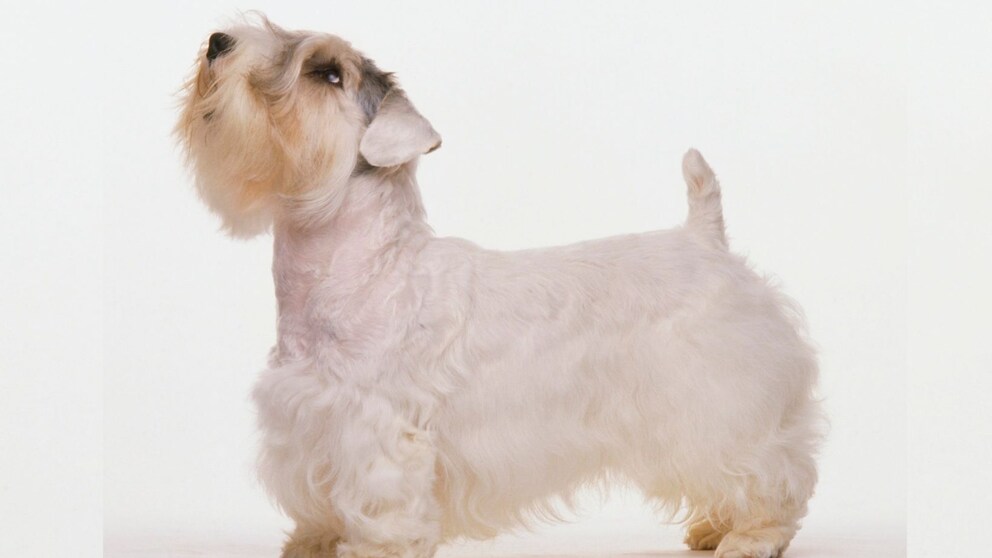
The Sealyham Terrier is a compact, low-set terrier with a powerful build and rectangular silhouette. Its shoulder height is a maximum of 31 centimeters, with an ideal weight of about nine kilograms for males and around eight kilograms for females. The tail emerges from a strong base, tapers to the tip, and is preferably carried upright.
Its gait is energetic, with strong drive from the hindquarters. Characteristic is the long, hard, and wiry topcoat with dense, weather-resistant undercoat. The coat color is usually pure white, often with colored markings on the head, such as yellow, gray, blue, or brown. Black spots are expressly desired according to the standard. The head is particularly striking with its abundant hair, emphasizing the broad muzzle. The coat requires regular grooming to maintain its protective function and aesthetics.
Character & Temperament
The Sealyham Terrier combines typical terrier traits with a surprisingly sociable nature. It is considered brave, confident, and alert without being aggressive. As a former hunting dog, it has a pronounced urge for movement and high independence. At the same time, owners describe it as cheerful, playful, and very people-oriented.
With consistent leadership, the Sealyham develops into a reliable family dog that seeks close contact with its caregivers. Early socialized dogs often show good behavior towards other dogs and pets. Its watchful nature makes it an attentive but not overly barking guardian—provided it is sufficiently exercised and well-trained.
Training a Sealyham Terrier
In training the Sealyham Terrier, loving consistency is the key to success. The intelligent but also strong-willed dog requires clear leadership, as it will otherwise try to take control. Early socialization and training are recommended to channel its original hunting behavior and strong guarding instinct into regulated paths. At the same time, the Sealyham is eager to learn and enjoys working with its people—a good basis for obedience and family integration. Mental stimulation is particularly important, as under-stimulation can quickly lead to undesirable behavior.
Proper Care & Maintenance
The Sealyham Terrier is suitable for living in an apartment or a house with a garden, provided it gets enough daily exercise and mental engagement. As an active and adventurous dog, it needs regular walks, play, and mental challenges. If under-stimulated, it tends to exhibit behavioral issues like excessive barking.
Coat care is demanding: The wiry topcoat must be brushed and combed daily, supplemented by regular trimming to maintain the breed-specific structure. Neglected grooming can lead to matting and skin problems. Early acclimation to handling the coat and paws also makes care easier.
Nutrition
A balanced, protein-rich diet is essential for the health of the Sealyham Terrier. High-quality food—whether wet or dry—should be tailored to age, weight, and activity level. As a typical hunting dog, it requires a nutritious diet with moderate energy content to maintain its ideal weight. Treats should be used sparingly to avoid obesity. Fresh drinking water must be available at all times. A fixed feeding schedule with two meals a day is recommended. For special needs—such as food intolerances—a veterinarian-supervised diet change may be advisable.

The Wire Fox Terrier Needs Challenge or It Takes Charge

The West Highland White Terrier is Not a Lapdog
Susceptibility to Certain Diseases
The Sealyham Terrier is generally considered a robust breed. Due to its rarity and responsible breeding practices, genetic diseases occur relatively infrequently. However, there are some health aspects that owners should be aware of. These include skin problems due to inadequate coat care and potential eye issues. There may also be a tendency towards obesity, especially with insufficient exercise. Regular veterinary check-ups, a balanced diet, and adequate exercise significantly contribute to maintaining health. Choosing a reputable breeder with transparent health records is also crucial for a long, trouble-free life.
The Sealyham Terrier at a Glance
- Size: Up to 31 cm shoulder height
- Weight: Males approx. 9 kg, females approx. 8 kg
- Coat: Long, wiry topcoat with dense undercoat
- Character: Brave, friendly, alert, playful, independent
- Special Features: Requires consistent training, regular trimming, and important mental stimulation