

September 30, 2025, 4:32 am | Read time: 5 minutes
Small, white, and full of spirit: The West Highland White Terrier—affectionately called “Westie”—is one of the world’s most famous dog breeds, not just because of a well-known dog food commercial. Originally bred as an agile hunting terrier in the Scottish Highlands, it has long established itself as a charming family dog. However, anyone who sees only a lapdog behind the cute exterior underestimates the confident character of this little bundle of energy. Find out what truly defines him and what owners should be aware of here.
Origin
The West Highland White Terrier has its roots in the western Highlands of Scotland. There, it was specifically used for hunting smaller prey such as foxes, badgers, and otters. Its compact build and high agility made it ideally suited to pursue prey into their dens. As early as the 18th and 19th centuries, Scottish clans valued these traits and preferred to use them in pack hunting.
Particularly striking and functional was the pure white coat, which stood out clearly from wild animals—a crucial advantage in hunting to avoid confusion with the prey. The official breed standard was recognized by the British Kennel Club in 1907, followed by the first entry in a German studbook in 1910. In the 1970s, the Westie experienced a surge in popularity, peaking in the 1990s when it gained widespread attention not only as an advertising figure but also as a fashionable dog. Today, it is appreciated worldwide as a loyal family companion.
Appearance & Coat
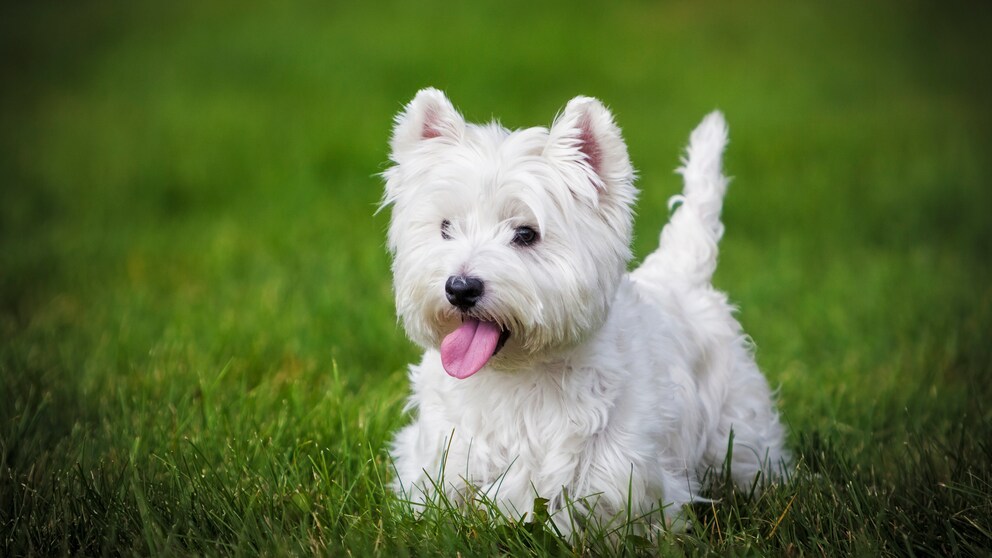
The West Highland White Terrier is a compact and muscular dog with a square body shape. It reaches a shoulder height of about 9 to 12 inches and weighs between 13 and 22 pounds. Its most striking feature is the snow-white, weather-resistant double coat. This consists of a soft, dense undercoat and a harsh, straight topcoat, giving it a robust and well-groomed appearance.
Particularly notable is the dense hair on the head, giving the Westie its typical, slightly rounded appearance. The erect, triangular ears, along with the dark sparkling eyes and black nose, emphasize its lively expression. Another distinctive feature is the carrot-shaped tail, which is medium-length, thick, and carried straight. Overall, the Westie embodies a powerful appearance despite its small stature.
Character & Temperament
The West Highland White Terrier possesses a lively, courageous, and self-assured nature–typical of a terrier. Despite its compact size, it is far from being a lapdog. Its personality is characterized by alertness, a certain degree of stubbornness, and a pronounced hunting motivation. Nevertheless, it shows itself in everyday life as cheerful, playful, and exceptionally charming.
Westies form a close bond with their family but do not tend to fixate on one person, integrating well into the family “pack.” They are usually compatible with other dogs and, with proper socialization, handle interactions with other dogs and children confidently. Its open nature makes it a popular companion—provided its independence is met with clear leadership.
Training
Training a West Highland White Terrier requires consistency, patience, and clear communication. Due to its terrier traits, it often shows independence and questions commands. However, the Westie can be well-trained with positive reinforcement, playful learning sessions, and clear rules. Early socialization and age-appropriate exposure to environmental stimuli are essential. Its intelligent nature makes it receptive to dog sports such as agility, where it can channel its energy and cleverness. With loving but consistent training, it becomes a reliable and well-integrated family member.
Proper Care & Maintenance
The Westie is adaptable—owners can keep it in both city apartments and rural areas, provided they take its need for exercise and activity seriously. They should offer daily walks and mental stimulation, as the spirited terrier craves challenges. It feels particularly comfortable when it can take on tasks or participate in dog sports.
Coat care is demanding: The coat should be brushed daily and professionally trimmed every eight to twelve weeks. Especially the area around the eyes and muzzle requires regular cleaning, as discolorations can easily form there. Owners must also regularly check the ears and clean them if necessary.
Nutrition
For the nutrition of the West Highland White Terrier, high-quality dog food with a high meat content is recommended. Owners should avoid grains, sugar, and artificial additives as much as possible to prevent skin irritations and intolerances. The amount of food should always be individually adjusted, depending on the dog’s age, weight, activity level, and health condition. A balanced diet not only supports the immune system but also helps maintain the typical coat quality.

Why the Cairn Terrier Is Anything but a Beginner’s Dog

The Sealyham Terrier is a Great Family Dog—if You Know What You’re Doing
Susceptibility to Certain Diseases
Despite its generally robust constitution, the Westie is prone to some breed-specific health issues. These include primarily genetically predisposed skin diseases, such as atopic dermatitis, as well as hereditary eye diseases. Patellar luxations (kneecap dislocations) and jaw malformations can also occur in dogs from uncontrolled breeding.
Regular veterinary check-ups and responsible breeding selection are important measures for health care. Early detection of potential problems increases the chance of successful treatment and a life free of complaints.
The West Highland White Terrier at a Glance
- Character: lively, courageous, charming, stubborn
- Size: about 9–12 inches shoulder height
- Weight: 13–22 pounds
- Coat: dense, white double coat with harsh topcoat
- Grooming effort: high–daily brushing, regular trimming
- Exercise needs: high, loves activity and mental stimulation
- Life expectancy: about 12–16 years