

September 20, 2025, 2:12 pm | Read time: 6 minutes
The Drentsche Patrijshond, a medium-sized pointing dog from the Dutch province of Drenthe, combines a passion for hunting with family friendliness. Little known outside its homeland, it impresses with intelligence, obedience, and a sensitive nature. Despite its visual similarity to the Münsterländer, the “Drent” has its own unique history—and skills that make it shine not only in hunting but also as a rescue, therapy, or companion dog. So why is this versatile all-rounder still a hidden gem here?
Origin
The origins of the Drentsche Patrijshond date back to the 16th century. Dogs of Spanish origin—known as “Spioenen” or “Spanjoelen”—came to the Netherlands via France. In the eastern province of Drenthe, these hunting dogs became known as “Patrijshonden” (partridge dogs) and were selectively bred without crossbreeding with other breeds. While similar dogs in other parts of the country were mixed with foreign lines, the Drent remained purebred.
Its history is closely linked to the regional way of life: The Drentsche Patrijshond lived not only as a hunting dog but also as a farm dog closely with the family, taking on various tasks. In Germany, it was bred with the Large and Small Münsterländer, explaining its similarity to these breeds. Official recognition was granted on May 15, 1943, by the Dutch breeding association, promoted by Baroness van Hardenbroek and gentlemen van Heek jr. and Quartero. Since 1948, the “Nederlandse Vereniging De Drentsche Patrijshond” has been responsible for breeding and maintaining the standards of this traditional breed.
Appearance & Coat
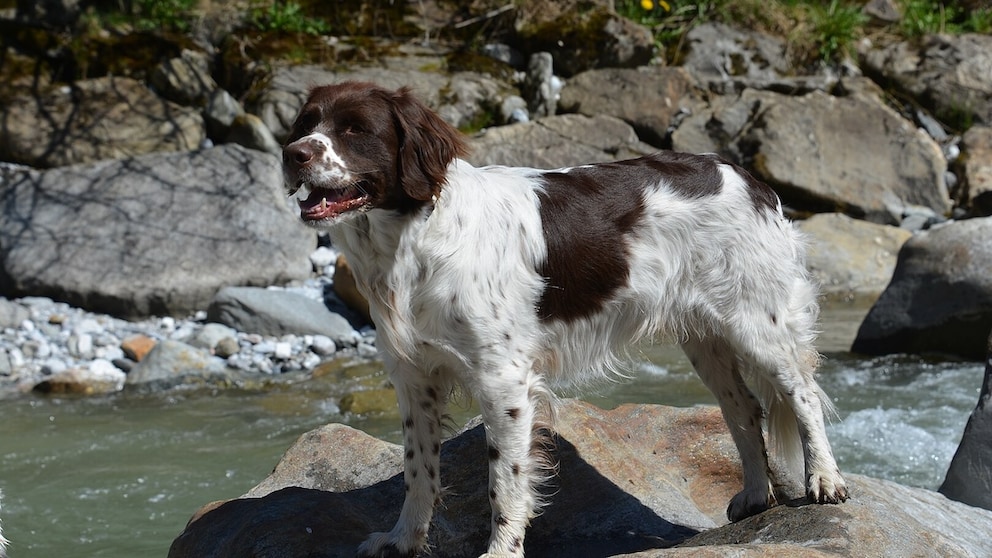
The Drentsche Patrijshond is a medium-sized, harmoniously built pointing dog with an athletic figure and lean musculature. Males reach a height at the withers of 58 to 63 cm, females 55 to 60 cm; the weight is 30–35 kg (males) and 25–31 kg (females). Its appearance is balanced, with a slightly wedge-shaped head, medium-length muzzle, and dark, intelligent-looking eyes.
The coat is medium-length, close-fitting, not curly, with a silky texture and water-repellent undercoat. Typical is the strong feathering on the tail, chest, and legs. The hair on the neck and ears is longer and often slightly wavy. This gives the dog a long-haired appearance, although the hair on the body itself is not excessively long. The tail is bushy and abundantly haired all around.
Approved coat colors are white with brown markings, including variations in liver or red-brown. Spots or speckles are allowed as long as the white base color is preserved. Despite its visual proximity to the Münsterländer, the Drent can be clearly distinguished by its more compact form and special coat structure.
Character & Temperament
The Drentsche Patrijshond is characterized by a calm, balanced, and friendly nature. It is people-oriented, socially compatible with other dogs, and particularly fond of children. Despite a pronounced hunting instinct, it usually stays close to its owner and does not tend to roam—an advantage in everyday life.
Its high intelligence and willingness to cooperate make it a reliable partner, both in hunting and family life. Toward strangers, it is neutral to friendly, without aggressive behavior. It has great patience, a high threshold for stimuli, and seeks the proximity of its human—even when off-leash.
Drents are considered sensitive dogs with a gentle character that respond to non-violent, positive communication. However, if not sufficiently occupied, they can become restless. Therefore, they need both physical and mental engagement. Due to this versatility, the Drent is suitable for active families as well as for rescue or therapy work.
Training
Training the Drentsche Patrijshond is usually uncomplicated due to its willingness to cooperate and sensitivity. It learns quickly, provided positive reinforcement is used. Force or harshness is counterproductive.
The Drent should be socialized early and trained consistently but gently. It wants to please, but occasionally makes its own decisions, which requires consistency in leadership. Early exposure to everyday situations—such as city visits, office life, or encounters with strangers—is recommended. With proper guidance, the Drent is also suitable for ambitious beginners.
Proper Care & Maintenance
The Drentsche Patrijshond is an active working dog that requires daily exercise and mental stimulation. A house with a garden is ideal, but it can also feel comfortable in an apartment if its needs are met. Long walks, dog sports, or joint activities such as hiking or jogging are essential for its well-being.
Coat care requires some effort: Daily brushing prevents matting, especially in the feathered areas. After walks, the coat should be checked for burrs and ticks. During the shedding season (twice a year), more intensive care is necessary. The floppy ears need regular checks, as they are prone to infections.
The Drent can also be left alone for a few hours if it has learned to do so early, provided it is sufficiently challenged in everyday life.
Nutrition
In terms of feeding, the Drentsche Patrijshond is uncomplicated but demands high-quality food. A protein-rich diet with a high meat content is essential—animal proteins should be at the top of the ingredient list. Grains should be avoided as much as possible, as they are difficult for dogs to digest and can cause allergies.
In addition to high-quality commercial food, raw feeding (BARF) is also suitable if done professionally. It is important to adjust the amount of food to age, activity level, and weight. Young dogs should receive special puppy food, and seniors from the age of 7–8 years should have age-appropriate food.
Since the Drent tends to gain weight, regular weight checks are advisable. In case of food intolerances, a veterinarian-supervised dietary change is recommended.
What Owners Need to Know About the Plott Hound
Griffon Korthals: Who Is This Unique Pointing Dog Really Suited For?
Susceptibility to Certain Diseases
The Drentsche Patrijshond is generally considered a robust and healthy breed without known breed-specific hereditary diseases. The life expectancy is about 12 to 14 years. However, its health strongly depends on responsible breeding and appropriate care.
Lack of exercise and obesity are the most common health risks and can cause cardiovascular diseases and joint problems. A balanced diet, regular exercise, and veterinary check-ups are therefore essential.
It is important to pay attention to inbreeding and genetic diversity when choosing a breeder—especially with rare breeds like the Drentsche Patrijshond.
The Drentsche Patrijshond at a Glance
- Size: Males 58–63 cm, Females 55–60 cm
- Weight: Males 30–35 kg, Females 25–31 kg
- Character: Friendly, obedient & intelligent
- Coat: Medium-length, silky, with feathering
- Special Features: High hunting passion, yet people-oriented and suitable as a therapy dog