

November 12, 2025, 6:08 am | Read time: 5 minutes
The Plott Hound is not only a passionate hunter but also a sensitive companion–a fascinating combination that makes it a unique breed. Originally bred for hunting bears and cougars, it combines robustness with intelligence and social sensitivity. However, those interested in this energetic dog should know: The Plott is demanding–both physically and mentally. Find out here if it suits you.
Origin
The Plott Hound originated in the U.S., specifically in North Carolina. The breed traces back to the German Plott family, who emigrated to America in the mid-18th century with five Hanoverian Bloodhounds. Their goal was to establish a powerful hunting dog line–particularly suited for tracking big game like bears or cougars in the Appalachians.
The descendants of these dogs were selectively bred over the decades, with a strong emphasis on purebred lineage. According to a 1996 article in the American Plott Association yearbook, the Plott Hound is among the genetically purest of American hunting dogs.
Despite its success in the U.S., the Plott Hound remained virtually unknown outside its homeland for a long time. Only recently has it gained attention in Europe, especially for wild boar hunting. Internationally, the breed is currently recognized only by the AKC, CKC, and UKC; recognition by the FCI is still pending. In Germany, breeding is overseen by the “Verein Plotthound Deutschland.”
Appearance & Coat
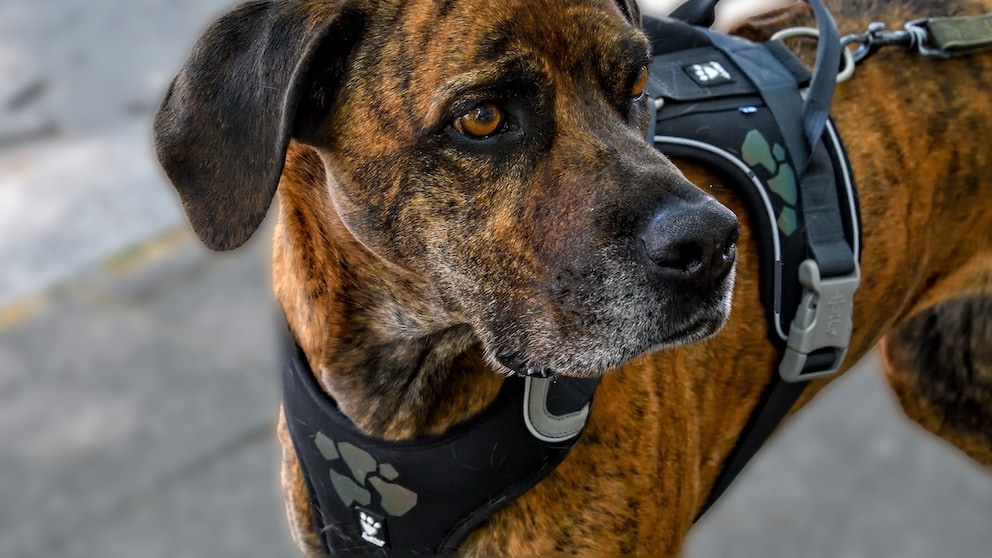
The Plott Hound is a medium-sized, muscular hunting dog with an athletic appearance and harmonious build. Its body is designed for endurance and agility–traits that make it particularly effective in mountainous terrain. Males reach a shoulder height of 50 to 63 cm and weigh 23 to 30 kg, while females are slightly smaller at 50 to 58 cm and weigh 18 to 27 kg.
Typical of the breed are the alert expression, drooping, medium-length ears, and long, straight tail. The head shape is reminiscent of the Hanoverian Bloodhound, highlighting its origins. The nose, lips, and eye rims are always black-pigmented.
The coat is short to medium-length, smooth, and easy to care for, with little undercoat. The most common color variants are brindle in all shades–often with a black saddle–but black dogs with brindle markings or solid-colored dogs in shades like cream, ocher, or red also occur. White markings on the chest and paws are allowed.
Character & Temperament
The Plott Hound is an energetic, independent, and intelligent dog with a strong hunting instinct. It is loyal, attentive, and eager to learn with its owner, but it is not a submissive “order taker.” Its nature is characterized by independence, making it valuable in hunting but demanding in everyday handling.
It initially approaches strangers with reservation but usually warms up quickly. The Plott is generally well-compatible with other dogs. Thanks to its social nature and close bond with humans, it can also be kept as a family dog–but only by experienced dog owners.
Training
Training a Plott Hound requires consistency, patience, and experience. Its intelligent and eager-to-work nature makes it capable of learning, but its strong will requires clear structures and a loving yet firm leadership.
Early socialization–especially with other dogs and people–is important to channel its vocal nature in desired directions. Variety and playful elements in training boost motivation and facilitate learning. The Plott is not suitable for novice dog owners.
Proper Care & Maintenance
The Plott Hound is not a dog for a life on the couch–it needs plenty of exercise, mental stimulation, and close family connection. Ideally, it should have a house with a large, securely fenced yard. Keeping it in an apartment or kennel is not appropriate.
Daily exercise, search games, mantrailing, or dog sports like agility or flyball are suitable activities.
Coat care is straightforward: regular brushing is sufficient. Additionally, ears, eyes, and claws should be regularly checked and maintained.
Nutrition
As an active hunting dog, the Plott Hound has an increased energy and protein requirement. A balanced, protein-rich diet supports its muscle strength and endurance.
Whether dry food, wet food, or BARF–the quality of the ingredients and an age- and activity-appropriate amount of food are crucial. Especially for hunting dogs, the diet must be adjusted to the actual energy consumption.
Light overweight can be easily avoided through controlled feeding and sufficient exercise.
Why the Drentsche Patrijshond Is Considered a Hidden Gem from the Netherlands

Why the Bavarian Mountain Hound is Demanding to Keep
Susceptibility to Certain Diseases
Although the Plott Hound is considered a robust and long-lived breed, there are some health risks to be aware of. These include:
- Hip Dysplasia (HD): can occur with excessive strain
- Gastric Torsion: possible in many deep-chested dogs
- Cataracts: occasionally reported
- Mucopolysaccharidosis Type I: a rare hereditary disease
Regular veterinary check-ups, appropriate care, and selective breeding can minimize the risk. The life expectancy is 12 to 14 years.
The Plott Hound at a Glance
- Character: passionate hunter with a sensitive nature
- Size (shoulder height): Males 50–63 cm, Females 50–58 cm
- Weight: Males 23–30 kg, Females 18–27 kg
- Coat: short to medium-length, smooth, with little undercoat, mostly brindle
- Exercise Needs: very high, requires plenty of daily exercise and mental stimulation
- Average Life Expectancy: 12–14 years
- Special Features: demanding, robust hunting breed–only suitable for experienced owners with plenty of time and space