

September 15, 2025, 4:48 am | Read time: 6 minutes
With its elegant, muscular build, deep black coat with tan markings, and a nose that reliably picks up even the faintest traces, the Black and Tan Coonhound is a hunting dog through and through–and at the same time, a calm, gentle companion in everyday life. Yet its nature is complex: Anyone who thinks they can satisfy it with just petting and short walks will be surprised. What makes this fascinating American specialist so special–you’ll find out here.
Origin
The Black and Tan Coonhound has a long history as a specialized hunting dog. Its origins lie in the southern United States, where it was bred about 200 years ago from various European scent hounds–especially the French Bloodhound–specifically for hunting raccoons. Its ability to consistently and silently track scents, then loudly drive prey up trees, was particularly valued. This specialization in so-called “coonhunting” quickly made it a popular working dog.
The legendary “Old Glory” line in the Ohio Valley, established by Simon Kenton and the Poe brothers, is considered the first targeted breeding of the Black and Tan Coonhound. Despite its performance, it was not officially recognized as a separate breed by the American Kennel Club until 1945–the first Coonhound to receive such recognition. The Fédération Cynologique Internationale (FCI) followed suit the same year. Today, the breed remains active in hunting in the U.S.–even for big game like bears or cougars. In Europe, however, the Black and Tan Coonhound remains a rarity.
Appearance & Coat
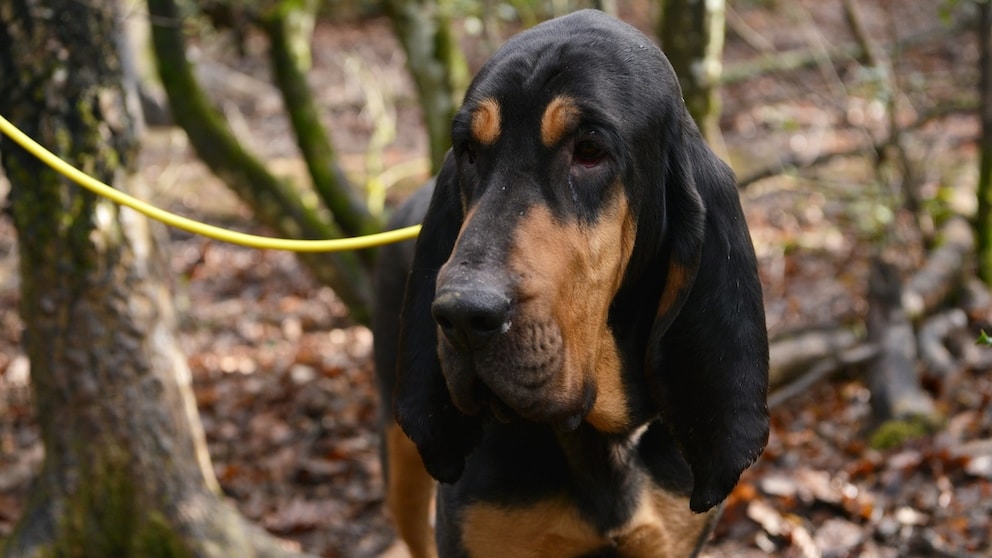
The Black and Tan Coonhound is a powerful, medium to large dog with a muscular body and elegant lines. Males reach a shoulder height of about 63–68 cm, while females are slightly smaller. The weight is around 25 kg, but can vary. Characteristic is the short, dense, close-fitting coat in rich black with distinctive tan markings on the eyebrows, chest, legs, and under the tail–hence its name.
The long, low-set hanging ears and the pronounced, slightly arched muzzle are reminiscent of the Bloodhound, but without its wrinkles. Particularly striking are its large, dark brown eyes, which convey a calm, gentle expression. Its movement is expansive and rhythmic, underscoring its hunting endurance and agility. The weatherproof coat reliably protects it during operations in rough terrain and various climates–a prerequisite for its original purpose as a hunting dog.
Character & Temperament
The Black and Tan Coonhound combines an exceptionally friendly, calm basic character with great determination at work. It feels particularly comfortable in a pack, making it very social and easygoing with other dogs. It is usually open to people as well, although sometimes initially a bit reserved. At its core, it is a highly specialized hunting dog: persistent, unwavering, and with an excellent sense of smell, it follows any trail, often for hours.
At the same time, it possesses high stress tolerance, low aggression potential, and a clear head–qualities that make it a pleasant companion in everyday life. However, its stubbornness should not be underestimated: Its independence is not a sign of a lack of intelligence, but an expression of centuries-old selective breeding for independent work. When properly engaged–such as through mantrailing–it shows itself to be balanced and affectionate.
Training
Training a Black and Tan Coonhound requires consistency, empathy, and clear, fair leadership. It is intelligent and capable of learning, but also independent and occasionally stubborn–especially if underchallenged or treated too harshly. Early socialization, positive reinforcement, and clear structures are crucial.
As a pack dog, it responds well to bonding and cooperation, but also needs sufficient activity to prevent behavioral problems. Particularly suitable are search games, scent work, or mantrailing, which promote its natural abilities. An untrained, bored Coonhound can quickly become headstrong and make independent decisions–usually not to the delight of its humans.
Proper Care & Maintenance
A Black and Tan Coonhound does not belong in a city apartment–it needs space, exercise, and above all, mental stimulation. Ideally, it lives in a house with a securely fenced yard and has daily opportunities for extended outings in nature. Its hunting heritage calls for appropriate work, whether through dog sports, tracking, or actual hunting missions. Being alone should be avoided, as the social Coonhound seeks close connection with its caregiver(s).
Coat care is straightforward: Regular brushing once or twice a week is sufficient to keep the short, dense coat healthy. It’s important to check the long hanging ears, as they can be prone to infections. Owners should also regularly inspect the eyes.
Nutrition
The Black and Tan Coonhound has no special dietary requirements but is sensitive to incorrect nutrient ratios. A protein-rich, meat-based diet with about 70–80% meat content is ideal. This is supplemented with vegetables and rice. Especially during growth, attention should be paid to a balanced calcium-phosphorus ratio and moderate protein intake to avoid skeletal diseases. Puppies should continue to receive the familiar food from the breeder in the first weeks after moving.
Afterward, a gradual transition to high-quality adult food can be made. Two fixed meals per day and controlled weight are essential–Coonhounds tend to become overweight with improper feeding, which can endanger their joint health in the long term. Fresh water should always be available.

The Polish Hound Is Not a Dog for Everyone

Why the Bloodhound Is Still Considered the Best Tracking Dog
Susceptibility to Certain Diseases
The Black and Tan Coonhound is generally considered a robust and healthy breed. Breed-specific diseases are not known, although–as with many larger dogs–hip dysplasia (HD) occasionally occurs. The risk can be significantly minimized through responsible breeding, joint-friendly care during growth, and an adapted diet.
Especially in the first year of life, excessive physical strain should be avoided–this includes abrupt stops during play or frequent stair climbing. Regular ear care helps prevent inflammatory diseases due to the long hanging ears. Preventive examinations and conscious health management also contribute to a long life expectancy of about 10–12 years.
The Black and Tan Coonhound at a Glance
- Character: Calm, friendly, headstrong, social, eager to work
- Size: Males about 63–68 cm, females slightly smaller
- Weight: About 25 kg, no standard weight specified
- Coat: Short, dense, weatherproof
- Special Features: Extremely fine sense of smell, excellent tracking dog, high need for movement