

September 1, 2025, 4:06 am | Read time: 6 minutes
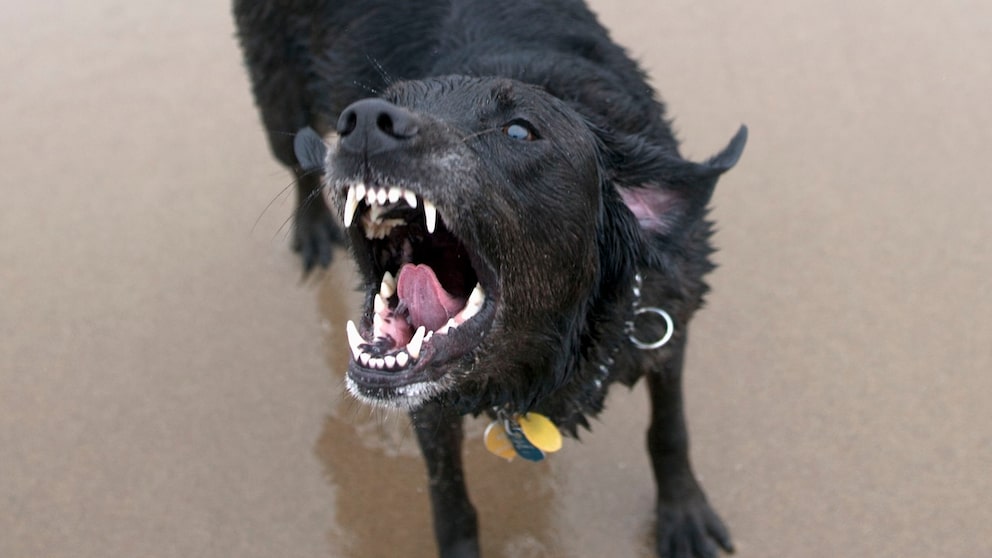
It happens every day–on walking paths, in parks, or while strolling through the city: A dog growls, snaps, or suddenly lunges forward seemingly “out of nowhere.” For outsiders, the judgment is often quick: “That dog is aggressive!” But those who look closer–or rather, feel closer–realize that in most cases, it’s not a “dangerous beast” standing before them, but a dog whose warning signals were simply overlooked or ignored.
People Often Don’t Notice These Subtle Stress Signals
When a dog bites for the first time, it seems surprising to laypeople: The dog lies quietly next to its owner–and suddenly lunges forward when someone tries to pet it. Or it walks on a leash and suddenly darts toward another dog without warning. The truth is, the dog has usually communicated long before that it feels uncomfortable. It may have slightly turned its head away, laid its ears back, blinked, or licked its lips, stiffened its body, or growled softly.
But we humans often don’t notice these subtle stress signals–or misinterpret them. Instead of thinking “Oh, it wants space,” many interpret it as “Oh, it’s just tired” or “It wants to play.” This leads to the dog eventually resorting to more obvious measures, like snapping or biting. Not out of malice, but because its quieter messages were ignored.
Dogs Also Have Personal Space
Every person has it–and every dog does too: personal space. It’s the personal area where we feel safe. For humans, we notice it when someone in the supermarket gets too close. We take a step back or feel slightly uncomfortable. For dogs, it’s similar, except they often defend their space more clearly.
This space isn’t the same for every dog: A well-socialized Labrador might enjoy being petted by strangers. A former street dog might prefer to observe from a distance. An older dog with pain reacts more sensitively to approach. If this space is violated, it can immediately cause stress for some dogs–especially if it involves strangers or unfamiliar dogs. This can lead to flight behavior, or–if escape isn’t possible, such as on a leash–to defensive behavior like growling or snapping.
Also interesting: Dog growling? What you should never do
A Leash Doesn’t Prevent Dogs from Biting
Many people think: “A dog on a leash is harmless–it can’t run up.” That’s true–and is also the problem. On a leash, the dog has no chance to escape. If someone gets too close, often the only option is to defend forward. This isn’t about aggression, but about a lack of options.
Leash laws not only protect others but can also increase the dog’s stress if people don’t learn to keep their distance. If you see a leashed dog, you should give it more space, not less.
Common Misunderstandings in Everyday Life Show How Quickly Conflicts Arise:
Case Study 1 – “He Just Wants to Play!”
An unleashed dog runs toward a leashed one while its owner calls out: “He won’t do anything!” The leashed dog starts growling and snapping. Result: Argument between the owners–the leashed dog was just defending its personal space.
Case Study 2 – “We Can Pet Him, Right?”
A person walks directly up to a dog, bends over it, and reaches for its head. The dog pulls back but is held in place. Finally, it snaps in the air. Not a bad dog–but a dog whose escape was taken away.
Case Study 3 – “Just Saying Hello”
Two people with dogs stop. The leashes are short, the dogs stand nose to nose. One turns its head away, the other moves forward–and a bite occurs. Reason: far too little space and too much pressure in a situation with no escape options.
Case Study 4 – “The Visitor Just Wanted to Say Hello”
A friend visits and enters the living room where the dog is lying in its spot. Without hesitation, she approaches, bends down, and reaches out to pet it. The dog turns its head away, licks its lips briefly, and tries to turn sideways. The visitor ignores these signals and moves even closer. Finally, the dog growls–and when that is also ignored, it snaps in the air. To the visitor, it seems like a sudden outburst, but the dog had repeatedly signaled that it didn’t want to be disturbed in its retreat area.
Everyone Should Know These Warning Signals
To prevent snapping, it’s worth knowing the stress signals of dogs. They’re like an early warning system: yawning without tiredness, licking or licking the lips, turning away the gaze, laying ears back, stiffening the body, shifting weight, growling. Growling isn’t “bad” behavior, but a gift: The dog clearly says “Please stop, this is too much for me.” Punishing a growl takes away the dog’s ability to warn–and increases the risk of a sudden bite.

Why Dogs Never Bite “Suddenly”

Fear and Overwhelm in Dogs Can Turn Into Aggression
Important Behavioral Rules When Dealing with Dogs
With a few simple behavioral rules, many misunderstandings can be prevented:
- Respect personal space–don’t just approach unfamiliar dogs, and don’t let your dog make contact without permission.
- Always ask the owner–”May I pet your dog?” is not only polite but safe.
- Read body language–pay attention to the dog’s gaze, posture, and movements. Better to keep too much distance than too little.
- Use the leash wisely–give your dog as much freedom of movement as possible on the leash so it can avoid.
- Train a distance signal–teach your dog to keep distance or stay with you when unfamiliar dogs or people approach.
Conclusion: A Dog That Growls or Snaps Isn’t Automatically Aggressive
Dogs live with us in a world they didn’t choose. Streets, shopping areas, narrow paths–all of these are full of stimuli and encounters that can cause stress for them. If we learn to see their signals and respect their need for distance, we not only prevent biting incidents–we also create more safety, trust, and relaxed encounters. The goal isn’t to train every dog to be an “everyone-can-do-anything dog.” The goal is to give them enough autonomy and protection so they don’t feel the need to defend themselves.
A dog that growls, snaps, or even bites isn’t automatically aggressive as a character trait. It shows behavior. Often, it’s cornered–physically or emotionally. Those who understand this will judge less and listen more. So on the next walk, remember: Stay a step further away, observe body language–and give dogs their space. They’ll thank you–and everyone involved will remain unharmed.

About the Author
Katharina Marioth is the founder of the brand Stadthundetraining and the KEML principle. She is an IHK- and government-certified dog trainer and behavioral assessor for dangerous dogs in Berlin. In her daily business, she works closely with veterinarians, scientists, and other specialists on dog-related topics. With her knowledge and skills, she secured the title of Dog Trainer of the Year 2023 in the Sat.1 show “The Dog Trainer Champion.”