

September 18, 2025, 3:11 pm | Read time: 6 minutes
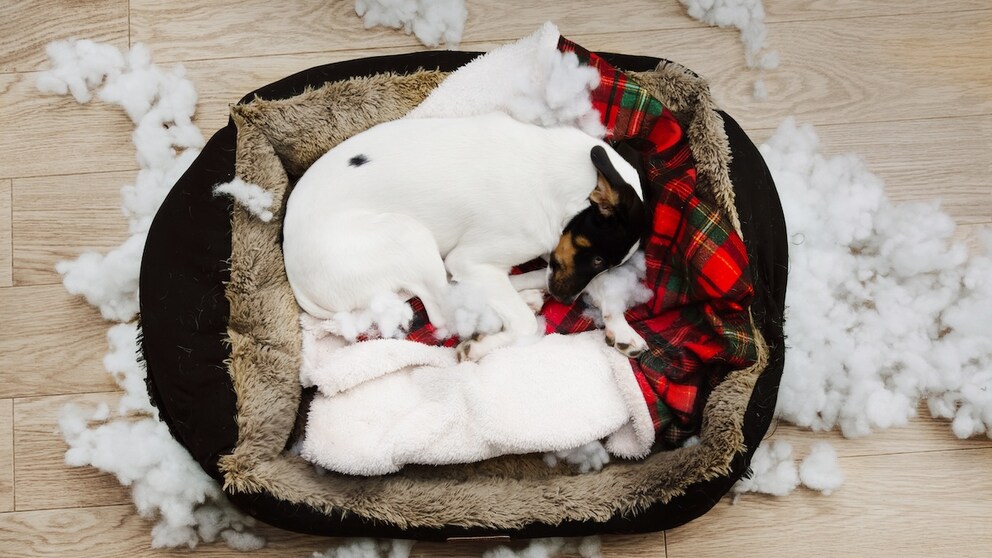
Just back from vacation, and it’s already time to return to work. But suddenly, the dog tears apart the house, howls and barks loudly, and sometimes even loses its house-training. Does this sound familiar? This is often due to separation anxiety in dogs after the holidays. Dog trainer Katharina Marioth explains the causes and what really helps.
After the Vacation Bliss Comes the Challenge
When summer is over and everyday life resumes, many dog owners face a familiar challenge: After weeks of shared experiences, the dog suddenly has to stay alone for several hours again. Separation anxiety in dogs after the holidays is an issue that even owners of multiple dogs should take seriously.
The sensitivity of the summer period is easy to explain. For weeks, dog and human are almost constantly together. Walks, outings, perhaps even trips in the RV or to a vacation home. The dog’s life is full, varied, and most importantly: the human is there. For many dogs, this time creates a kind of “overdose of closeness.” The sudden return to reality—owner working eight hours away from home, kids at school—can feel like a small shock. Dogs don’t understand the routines; they only feel: Suddenly it’s quiet. Suddenly security is missing. Suddenly boredom sets in.
More Dogs, More Problems?
The causes of separation anxiety are varied. On one hand, the attachment pattern plays a significant role. Dogs that are very attached to their humans panic more quickly when they are absent. On the other hand, expectations are crucial: If the dog has learned that being close to humans is the norm, being alone feels like an exception.
Genetic factors, individual experiences, and age can also play a role. With a second dog, there’s often hope that it will support the first dog. But that doesn’t happen automatically. Dogs are not babysitters. Sometimes they amplify each other’s nervousness, bark in duet, or restlessly roam the house together.
Also interesting: Why many dogs supposedly suddenly bite
With the Right Training, Separation Anxiety Is History
Gentle training methods don’t rely on punishment or harshness but on acclimatization, positive reinforcement, and security. Small rituals help give the dog orientation. A fixed place like a blanket or a basket can become a “safe haven.” When the dog lies there relaxed while the human works in the next room or briefly takes out the trash, it associates positive experiences with the state “I’m here—and nothing bad happens.” Praise, a chew item, or a toy filled with lick paste support this process.
Training is like a muscle—it atrophies if not used. Those who have been with their dog continuously for several weeks shouldn’t expect it to immediately show the same resilience again. Dogs also need a “re-entry.”
Important: Start training early and make the transition gentle. Training always begins small. Being alone is not a given but a learned behavior. After the summer holidays, dog owners should consciously reintroduce mini-steps: Leave the room, close doors, incorporate short absences. The emotional attitude is crucial. Leaving with a guilty conscience transfers insecurity. Dogs are masters at detecting the slightest mood changes. A confident, calm farewell without much fuss is often half the battle.
Even with two dogs, training should be built up in small steps. It’s important to accustom both dogs to being alone, both together and individually. Why? Because dependencies can develop. If the first dog has learned to stay calm only in the presence of the second dog, it becomes stressed when it has to stay alone—such as in case of illness. Conversely, the second dog can adopt the first dog’s insecure behavior if it only sees the example but doesn’t develop its own strategy. Therefore, separate training sessions should be established as a routine.

Why Many Dogs Struggle to Stay Alone

Dog Destroys Furniture? Expert: “It’s Not Revenge—It’s Panic”
Tips and Tricks Against Separation Anxiety in Dogs After Holidays
In addition to training, there are everyday aids that can ease being alone and separation anxiety in dogs after the holidays. Activities like lick mats, frozen food toys, or chew items offer distraction and help reduce stress hormones. It’s not about keeping the dog occupied for hours but making the moment of separation pleasant. Some dogs benefit from calming background music or an audiobook that brings familiar voices into the room. Scents like lavender or specially developed pheromone sprays can also have a supportive effect. It’s important that these aids never replace training but complement it.
A second dog, as mentioned earlier, can be a blessing or a curse. If both are insecure, stress increases. Clear observation is needed here. Video recordings during absence are a valuable tool. They show whether the dogs are really sleeping and relaxing or if they become agitated as soon as the door closes. Only with this honest feedback can the situation be accurately assessed.
A second dog can, as mentioned earlier, be a blessing or a curse. If both are insecure, stress increases. Clear observation is needed here. Video recordings during absence are a valuable tool. They show whether the dogs are really sleeping and relaxing or if they become agitated as soon as the door closes. Only with this honest feedback can the situation be accurately assessed.
Plan walks more consciously. Instead of exhausting the dog in the morning, which can make it even more dependent on your presence, consider a calm, structured start to the day. A walk with some nose work and short rest periods is often more effective than a wild ball-throwing marathon. After that, it’s easier to relax.
Conclusion
Separation anxiety in dogs after the holidays is normal but not inevitable. The causes lie in attachment, expectation, and lack of habituation. Gentle, gradual training and everyday support can significantly reduce stress levels. The goal is for each dog to be viewed individually and to learn to find security in their own calm.
Ultimately, you benefit too, as you can go to work without feeling guilty. Even when a door is closed between you and your dog.