

September 16, 2025, 8:47 am | Read time: 5 minutes
The Chodský pes, also known as the Bohemian Shepherd, is a true unsung hero among herding dogs. With its elegant appearance, strong work ethic, and friendly nature, it combines many qualities that make it appealing for both active families and professional use. But what makes this versatile dog from the Czech Republic so special—and does it really fit into every lifestyle?
Origin
The origins of the Chodský pes date back to the 14th century, when it was used as a herding and guard dog by the Choden people in southwestern Bohemia. These dogs guarded homes and farms in the Chodsko region and herded the livestock of local farmers. Their image was so closely tied to the region that their likeness even appeared on the local flag and was immortalized in literature, such as by Alois Jirásek.
Despite these deep historical roots, the modern Chodský pes is a relatively young breed. It wasn’t until 1984 that Czech cynologist Jan Findejs initiated a targeted breeding program based on historical sources and existing herding dog types. The first puppies were born in 1985. The goal was to establish a national dog breed that resembled the original appearance and working style of the old Choden dogs. The Czech Cynological Union (ČMKU) recognized the breed in 1984, and the Fédération Cynologique Internationale (FCI) followed in 2019 with a provisional recognition under standard number 364 in Group 1 (Herding Dogs and Cattle Dogs).
Appearance & Coat
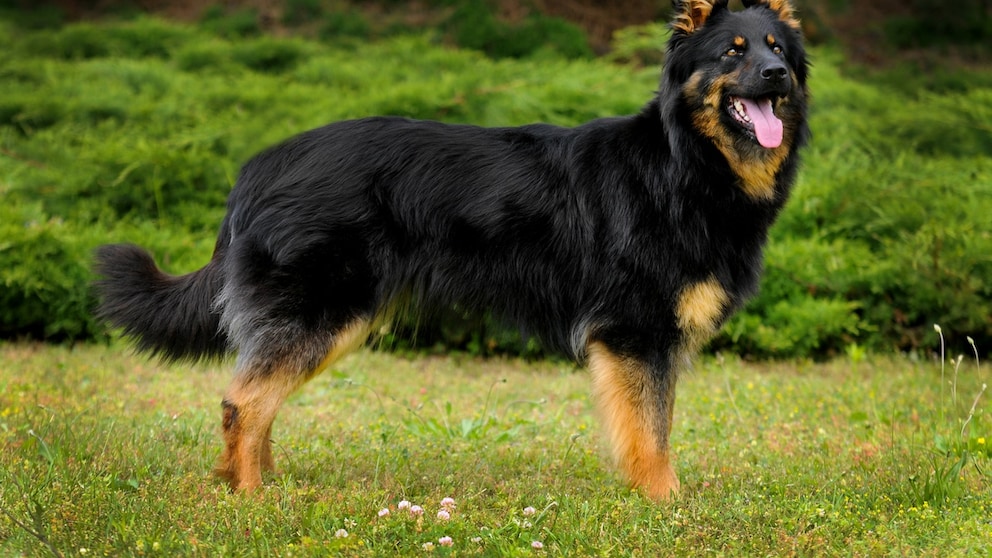
The Chodský pes is a medium-sized, athletic dog with a rectangular body and harmonious proportions. Males reach a height of 52 to 56 cm at the withers, while females are 49 to 53 cm. The weight ranges from about 19 to 27 kg for males and 17 to 24 kg for females, making it one of the lighter working dogs.
Typical is the long, silky, and weather-resistant coat with a dense undercoat. The base color is black or metallic black, combined with red-yellow markings—a color pattern known as “Black and Tan.” The markings are typically found above the eyes, on the cheeks, chest, belly, legs, and tail. The elegant coat slightly conceals the body shape but simultaneously emphasizes the dog’s graceful impression.
The head appears noble with dark brown, expressive eyes and small, closely set, triangular ears that are slightly forward-facing. Overall, the Chodský pes conveys a vigilant, friendly, and attentive appearance.
Character & Temperament
The Chodský pes is considered lively, intelligent, and people-oriented. Its reactions are quick but not nervous. It is strong-nerved, balanced, and shows a high willingness to cooperate. Its strong “will-to-please” facilitates communication with humans and makes it a pleasant companion—whether in everyday life or at work.
It usually gets along well with other dogs and behaves in a friendly to neutral manner toward strangers. In the family, it is affectionate, playful, and particularly child-friendly. Nevertheless, it is a true working dog that takes its tasks seriously. Its alertness is pronounced but can be well controlled with proper socialization. Thanks to its versatility, it is suitable as a family dog as well as for sporting and service roles—from rescue missions to avalanche searches to protection work and therapy.
Training
Training the Chodský pes is generally straightforward, provided there is consistent and loving leadership. Due to its high willingness to learn, intelligence, and close bond with humans, it can be well-trained—even by dedicated beginners, as long as they thoroughly inform themselves beforehand and seek support from dog schools or clubs.
Early socialization and clear, calm leadership are crucial to channel its protective instincts in the desired direction. Without confident leadership or if overwhelmed, the dog may take the initiative. Consistent but fair training ensures a harmonious coexistence in the long term.
Proper Care & Maintenance
As an active working dog, the Chodský pes requires plenty of exercise and mental stimulation. Daily walks of at least three to four hours, supplemented by dog sports or specific tasks like search or retrieval games, are essential. Ideal are athletic owners who enjoy hiking, jogging, or cycling—the dog eagerly accompanies them.
The breed should preferably not be kept in a small apartment. A house with a garden is advantageous, provided the dog is not isolated—social contact is essential. It also finds it difficult to be left alone, as it seeks a close bond with its people.
The long coat must be brushed regularly, especially during shedding. Daily brushing prevents matting and skin problems. Additionally, ears, teeth, and claws should be checked weekly.
Nutrition
The Chodský pes is a robust and not very susceptible dog, but it demands high-quality food. High-quality food with a high meat content, without unnecessary fillers like grains or soy, is recommended. The composition should be adapted to age, activity level, and health condition.
Puppies need special puppy food until about six months old, adult dogs benefit from balanced adult food, and seniors from nutrient-adjusted food to relieve the heart, kidneys, and joints. Chew items help with natural dental care and prevent plaque. It is also important to adjust the food quantity to activity and weight to avoid obesity.
Why Hardly Anyone Knows the Dutch Shepherd
Why the Drentsche Patrijshond Is Considered a Hidden Gem from the Netherlands
Susceptibility to Certain Diseases
The Chodský pes is generally considered a healthy breed without known breed-specific hereditary diseases—an advantage over many other herding breeds. The average life expectancy is—rather unusual for such large dogs—13 to 14 years.
However, like other medium to large working dogs, orthopedic problems such as hip dysplasia (HD) or elbow dysplasia (ED) can occur, especially with overexertion, improper care, or genetic predisposition. Therefore, when buying a puppy, attention should be paid to reputable breeding with veterinarian—checked parent animals. Controlled breeding lines also minimize the risk of other genetic diseases, such as degenerative myelopathy or deafness.
The Chodský pes at a Glance
- Character: Lively, eager to work, intelligent, family-oriented
- Size (shoulder height): Males 52–56 cm, females 49–53 cm
- Weight: Males 19–27 kg, females 17–24 kg
- Coat: Long stock hair with dense undercoat
- Exercise needs: High, requires a lot of exercise and variety every day
- Average life expectancy: 13 – 14 years
- Special features: Versatile–suitable for dog sports, protection, and rescue work