

July 30, 2025, 9:03 am | Read time: 5 minutes
The Thai Ridgeback is one of the rarest dog breeds in the world—yet it’s a true natural talent. With its independent nature, impressive physique, and distinctive “ridge” on its back, it clearly stands out from other breeds. Originally valued in Thailand as a guard and hunting dog, it is now considered a demanding companion for experienced owners. Those who commit to this four-legged friend will gain a loyal, athletic, and vigilant companion—provided they can handle its stubbornness.
Origin
The origins of the Thai Ridgeback date back a long time. The first written mentions can be found in Thai manuscripts over 360 years ago. The breed’s origin lies in the eastern region of Thailand, particularly in the provinces of Chanthaburi and Rayong. There, it served for a long time as a hunting dog and loyal companion in securing carts. Due to the poor infrastructure at the time, the breed remained isolated for centuries, preserving its original type.
The Thai Ridgeback is therefore counted among the so-called pariah dogs—descendants of feral domestic dogs that have largely sustained themselves without targeted breeding developments. It was only when established breeders in Bangkok began systematic breeding that characteristics such as body structure, coat color, and the namesake ridge were deliberately promoted. Nevertheless, the population remains small: In Thailand, the number is estimated at only about 2,500 animals. Internationally, the breed became known only recently and remains a great rarity.
Appearance & Coat
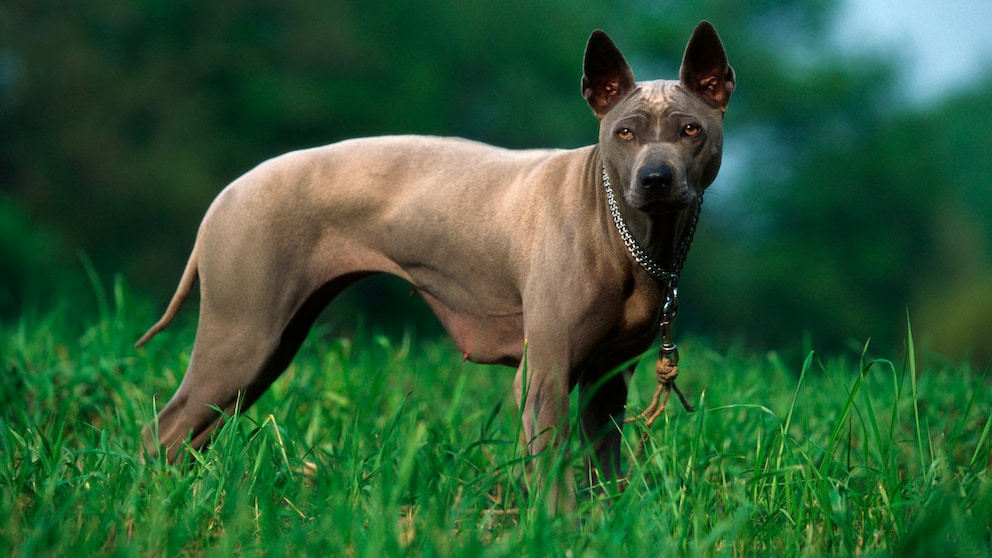
The Thai Ridgeback is a medium to large dog with a powerful, athletic build. Its body length slightly exceeds its height at the withers, giving it a harmonious and agile appearance. Particularly striking is the so-called “ridge”—a clearly visible hair ridge on the back, where the hair grows in the opposite direction to the rest of the coat. This ridge varies in shape and length but must be symmetrical and clearly defined.
The overall appearance is complemented by erect ears, an alert expression, and a high-set, strong tail. The coat is short, smooth, and lies close to the body. Colors allowed are red (often with a black mask), black, blue, and a very light fawn (also known as “Isabella”). Combined with its muscular appearance, the Thai Ridgeback looks powerful and elegant at the same time.
Character & Temperament
The Thai Ridgeback is considered intelligent, alert, and highly independent. It often appears distant to strangers without being aggressive—a behavior that reflects its origin as a guard dog. Toward familiar people, however, it is exceptionally affectionate, sensitive, and even cuddly. Its nature is characterized by high self-motivation, which is why it likes to make its own decisions. This confident nature requires clear but sensitive leadership.
Its pronounced urge for movement and natural hunting instinct make it an active partner that needs both mental and physical challenges. Despite its robustness, the Thai Ridgeback is a sensitive dog that can form a close bond with its people—if treated with respect and consistency.
Training
Training a Thai Ridgeback requires experience, patience, and consistency. Due to its pronounced stubbornness, it is not suitable for beginners. While it is intelligent and capable of learning, its hunting instinct and independence can lead it to consciously disobey commands—especially if something more exciting beckons outside. Early socialization and consistent, non-violent training are therefore essential.
This breed reacts sensitively to pressure or harshness—better is positive reinforcement through praise, play, or food rewards. It is also important to establish clear rules in everyday life that the dog can follow. Sometimes it is said that the Thai Ridgeback is considered a “list dog” in Germany. This is not the case. However, the breed is banned in certain regions or cantons in Switzerland. Owners should therefore inform themselves about legal requirements in advance.
Proper Care & Maintenance
The Thai Ridgeback needs plenty of space, exercise, and activity—living in a small apartment or city center is unsuitable for it. Ideally, it should have a home with a large, securely fenced yard where it can move freely and guard its surroundings. Due to its impressive jumping ability—jumps of up to two meters have been observed—the fence must be sufficiently high and stable.
Its high activity level requires daily, varied walks and mental stimulation. The breed is also suitable for agility or other dog sports. In terms of care, the Thai Ridgeback is uncomplicated: Its short coat is easy to maintain and should only be brushed occasionally to remove loose hair and stimulate the skin.
Nutrition
Regarding nutrition, the Thai Ridgeback has no special requirements, provided it is high-quality food. A high meat content is important, as dogs are carnivores. Grains and sugar should be avoided as much as possible, as these ingredients are neither necessary nor beneficial to health. Fruits and vegetables can be included in smaller amounts as sources of fiber and vitamins. Fresh drinking water should always be available. A balanced, species-appropriate diet not only supports health but also helps maintain the dense, shiny coat.

The Thai Spitz is a True Unsung Hero Among Dog Enthusiasts

Why the Tibetan Terrier Doesn’t Simply Obey Blindly
Susceptibility to Certain Diseases
The Thai Ridgeback is generally considered a robust and healthy breed. Its centuries-long natural development, far from fashionable overbreeding, has kept many hereditary diseases at bay. However, there are breed-specific health risks. These include hip dysplasia (HD), a joint malformation common in many medium to large breeds. Skin problems such as dermatitis can also occur. The “ridge” plays a special role: It is genetically related to a malformation similar to spina bifida in humans.
In this context, affected dogs may develop a condition known as dermoid sinus—a cystic change along the spine that can cause severe inflammation if left untreated. Regular veterinary check-ups and careful breeding selection are crucial to identify and minimize such risks early.
The Thai Ridgeback at a Glance
- Character: intelligent, independent, and alert
- Size: 22–26 inches
- Weight: 35–75 pounds
- Coat: short, smooth, with a characteristic “ridge” on the back
- Life Expectancy: about 12–13 years
- Special Features: rare breed, considered a “list dog” in some German states