

September 24, 2025, 4:26 am | Read time: 5 minutes
The Thai Bangkaew Dog is a true national dog in its native Thailand—known for its watchful gaze, magnificent coat, and strong family sense. In Germany, however, it is still considered a hidden gem among dog lovers. Those seeking an affectionate, intelligent, and characterful companion might find the ideal match in this Asian Spitz breed. But the Thai Bangkaew Dog is not for everyone—find out why in the following profile.
Origin
The Thai Bangkaew Dog originates from the village of Bangkaew in the Thanang-ngam region, located in the Bangrakam district of Thailand’s Phitsanulok province. According to legend, the breed emerged from a cross between a black-and-white female dog owned by a Buddhist abbot and a now-extinct wild dog. Intentional breeding began in the mid-1950s, laying the foundation for the current type from selected litters.
Due to its role as a guard dog, the Thai Bangkaew Dog quickly became a popular farm dog in rural Thailand. Its popularity grew over the years, and it is now widespread across the country, considered a cultural heritage of its origin region. Outside Thailand, however, the breed is hardly known. In Europe and the U.S., there are only a few specimens, and although the Thai Bangkaew Dog has been included in the FCI standard, it currently holds only provisional recognition. This limited distribution makes it a rarity outside Thailand.
Appearance & Coat
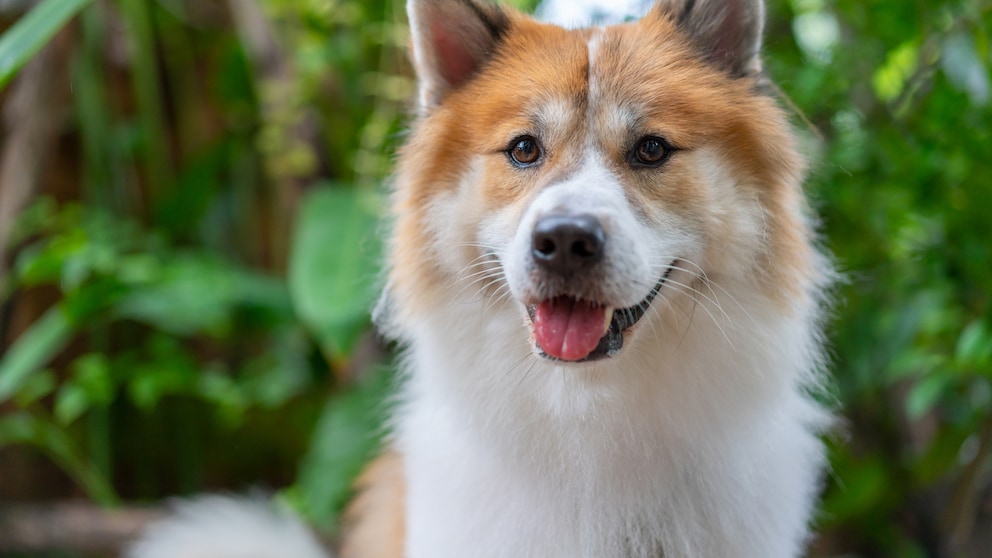
The Thai Bangkaew Dog is a medium-sized dog with a strong, square build. Males reach a shoulder height of 46 to 55 cm, while females are slightly smaller at 41 to 50 cm. The weight typically ranges between 16 and 20 kg. Notable is the double coat with straight, rather coarse outer hair and dense, soft undercoat. Particularly striking is the longer hair on the neck and shoulders, which forms a lion-like mane in many dogs—a sexually dimorphic feature that is especially pronounced in males. The backs of the limbs are also adorned with distinctive feathering.
Color-wise, clear white base areas with contrasting markings are typical, often in red, gray, fawn, lemon, or tan, sometimes with black hair tips—ranging from two-tone to three-tone is possible. Symmetrical facial patterns with a dark mask are preferred. The small, pointed ears and almond-shaped, dark eyes emphasize the breed’s alert and intelligent expression.
Character & Temperament
The Thai Bangkaew Dog is considered loyal, intelligent, and attentive. It is strongly attached to its family but tends to be reserved with strangers—a behavior rooted in its original use as a guard dog. The animals are lively, playful, and energetic, yet also show a certain independence. This combination of loyalty and protective instinct makes them vigilant family dogs, requiring consistent leadership.
Despite their seriousness toward strangers, they are friendly and eager to learn within their social environment. The close bond with their caregivers promotes a balanced nature, provided the dog is kept busy and socialized. Families with young children should ensure respectful interaction, as the Thai Bangkaew Dog sometimes assesses situations based on its protective motivation.
Training
Thanks to its high intelligence and comprehension, the Thai Bangkaew Dog can be well-trained—provided training starts early and is consistent. It responds sensitively to positive reinforcement and is motivated to learn new commands or tricks. However, its watchful nature requires careful socialization to mitigate potential skepticism toward strangers and new situations.
A clear role distribution within the household helps avoid uncertainties. Even experienced owners benefit from a professional dog school, especially regarding impulse control and leadership confidence. It’s important that training is patient yet purposeful—the Thai Bangkaew Dog wants to understand why it should do something.
Proper Care & Maintenance
This breed is not for couch potatoes: The Thai Bangkaew Dog needs plenty of exercise, variety, and mental stimulation. Daily walks, puzzle games, and ideally a secure yard contribute to its balance. Dog sports like agility can positively channel its urge to move. Generally, the dog can be kept in an apartment if sufficiently exercised, as long as it regularly has access to external stimuli.
Close social connection to its caregivers is particularly important—isolation is not good for it. Coat care is relatively demanding: The dense, long coat should be thoroughly brushed at least twice a week, even more frequently during shedding. Significant hair loss is expected, especially in spring and fall.
Nutrition
The Thai Bangkaew Dog does not have extraordinary dietary requirements. It is important to have high-quality food with a high proportion of animal protein, free from sugar and artificial additives. Both dry and wet food are possible, as is BARF, provided this diet is implemented knowledgeably.
The amount of food should be adjusted to the activity level, age, and weight. Fresh drinking water must be available at all times. For joint health, additional omega-3 fatty acids or special dietary supplements can be beneficial—especially for preventing genetically predisposed issues like hip dysplasia.

How the Indian Spitz Came to Be and What Makes It Special
The Shetland Sheepdog is More Than Just a Miniature Collie
Susceptibility to Certain Diseases
The Thai Bangkaew Dog is generally considered a robust and long-lived breed with an average life expectancy of 12 to 14 years. However, some genetically predisposed conditions can potentially occur. These include primarily hip dysplasia (HD), certain eye problems, and allergic reactions. Responsible breeding, using only clinically healthy parent animals, is essential to minimize the risk of disease. Therefore, prospective owners should ensure they buy from a reputable breeder with health-tested lines. Regular veterinary check-ups are also crucial to detect potential issues early.
The Thai Bangkaew Dog at a Glance
- Character: Alert, watchful, intelligent, loyal
- Size (Shoulder Height): Males 46–55 cm, Females 41–50 cm
- Weight: 16–20 kg
- Coat: Medium-length, double-layered, with mane and feathering
- Exercise Needs: High, requires plenty of daily activity and variety
- Average Life Expectancy: 12 to 14 years
- Special Features: Rarely found in Germany