

September 26, 2025, 4:48 am | Read time: 6 minutes
The Japanese Spitz initially appears like a fluffy stuffed animal—but upon closer inspection, one discovers an active, intelligent, and loyal companion with a remarkable urge to move. This rare breed from the Far East combines charming looks with a balanced temperament and is notably less prone to barking than many of its European relatives. Beneath the white fur lies more than just cuteness—it’s a dog with real demands.
The Japanese Spitz (Nihon Supittsu) is part of the Asian Spitz group and is considered a traditional companion dog in Japan. Although its name seems to clearly indicate its origin, its actual roots are not fully documented. As a family dog, the small Spitz is increasingly appreciated in Europe–but its active character and care needs are often underestimated. Originally bred to accompany and delight people, it has little hunting instinct, is playful, intelligent, and highly eager to learn. Its low tendency to bark, combined with its alertness, makes it a pleasant housemate—but only if its physical and mental needs are adequately met.
Origin
The exact origin of the Japanese Spitz is still not completely clarified. However, it is generally considered likely that white German Spitz dogs reached Japan via Russia and Northeast China in the early 20th century. They quickly gained popularity there and were first presented at a dog show in Tokyo in 1921. Subsequently, systematic breeding began, involving not only German dogs but also Spitz from Canada, Australia, the U.S., and China.
The goal was to develop an elegant, pure white companion dog. In the early years, breeding was characterized by strong inbreeding, which later negatively impacted the breed’s genetic health. Since 1948, there has been an official breed standard, and the Nihon Supittsu was recognized as an independent breed by the Japan Kennel Club. While the breed’s popularity in Japan temporarily declined, the number of owners in Europe and North America is now slightly increasing—in Germany, however, the breed remains a rarity.
Appearance & Coat
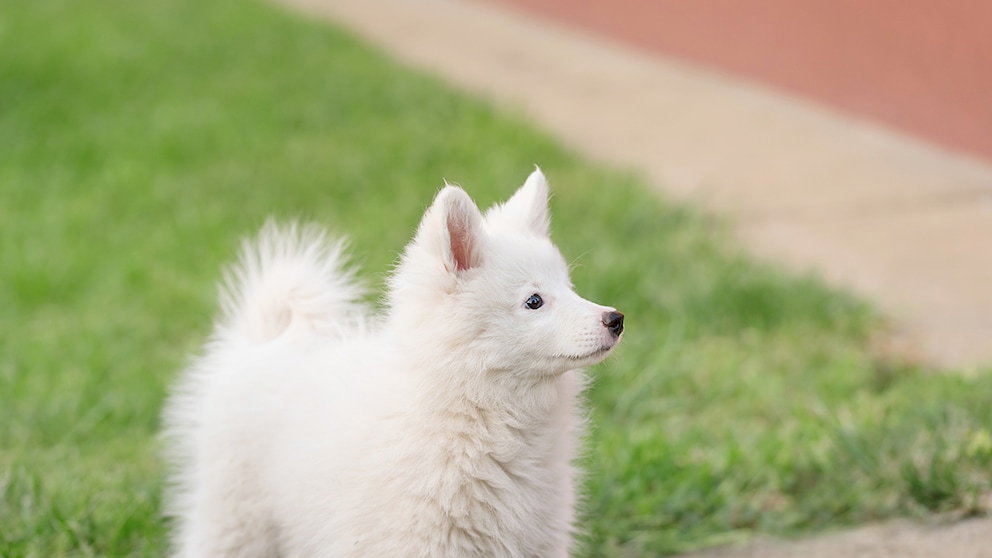
The Japanese Spitz is a small, well-proportioned dog with a lively demeanor and striking coat. Males reach a shoulder height of 30 to 38 cm, while females are slightly smaller but appear nearly the same size due to their dense fur. Characteristic is the pure, bright white coat with straight, standing outer hair and dense, short undercoat. The head has short, soft fur, as do the fronts of the legs.
Notable are the pointed snout and the small, triangular, erect ears, usually directed forward. The gaze is alert and friendly. The bushy tail is carried over the back, enhancing the plush overall impression. Despite its delicacy, the body appears strong and slightly longer than tall. Overall, its appearance gives it an elegant yet sporty look.
Character & Temperament
The Japanese Spitz is often described as lively, playful, and intelligent. It was specifically bred as a companion dog and is accordingly people-oriented, affectionate, and attentive. It is friendly and playful with children, but initially more reserved with strangers. This reserved nature makes it an attentive guardian that reliably alerts to uninvited visitors—but without excessive barking, which sets it apart from other Spitz breeds. Its low hunting instinct, high eagerness to learn, and strong need for closeness to its people make it a suitable family dog. However, it must be sufficiently occupied, as under-stimulation can lead to behavioral problems. With good socialization, it is also compatible and playful with other dogs.
Training
Training the Japanese Spitz is usually positive thanks to its intelligence and willingness to cooperate. It has a pronounced “will to please,” quickly understanding new commands. Its low tendency to roam and minimal hunting instinct further ease training. Nevertheless, it requires consistent yet empathetic leadership, especially in dealing with strangers and controlling its temperament. It is particularly important to expose the young dog to everyday stimuli early and teach patience. Dog sports such as agility or trick training are suitable to challenge it physically and mentally while strengthening the bond. The Japan Spitz, however, dislikes being left alone for long periods.
Proper Care & Maintenance
The Japanese Spitz is not a dog for couch potatoes. It needs daily exercise, mental stimulation, and close family connection. An active home where walks, games, and training are routine is ideal. Due to its energy, it is well-suited for sporty individuals or families experienced with active dogs. Coat care requires effort: daily brushing prevents matting, especially during shedding. Ears, teeth, and eyes should be regularly checked and maintained. Despite its cleanliness, the Japan Spitz sheds—albeit minimally. Early acclimation to grooming rituals is therefore essential.
Nutrition
In terms of nutrition, the Japanese Spitz is generally uncomplicated. However, high-quality food with a high meat content and without grains or artificial additives is important—especially for sensitive stomachs or food intolerances. Due to a genetic predisposition to dental issues, regular use of chew bones or dental care snacks is recommended, and soft food may be preferable to dry food if needed. Switching to senior food from the age of 8 can help prevent age-related ailments. Puppies benefit from tailored young dog food during growth. Fresh, low-calcium water should always be available. Obesity is a relevant risk—food quantity and exercise must therefore be carefully balanced.

Not for Beginners: Why the Shikoku Belongs in Experienced Hands

Japan Chin: Small Dog with Big Health Risks
Susceptibility to Certain Diseases
The Japan Spitz exhibits breed-specific health weaknesses, partly due to early inbreeding. The most common is patellar luxation—a dislocation of the kneecap that can be painful and may require surgical treatment. Additionally, some animals suffer from blocked tear ducts or distichiasis, a misalignment of eyelashes that irritates the cornea. Dental misalignments and severe tartar can be exacerbated by the narrow snout. Early veterinary checks and regular dental care are therefore crucial. Reputable breeders test parent animals for these conditions, significantly reducing the risk of hereditary diseases. With careful care, life expectancy ranges from 12 to 14 years, sometimes even longer.
The Japan Spitz at a Glance
- Character: playful, intelligent, affectionate, alert, reserved with strangers
- Size (shoulder height): 30–38 cm
- Weight: 4.5–11 kg
- Coat: lush, white coat with straight outer hair and dense undercoat
- Exercise needs: typical, enjoys running, and is eager to work
- Average life expectancy: 12–14 years
- Special features: low hunting instinct, rare breed in Europe, sporty despite small size