

August 3, 2025, 2:03 pm | Read time: 5 minutes
Elegant as a porcelain figurine, quiet as a cat, and loyal as a dog—the Japanese Chin fascinatingly combines traits of various animal species. Its adaptability and calm nature make it the perfect city companion, but its character goes far beyond mere charm. Due to health vulnerabilities, special caution is advised when purchasing this breed.
Origin of the Japanese Chin
The origins of the Japanese Chin date back to the early 8th century. Historically documented, the first ancestors of this breed arrived in Japan as a gift from a Korean ruler. There, the elegant small dog quickly found its way into the courtly nobility and developed over the centuries into an exclusive companion for aristocrats and upper-class ladies. Its compact body, which allowed it to be carried in wide kimono sleeves, was particularly valued–a prestige object of ancient Japan. A breeding ideal was: the smaller the dog, the higher its value.
Cynologists suspect a close relationship to short-nosed breeds from China, such as the Pekingese. This is reflected in both appearance and calm demeanor. Its popularity long remained confined to the empire until European monarchs like Queen Victoria received the first specimens in 1853. German Empress Augusta also received a Japanese Chin as a gift in 1880. Despite this royal distribution, the breed remained a niche dog in Europe and the U.S., known primarily for its graceful appearance and cultivated aura.
Appearance & Coat
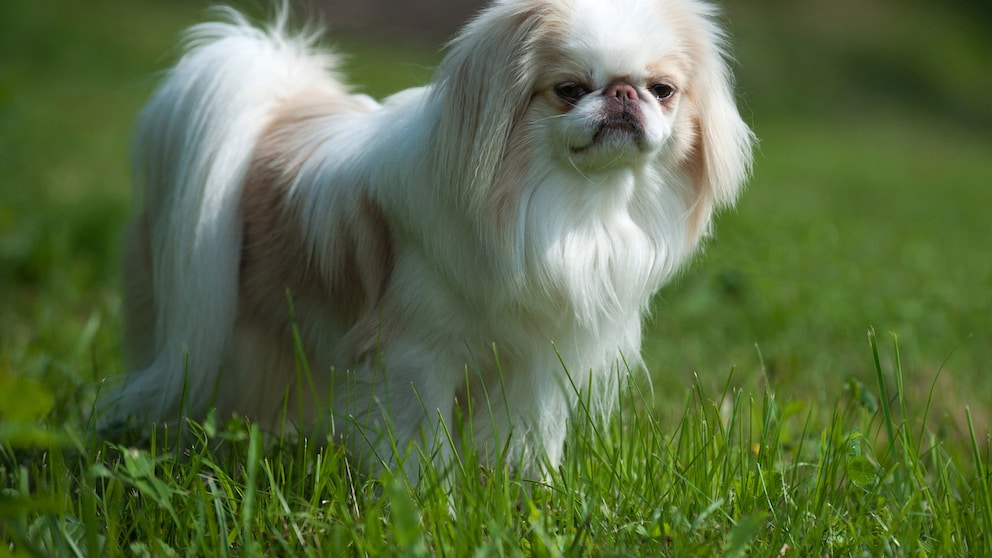
The Japanese Chin is among the smaller dog breeds, reaching a shoulder height of about 8 to 11 inches and weighing between 3.3 and 8.8 pounds. Its body is compact and square, yet surprisingly graceful and delicate. Particularly striking is the round, broad head with a short muzzle, large, slightly protruding eyes, and a symmetrical facial marking that gives the dog a typically oriental expression.
The long, silky coat is smooth and falls softly. It appears in white with black or red markings. In Japan, animals with a round spot on the forehead are especially prized—according to legend, a fingerprint of Buddha. The bushy tail is carried curled over the back, completing the elegant appearance. Its paws are slightly elongated, giving the dog a springy, stylish gait. The care of its fine hair requires regular and thorough brushing to prevent matting.
Character & Temperament
The Japanese Chin is considered a calm, cuddly, and sensitive companion dog with high social intelligence. Its alertness is expressed through short, quiet notifications, without being loud or intrusive—a pleasant roommate—even in noise-sensitive apartments. Aggressive or nervous behavior is completely foreign to it. It is peaceful, friendly, and open-minded towards people and other dogs.
Typical of the Chin is its strong bond with its caregivers. It loves closeness and affection and is very empathetic in dealing with human moods. It is more reserved with strangers. Its playful nature and quiet humor repeatedly provide surprising moments in everyday life. The Japanese Chin is a dog with character—loyal, attentive, but never intrusive. Its modest need for exercise makes it ideal for life in smaller households.
Training a Japanese Chin
The Japanese Chin is generally easy to train. Its high adaptability and desire to please its people make training significantly easier. Important is a loving but consistent upbringing without harshness. The Chin responds sensitively to the tone of its caregiver and benefits from calm, positive reinforcement.
Early socialization is advisable to reduce potential insecurities towards strangers. Despite its small size, it should not be underestimated—the Japanese Chin is intelligent and needs mental stimulation, such as small tricks or intelligence games. Due to its possible hunting instinct, recall training is beneficial.
Proper Care & Maintenance
The Japanese Chin is ideal for city living or small apartments. It requires little space and has moderate exercise needs. Daily short walks and some play indoors are usually sufficient to keep it satisfied. It does not refuse longer outings but does not demand them regularly. It is particularly suitable for older people or less mobile owners.
However, its long coat is high-maintenance. It should be brushed at least several times a week, daily during the coat change in spring and fall. Early habituation to the grooming ritual significantly eases regular coat care. The Chin usually enjoys the body contact involved. Additionally, it should never be left alone for extended periods—its close bond with humans makes it prone to loneliness.
Nutrition
The diet of the Japanese Chin should be balanced, species-appropriate, and individually tailored to age, weight, and activity level. Dry food, wet food, or BARF are generally suitable, as long as the composition is of high quality. Foods with wheat or sugar additives are unsuitable. A high meat content should always be present, supplemented by vegetables, fruits, and possibly rice or pasta.
Weight control is important, as the Japanese Chin tends to gain weight. Especially for less active or older dogs, the daily food ration should be adjusted accordingly. Attention should be paid to age-appropriate food types—such as puppy, adult, or senior food. Consultation with a veterinarian or breeder is recommended if there are uncertainties.

The Japanese Spitz: Why the White Companion Dog Is Little Known in Europe

Why the Clumber Spaniel Is Among Endangered Dog Breeds
Susceptibility to Certain Diseases
The Japanese Chin shows an increased susceptibility to certain, partly genetically determined diseases, especially in the eye area. The following problems frequently occur:
- Trichiasis: Misalignment of the eyelashes, leading to irritation of the cornea or conjunctiva.
- Distichiasis: Additional eyelashes from sebaceous glands that irritate the cornea.
- Dry eye (Keratoconjunctivitis sicca): Lack of tear fluid.
- Cataract: Clouding of the lens, which can lead to blindness.
Additionally, the Japanese Chin is more prone to hydrocephalus (water on the brain) and birthing difficulties. Early veterinary diagnostics and regular check-ups are essential. Reputable breeders pay attention to healthy parent animals and can reduce the risk through genetic selection, though it cannot be completely avoided.
The Japanese Chin at a Glance
- Character: Calm, cuddly, attentive, loyal
- Size: 8–11 inches shoulder height
- Weight: 3.3–8.8 pounds
- Coat: Long, silky, smooth
- Grooming Needs: High—regular brushing required
- Exercise Needs: Low, ideal for city and apartment living
- Special Features: Strong human bond, frequent eye diseases, high sensitivity