

August 10, 2025, 1:41 pm | Read time: 5 minutes
Its appearance resembles a wolf, and its nature is that of a freedom-loving adventurer: The Shikoku is one of Japan’s most primitive and rare dog breeds. With its muscular build, alert gaze, and remarkable endurance, this medium-sized dog was once bred for hunting wild boar–and still possesses a strong personality today. But how much of the wild dog remains in it?
Origin
The Shikoku hails from the island of the same name in southern Japan and was traditionally kept in the mountainous Kochi region by the Matagi–Japanese winter hunters. Its task: big game hunting, especially wild boar, in rugged terrain. Over centuries, this developed into a robust, sure-footed dog with a pronounced hunting instinct and high intelligence.
Historically, three breeding lines can be distinguished: Awa, Hongawa, and Hata. Today’s known Shikokus most closely resemble the Hongawa type. Old illustrations and ceramics attest to the long history of this breed. In 1937, the Shikoku was recognized by the Japanese government as a national cultural treasure–a testament to its high status in Japanese culture. Until the 1970s, it was forbidden to sell these dogs. Only afterward did some specimens make their way to Europe. Since 1982, the Shikoku has been officially recognized as a breed by the FCI.
Appearance & Coat
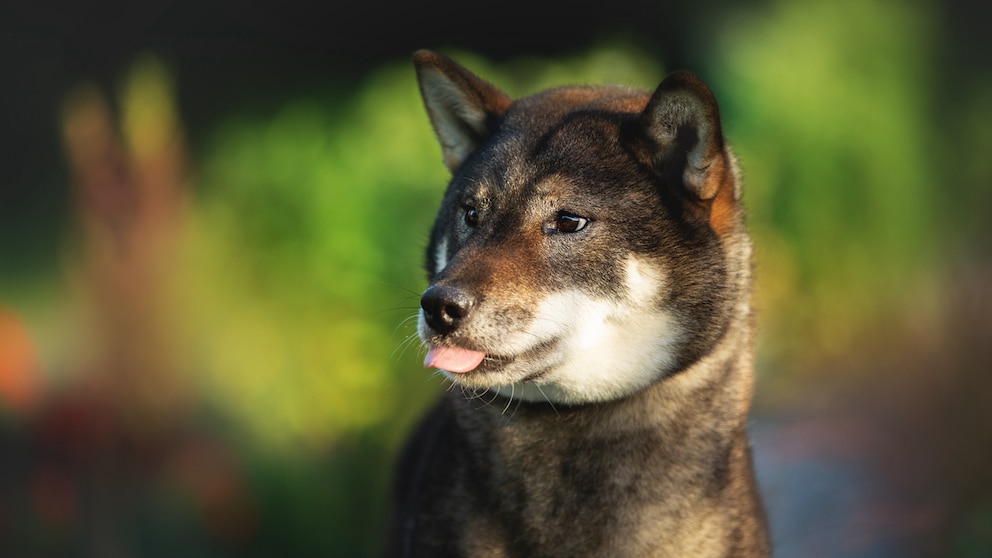
The Shikoku is a medium-sized, compactly built dog with a harmonious body structure. Males reach a shoulder height of about 52 cm, females around 49 cm. The weight ranges between 15 and 25 kg. Typical features include the erect, triangular ears and the high-set tail, which is sickle-shaped or curled over the back. The eyes are dark brown, slightly almond-shaped with a distinctive outer corner.
Its dense, double coat consists of a hard outer coat and soft undercoat–ideal for cold and harsh weather conditions. The coat colors are usually sesame (a mix of black, white, and red hairs), but variants in black sesame, red, or black and tan also occur. Its wolf-like appearance is further emphasized by the dense coat and athletic build.
Character & Temperament
The Shikoku is an alert, brave, and independent dog with a strong hunting instinct. It is considered intelligent, eager to learn, and very active–traits that trace back to its past as a hunting dog. It often appears reserved towards strangers, but not aggressive. It shows loyalty and affection to its owner, provided one has earned its trust.
The Shikoku is not a dog that submits unconditionally–it likes to act independently and can be stubborn or dominant if leadership is unclear. At the same time, it is calm and balanced in familiar surroundings. Its pronounced alertness makes it an attentive household guardian, capable of barking if it feels called to protect its environment.
Training
Training the Shikoku requires patience, consistency, and a delicate touch. Due to its independence, it is not suitable for beginners. Early socialization and learning basic commands are essential, especially considering its hunting instinct. This cannot be trained away but can be channeled through clear leadership and appropriate activities.
It is important to set clear boundaries for the Shikoku, but without using pressure or harshness. Those who respect its intelligence and stimulate it mentally and physically will be rewarded with a loyal and cooperative companion.
Proper Care & Maintenance
The Shikoku needs sufficient exercise and mental stimulation to remain balanced. Long walks, sports activities like jogging or agility, and search games are excellent. Due to its strong hunting instinct, off-leash running is often not recommended. Although the Shikoku can generally be kept in a city apartment, it needs plenty of space in daily life. In terms of care, the Shikoku is uncomplicated. Regular brushing–especially during the shedding season–keeps the coat clean and healthy. Nail care and regular checks of teeth, ears, and eyes are sufficient. Bathing is only necessary when heavily soiled.
Nutrition
In terms of nutrition, the Shikoku is usually unproblematic. High-quality dry or wet food is suitable, as is feeding according to the BARF principle. A protein-rich diet is important to meet the high energy needs of this active dog. Low-quality ingredients like sugar, grains, or artificial additives should be avoided.
Dental care snacks or chew items can also be useful to support oral hygiene. Veterinary advice on individual diet composition can be beneficial, especially for very active or sensitive animals.
The Japanese Spitz: Why the White Companion Dog Is Little Known in Europe

The Sealyham Terrier is a Great Family Dog—if You Know What You’re Doing
Susceptibility to Certain Diseases
The Shikoku is considered a very robust dog breed. No typical hereditary diseases are known so far. Its dense coat protects it excellently from cold and wet, but less so from heat. On particularly hot days, the Shikoku should therefore have plenty of shade and cooling. To avoid health issues like obesity, regular exercise is essential. Regular veterinary check-ups help to detect any abnormalities early.
The Shikoku at a Glance
- Origin: Japan, Shikoku Island
- Size: Males approx. 52 cm, females approx. 49 cm
- Weight: 15–25 kg
- Coat: Hard outer coat, soft undercoat
- Temperament: Alert, independent, loyal, intelligent, brave
- Nature: High-energy hunting dog with strong independence