

August 30, 2025, 5:59 am | Read time: 5 minutes
Small, robust, and full of spirit: The Australian Terrier is an energetic all-rounder with a big heart for its people. Originally bred as a versatile working dog in the rugged Australian landscape, it now tackles dog sports, family life, and outdoor adventures with the same enthusiasm. With its intelligence, adaptability, and a touch of terrier charm, it captivates not only experienced dog owners but can also become the ideal companion for dedicated beginners with the right training.
Origin
The Australian Terrier is one of the few terrier breeds that originated not in Great Britain but in Australia—and is considered the first terrier breed developed in Australia. Its roots trace back to the mid-19th century when British immigrants needed robust, versatile dogs for work in the harsh bushland. Various terrier breeds contributed to its development, including the Skye Terrier, Scottish Terrier, Cairn Terrier, Dandie Dinmont Terrier, as well as the Yorkshire Terrier and Irish Terrier. These crossbreeds endowed the Australian Terrier with the necessary toughness, agility, and fearlessness to combat snakes and rodents, herd livestock, and serve as a watchdog.
As early as 1863, it was exhibited under the name “Rough-coated Terrier” at a show in Melbourne. The first breed standard appeared in 1896, initially allowing for floppy ears—today, only erect ears are permitted. In 1963, it received international recognition by the FCI. Despite its versatility, its spread in Germany remained limited: Since the 1970s, only a few puppies have been registered in the breeding book of the Terrier Club in the VDH. Worldwide, however, the Australian Terrier enjoys great popularity as a hardworking companion and family dog.
Appearance & Coat
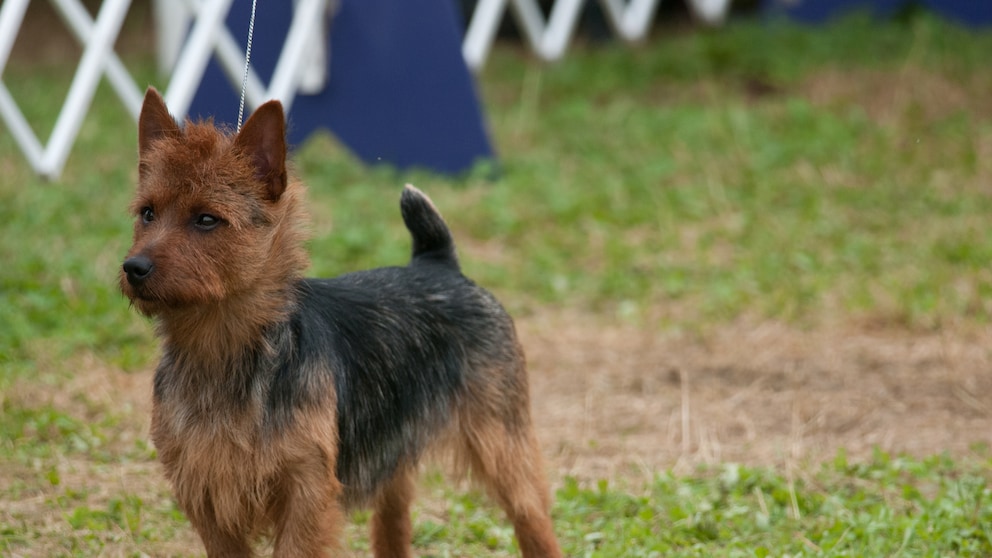
With a shoulder height of about 10 inches and a weight of around 14 pounds, the Australian Terrier is among the smallest working terriers. Its build is strong, elongated, and low-set, providing stability and agility. The long, flat skull with a slight stop, dark oval eyes, and small, erect ears give it an alert expression. The high-set tail is carried confidently but not over the back.
Characteristic is its harsh, approximately 2.5-inch-long topcoat with a short, soft undercoat. Around the neck and chest, it sports a pronounced ruff, emphasizing its robust appearance. The soft, silvery topknot on the head adds a striking accent. Approved color variants are blue with tan head and legs, as well as solid sand or red; white markings and shadings are undesirable. The weather-resistant coat protects equally against heat and cold and is exceptionally low-maintenance.
Character & Temperament
The Australian Terrier combines typical terrier traits such as confidence, alertness, and energy with a remarkable friendliness toward people. It is considered lively, playful, and affectionate, forming a close bond with its primary caregiver and, with good socialization, is also child-friendly. Its high threshold for stimuli and patience make it a reliable family dog—under supervision.
Despite its small size, it harbors the heart of a brave working dog. It is attentive, eager to learn, and versatile, whether in dog sports, as a companion for outdoor activities, or as a watchdog. With early and consistent socialization, it often gets along well with other dogs, although a certain hunting instinct remains.
Training
The Australian Terrier is intelligent and eager to learn but also possesses the typical terrier stubbornness. Consistency, patience, and positive motivation are therefore essential. Harsh methods or unfairness quickly lead to resistance. Basic obedience, impulse control, and managing its barking behavior should be practiced from puppyhood. Early socialization in puppy playgroups and dog schools helps reinforce desired social behavior.
Proper Care & Maintenance
Australian Terriers require daily mental and physical stimulation—long walks, hikes, or dog sports are ideal. They can be kept in both rural settings and city apartments, provided they receive enough exercise. At home, they are calm when sufficiently occupied. The coat requires only occasional brushing and combing, as well as plucking of dead hair (“trimming”). Thanks to its weather-resistant coat, the Australian Terrier is suitable for outdoor activities year-round.
Nutrition
The Australian Terrier does not have specific dietary requirements. High-quality, protein-rich food—whether dry, wet, or a balanced BARF meal—supports its health and vitality. Additionally, meaty bones or fresh meat are suitable. An adjusted food quantity prevents overweight, which could strain the joints. Fresh drinking water must always be available.

The West Highland White Terrier is Not a Lapdog
The Australian Stumpy Tail Cattle Dog is Best Suited for Experienced Handlers
Susceptibility to Certain Diseases
The breed is considered robust, especially with responsible breeding without excessive inbreeding. Nevertheless, breed-specific issues like patellar luxation (kneecap dislocation) and occasionally diabetes occur. Reputable breeders test their breeding animals for these conditions. Regular veterinary care, a balanced diet, and sufficient exercise promote a long, healthy life—many Australian Terriers live to be 14 to 15 years old.
The Australian Terrier at a Glance
- Size & Weight: about 10 inches shoulder height, around 14 pounds
- Character: lively, friendly, confident, alert
- Coat: harsh topcoat (about 2.5 inches), short undercoat, ruff at the neck
- Life Expectancy: 14–15 years
- Special Features: versatile working dog, family-friendly, moderate hunting instinct