

August 5, 2025, 4:06 am | Read time: 5 minutes
The Telomian is a fascinating rarity among dog breeds: As the only native Malaysian dog bred outside the country, it remains almost undiscovered. With its climbing agility, high intelligence, and primal hunting instinct, it embodies the perfect blend of wild dog and loyal companion—but only for experienced owners. So, what makes this dog so special, and what should you consider if you want to keep one?
Origin
The Telomian hails from Malaysia and is considered the only dog breed from the country bred outside its homeland. Originally, it was kept by the Orang Asli, the indigenous peoples of Malaysia. These dogs lived closely with village communities, fed on scraps, and protected homes from snakes and other pests. Typically, the dogs had to climb ladders to reach stilt houses—often over two meters high—which led to their unique climbing ability.
The breed was first discovered in 1963 by anthropologist Dr. Orville Elliot, who observed them in the Telom River Valley in Pahang and subsequently brought two animals to the U.S. In 1973, another breeding pair followed. All Telomians in the United States trace back to these four dogs. Although known outside Malaysia, the global population is small, and the breed is not recognized by the FCI or the AKC.
Appearance & Coat
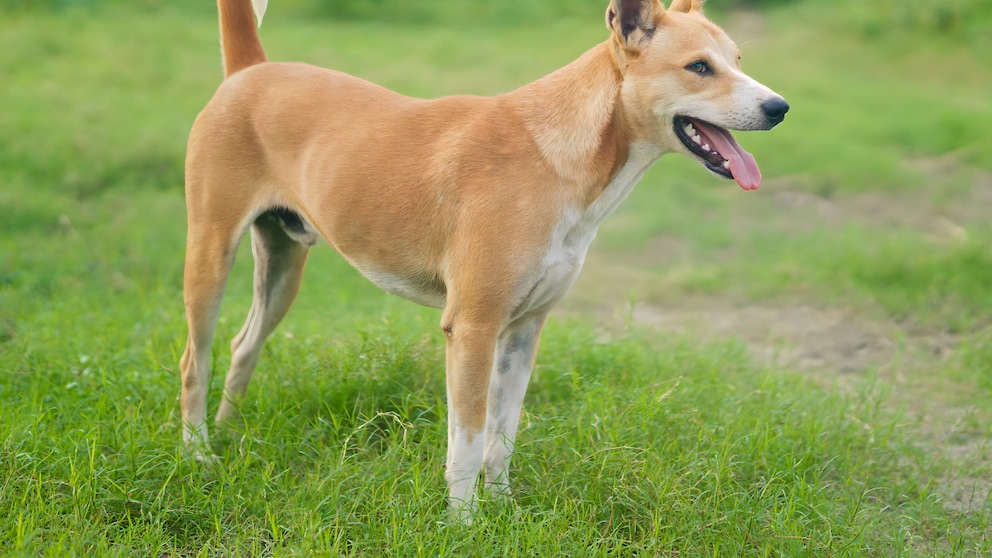
The Telomian is a small to medium-sized, highly athletic dog with a height of 15 to 19 inches at the shoulder and a weight of 18 to 29 pounds. Its body is compact and square. Typical features include almond-shaped eyes, forehead wrinkles, and an expressive face reminiscent of the Basenji—though not identical.
The coat is short and smooth but can appear slightly wiry. The Telomian displays a wide range of colors: from all sable tones to black, with white markings, brindle patterns, or black masks. Some dogs have a bluish-black tongue–a rare but breed-typical feature. Since there is no official breed standard, the appearance can vary slightly.
Character & Temperament
The Telomian is an energetic, intelligent, and curious dog with a strong hunting instinct. Its original role as a village guardian and snake hunter still influences its behavior: It is alert, brave, and always ready to protect its “pack.” Despite its independent nature, it often shows affection, playfulness, and a willingness to work with familiar people.
Due to its high stimulus threshold and temperament, the Telomian is not suitable for beginners. It requires mental stimulation and clear structures in daily life. With proper socialization, it can be a loyal and loving companion, but small children are not ideal playmates for this independent breed.
Training
Training a Telomian requires consistency, patience, and experience. Due to its high intelligence and independence, it can be willful—it learns quickly but also tests boundaries. Early socialization with people and other dogs is essential to avoid unwanted behavior patterns.
Positive reinforcement, clear communication, and varied training help maintain its attention. It is particularly helpful to give the Telomian a task—whether it’s scent work, agility, or trick training. This keeps it mentally challenged and better integrated into family life.
Proper Care & Maintenance
The Telomian is ideal for a rural environment with plenty of space to move. A fenced yard or area for free running is almost a necessity, as these dogs are exceptionally good climbers and not easily confined. Daily, intensive exercise—preferably with a sporting challenge—is essential for its well-being.
The Telomian is low-maintenance when it comes to its coat: Weekly brushing is sufficient, and occasional bathing is only needed as necessary. Regular checks and cleaning of ears, teeth, and nails are important. Due to its origin, it prefers a warm, humid climate but can adapt to cooler regions with appropriate protection.
Nutrition
As an active, medium-sized dog, the Telomian requires a balanced, protein-rich diet. High-quality dry or wet food with meat as the main ingredient, supplemented with healthy fats and selected plant ingredients like sweet potatoes or berries, is ideal.
Fatty meats should be avoided to prevent obesity. It’s important to adjust the food portion to the activity level. Rewards from fresh fruits or vegetables are possible—but only in consultation with a veterinarian to rule out intolerances.

Why the Miniature Schnauzer Is a Popular Family Dog Today

Why the Tibetan Terrier Doesn’t Simply Obey Blindly
Susceptibility to Certain Diseases
Little is known about breed-specific hereditary diseases in the Telomian. However, the limited genetic diversity—especially in the U.S. breeding line—suggests that a certain susceptibility to degenerative or autoimmune diseases cannot be ruled out.
Generally, Telomians are considered robust dogs well adapted to tropical conditions. Sensitivity to cold is an issue that should be addressed with appropriate protection. Regular veterinary check-ups and responsible breeding practices are crucial to maintaining the health of the population.
The Telomian at a Glance
- Temperament: Alert, intelligent, playful, independent, territorial
- Size: 15–19 inches at the shoulder
- Weight: 18–29 pounds
- Coat: Short-haired, smooth or slightly wiry
- Special Traits: Extremely agile climber, rare vocalization (howling instead of barking), high prey drive