

September 3, 2025, 8:54 am | Read time: 5 minutes
The Miniature Schnauzer is a true powerhouse in a small package. With its distinctive appearance, independent nature, and remarkable intelligence, it ranks among Germany’s most popular companion and family dogs. However, those interested in this breed should take a closer look: The Miniature Schnauzer has a big personality in a small body.
Origin
The Miniature Schnauzer originally comes from Germany and is the smallest variety of the three Schnauzer breeds—alongside the Standard and Giant Schnauzer. Its roots go back to the 19th century when smaller types were selectively bred from the rough-haired variant of the Pinscher. Early names like “Rattler” or “Stable Pinscher” refer to its original role as a stable dog and mouse catcher in horse stables. The ancestors of the Miniature Schnauzer accompanied coachmen, guarded their wagons, and kept stables free of vermin.
In 1895, the Pinscher-Schnauzer Club was founded, actively promoting the breeding of the Miniature Schnauzer. Initial distinctions from the similarly small Affenpinscher became visible at exhibitions in 1899. However, official recognition by the FCI did not occur until 1955. The breed owes its clear lineage to dedicated breeders like Josef Berta and Max Hartenstein. Today, the Miniature Schnauzer is considered a miniature version of the Standard Schnauzer and is a popular breed for active families and city dwellers in Germany and internationally.
Appearance & Coat
The Miniature Schnauzer has a compact, sturdy appearance with an almost square body structure. Despite its small size, it does not appear delicate—its body proportions and movements demonstrate strength and endurance. Males reach a height at the withers of about 13 to 15 inches, females between 12 and 14 inches. The weight varies depending on body structure between 9 and 18 pounds.
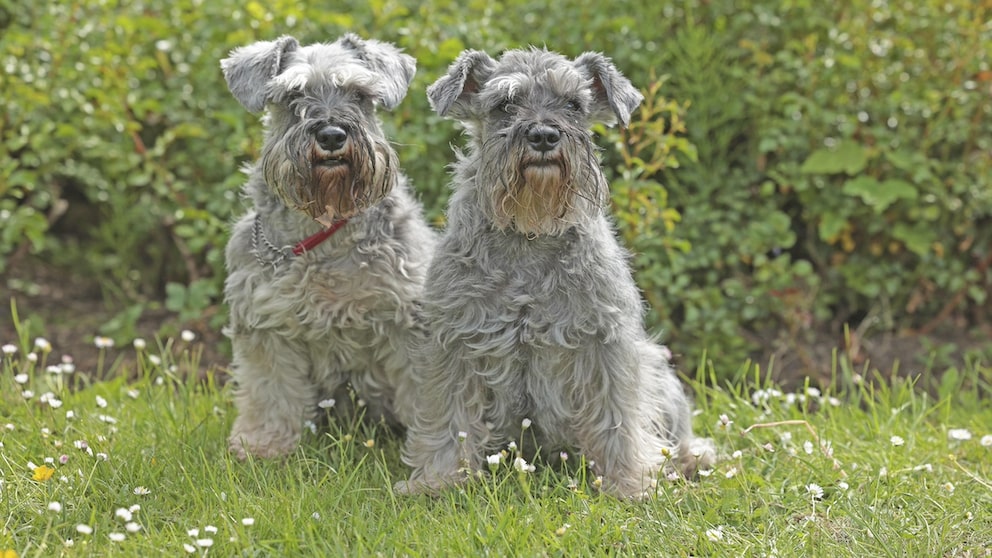
Particularly striking is its typical Schnauzer face with bushy eyebrows and a prominent beard. Its ears are set high and slightly tilt forward. The coat is wiry, hard, dense, and rough—with short hair on the body and longer sections on the legs and belly. The undercoat reliably protects against weather influences. According to the standard, four color variants are allowed: black, pepper-salt, black-silver, and white—with white specimens being relatively rare. An elastic gait with strong propulsion from the hindquarters completes the appearance of this small performance dog.
Character & Temperament
The Miniature Schnauzer is characterized by a lively, intelligent, and self-assured personality. Despite its small body size, it possesses great self-confidence and behaves fearlessly, attentively, and sometimes stubbornly. It is considered very affectionate and family-oriented, loves being close to its people, and enjoys participating in daily activities.
At the same time, it brings a pronounced guarding instinct—without being aggressive. It approaches strangers with caution but remains alert and interested. Its high intelligence makes it a versatile companion dog that also feels comfortable in dog sports such as agility, obedience, or tracking.
The Miniature Schnauzer is robust, spirited, and sensitive at the same time—a true all-round talent with character.
Training
Thanks to its intelligence and eagerness to work, the Miniature Schnauzer can generally be trained well—provided its owner shows consistency and clarity. Harshness is out of place; instead, positive reinforcement and patience should be used. Early socialization is crucial for the dog to behave confidently and balanced in everyday life.
A certain stubbornness can occur depending on the character—clear rules and a consistent approach help prevent this. The barking behavior should also be controlled from the start, as Miniature Schnauzers can tend to bark extensively if they feel unsupervised or underchallenged.
Proper Care & Maintenance
Miniature Schnauzers adapt well and feel comfortable in both apartments and houses with gardens—provided their owners ensure sufficient daily activity. They should plan at least two hours of exercise per day and combine this with mental engagement. Walks, puzzle games, or sports activities like agility promote the dog’s physical and mental well-being.
Coat care is more demanding than for many other breeds: The wiry coat must be regularly brushed and professionally trimmed several times a year. Clipping is not recommended, as it can damage the hair structure. Eyebrows and beard also require regular care. Overall, the breed is considered robust and low-shedding.
Nutrition
The active Miniature Schnauzer requires a balanced, protein-rich diet to optimally support its muscles. High-quality food with a high proportion of animal protein is recommended, especially for dogs that are actively engaged in sports.
Owners can adjust feeding individually: They can combine dry and wet food or opt for raw feeding (BARF). The quality of the ingredients and consideration of energy needs according to activity level are important. Supplements like salmon oil provide valuable omega-3 and -6 fatty acids. Pure wet food can lead to digestive problems in sensitive dogs—here, a balanced mixed feeding is advisable.
Russian Black Terrier: What to Consider When Keeping This Guard Dog

Lagotto Romagnolo: From Duck Hunter to Renowned Truffle Dog
Susceptibility to Certain Diseases
Generally, the Miniature Schnauzer is considered a resilient and long-lived breed with a life expectancy of 12 to 15 years. However, there are some breed-specific risks. These include:
- Progressive Retinal Atrophy (PRA): A hereditary eye disease that can lead to blindness.
- Cataracts: Clouding of the eye lens, especially in old age.
- Urinary Stone Formation: Miniature Schnauzers are prone to struvite and calcium oxalate stones, so regular urine checks and an adapted diet are important.
- Pancreatitis: Can be triggered by a diet too high in fat or genetic predisposition.
Regular veterinary check-ups, a healthy diet, and reputable breeding lines help minimize these risks.
Miniature Schnauzer Overview
- Character: Intelligent, alert, spirited, self-assured, family-oriented
- Size: Males 13–15 inches, females 12–14 inches
- Weight: 9–18 pounds
- Coat: Rough, wiry, with dense undercoat
- Colors: Black, pepper-salt, black-silver, white
- Care Requirements: High (regular trimming necessary)
- Special Features: Tends to bark, needs mental and physical stimulation