

January 8, 2026, 9:50 am | Read time: 5 minutes
The Lurcher is one of the rare hybrid breeds specifically created for hunting. Its origins date back to the Middle Ages, when common people in Britain and Ireland were not allowed to own purebred greyhounds. The solution was an intelligent, fast, and versatile mix that was excellent for hunting game: the Lurcher.
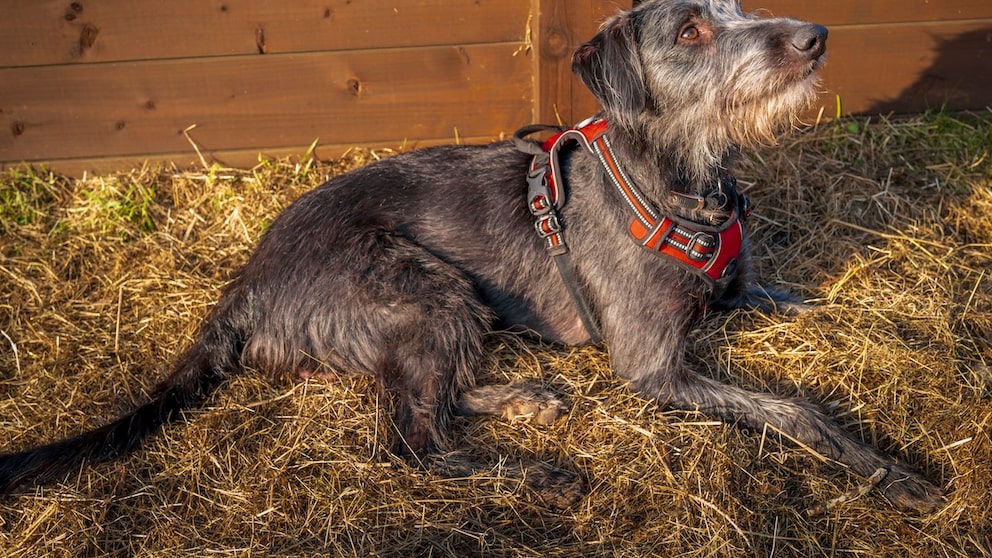
The Lurcher is not a distinct dog breed but a deliberate cross between a greyhound and another working dog breed, such as a collie or terrier. The long-legged, muscular dog was originally bred for silent hunting of small game and is notable for its tremendous speed and strong hunting instinct. Behind the athletic hunter lies a sensitive and affectionate family dog.
Origin
The history of the Lurcher is closely tied to British hunting traditions. In the Middle Ages, hunting with greyhounds was reserved for the nobility, while common people had to rely on alternative hunting methods. To still have fast and effective hunting dogs, farmers and traveling people began crossing greyhounds with other working dogs.
The name “Lurcher” likely comes from the Old English word “lurking,” meaning “to lurk” or “to sneak,” which refers to the hunting technique of these dogs. The Lurcher was especially popular among the Irish and British “Travellers”—nomadic communities—as it was ideal for poaching.
To this day, Lurchers are particularly popular in Britain and Ireland, where they are still kept as hunting and working dogs. Although they are not a recognized breed, there are efforts to develop more uniform standards for breeding.
Appearance & Coat
Since the Lurcher is not a uniform breed, its appearance varies depending on the cross. However, there are some characteristic features that indicate its descent from the greyhound.
Typically, the Lurcher is large and slender with a shoulder height of 27 to 30 inches and a weight of 60 to 70 pounds. It has an athletic build with an elongated body, narrow waist, and deep chest. Its legs are long and strong, giving it tremendous speed.
The coat varies depending on the parent breed and can be short, medium, or rough-haired. There are smooth, rough, and wavy variants in almost all colors and patterns. The ears are often set on the sides and can be erect or drooping. The long, narrow head with a pointed snout and expressive eyes emphasizes the similarity to greyhounds.
Character & Temperament
The Lurcher is an extraordinary mix of hunting and companion dog. On one hand, it possesses the pronounced hunting instinct and speed of a greyhound, and on the other, the intelligence and eagerness to work of a shepherd or terrier.
Lurchers are attentive, sensitive, and very people-oriented. They form a close bond with their owners and are highly responsive to moods and emotions. Their affectionate nature makes them loyal family dogs, but only if they are kept sufficiently occupied.
Despite their gentleness, they are not beginner dogs. Their hunting instinct is very strong, making it difficult for them to run off-leash. They also need plenty of exercise and mental stimulation to remain balanced.
Training
Training a Lurcher requires experience, patience, and clear leadership. Strict or harsh methods are unsuitable, as these sensitive dogs can quickly lose trust. Instead, positive reinforcement and a close bond with the owner should be prioritized.
A well-socialized Lurcher behaves friendly towards people and other dogs, but may have a strong hunting instinct towards small animals. Early socialization and targeted training are crucial to making this instinct manageable.
Proper Care & Maintenance
Lurchers are extremely active dogs that need plenty of space and freedom to run. Apartment living is only partially suitable—an ideal home is one with a large, securely fenced yard.
Due to their thin skin and low body fat, they are sensitive to cold and often need a dog coat in the winter. In the summer, they should not run in direct sunlight as they are prone to overheating.
Coat care depends on the specific cross. Short-haired Lurchers require only occasional brushing, while rough-haired or long-haired specimens need more regular grooming. Special attention should be paid to the claws and paws, as Lurchers are prone to injuries due to their high speed.
Nutrition
A Lurcher requires high-quality, protein-rich food that is adapted to its activity level. Due to their high energy consumption, carbohydrate-rich foods are more suitable than high-fat ones.
Regular feeding with subsequent rest periods is particularly important to minimize the risk of gastric torsion.
Galgo Español: Why the Beautiful Greyhound Is So Hard to Tame

Irish Wolfhound–From Status Symbol to Family Pet
Susceptibility to Certain Diseases
Lurchers are considered robust dogs but can be prone to certain conditions due to their greyhound ancestry: For example, they can experience Greyhound Cramp (Exertional Rhabdomyolysis), a muscular overload after intense exercise. Regular veterinary check-ups and an adapted lifestyle help maintain the dog’s health.
The Lurcher at a Glance
- Origin: Britain & Ireland
- Size: 27–30 inches shoulder height
- Weight: 60–70 pounds
- Coat & Color: Short, medium, or rough-haired, smooth, rough, or wavy, all colors possible
- Character: Sensitive, attentive & affectionate
- Care Requirements: Low to medium, depending on coat length
- Special Features: Speed, hunting instinct, high sensitivity
- Life Expectancy: 12–15 years