


August 4, 2026, 7:50 am | Read time: 5 minutes
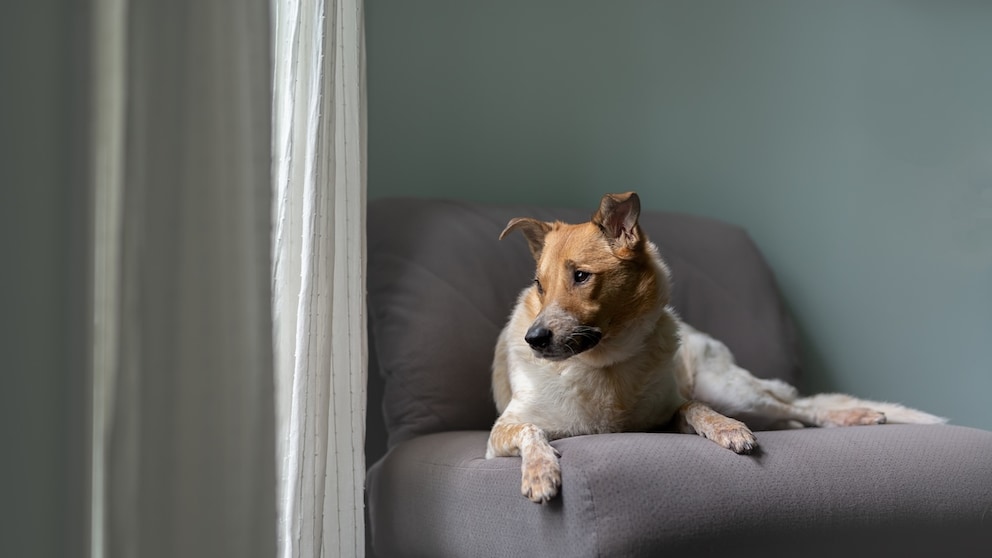
Work calls, appointments are scheduled, and the dog stays home alone. But how long can a dog actually be left alone? Dog trainer Katharina Marioth explains why there isn’t a simple answer and what owners should pay attention to.
What the Legal Regulation Says
How long can a dog actually stay alone? A seemingly simple question—to which, according to dog trainer Katharina Marioth, there is no simple answer. “You can’t generalize it,” she clarifies right from the start. If anything, there is only a very rough guideline: “Until the next sanitary pressure.” In other words, until the dog needs to relieve itself.
In fact, there is a legal regulation in Germany. It mentions four to six hours, after which the dog should be “freed” again. But Marioth views such time specifications critically. How should this be monitored? Who would record it? And who would enforce it if necessary? For her, it’s crucial not to rigidly watch the clock but to look at the individual situation. She advocates for approaching it “in partnership and, in quotes, asking the dog: How long can you manage?”
“It Just Thinks It’ll Die if Left Alone”
Age and health play a central role. The younger a dog is, the less it can stay alone—and as it gets older, the same applies. A puppy should not simply be left to itself. “It has to be trained very, very carefully, step by step,” emphasizes Marioth. For a young dog, being alone can feel existentially threatening—”it just thinks it’ll die if left alone.”
But caution is also advised with seniors. If bladder muscles weaken, age-related gastrointestinal issues, pain, or even early dementia set in, longer periods alone are “an absolute no-go” for them. In such cases, the legal four-to-six-hour rule is of little help.
The Stress Level is Key
Whether a dog can stay alone well is mainly shown by its relaxation. If it stays calmly in its place when its owner gets dressed, maybe even curls up and dozes off, that’s a good sign. Likewise, if you come home and find the apartment as you left it.
It’s a different story if furniture is destroyed, doors are scratched, or objects are chewed. The often humorously portrayed social media videos of “exploded” sofas are anything but harmless. Such destruction is not malice but an expression of “incredible stress.”
Howling or persistent barking, reported by neighbors, also indicates problems. Similarly, if an otherwise healthy, adult dog regularly relieves itself in the apartment. A single accident can happen—if such incidents accumulate, “I should be concerned,” says Marioth.
Dogs Aren’t Made to Be Alone
Regularly being alone for eight hours or more is problematic, she believes. “The dog suffers, to put it bluntly. Dogs aren’t made for that.” Of course, she knows that life circumstances can change: separations, job changes, the end of home office regulations. But then solutions are needed.
Her wish: involve the environment. Neighbors, friends, or family could help by taking a walk at noon. Perhaps a longer lunch break can be arranged with the employer. A good dog care service or a small dog-walking group could also be an option.
These Breeds Have a Harder Time Being Alone
Two to three hours alone can be beneficial for many dogs. Some even enjoy “being left alone for a while and being able to sleep and doze in peace.” But eight or nine hours should remain the absolute exception—”like New Year’s Eve, once a year,” not everyday life. Because the dog is a social creature. It needs social contact, exercise, and interaction—not just the opportunity to relieve itself.
The breed can also play a role—though not a rigid one. “Yes and no,” Marioth answers when asked if some dogs can generally stay alone better than others. Independently bred dogs, such as many hunting or herding dogs, often cope a bit better—provided the workload and conditions are right.

Dog Destroys Furniture? Expert: “It’s Not Revenge—It’s Panic”

Does My Dog Have Genuine Separation Anxiety or Is It Just Acting Out?
A Second Dog is Not a Solution
Very work- and people-oriented breeds, on the other hand, often have greater difficulties. Australian Shepherds, Border Collies, or Belgian Shepherds are “usually not so well-suited” to being alone for long periods. Many companion dogs, especially Poodles and Poodle mixes, also tend to struggle more. However, Marioth emphasizes that there are always exceptions. Much depends on upbringing and previous experiences. Dogs with traumatic experiences related to being alone or many rescue dogs that bond very closely with their humans may present special challenges.
A common thought is: Then we’ll just get a second dog so the first one isn’t alone anymore. But it’s not that simple. “If that worked, the animal shelters would be much emptier,” says Marioth. A second dog doesn’t automatically replace the human as an important social partner.
Separation Anxiety or Lack of Training?
It’s also crucial to distinguish between genuine separation anxiety and lack of training. In cases of pronounced anxiety issues, medication support in collaboration with veterinarians may even be necessary. If the dog simply never learned to stay alone, it’s primarily a training issue. In both cases, a second dog doesn’t automatically solve the underlying problem.
In the end, for Marioth, one thing remains important: Not the clock, but the dog itself should set the standard.

About the Expert
Katharina Marioth is the founder of the brand Stadthundetraining and the KEML principle. She is an IHK- and government-certified dog trainer and behavioral assessor for dangerous dogs in the state of Berlin. In her daily business, she works closely with veterinarians, scientists, and other specialists on dog-related topics. With her knowledge and skills, she secured the title of Dog Trainer of the Year 2023 in the Sat.1 show “The Dog Trainer Champion.”