


September 11, 2025, 11:56 am | Read time: 4 minutes
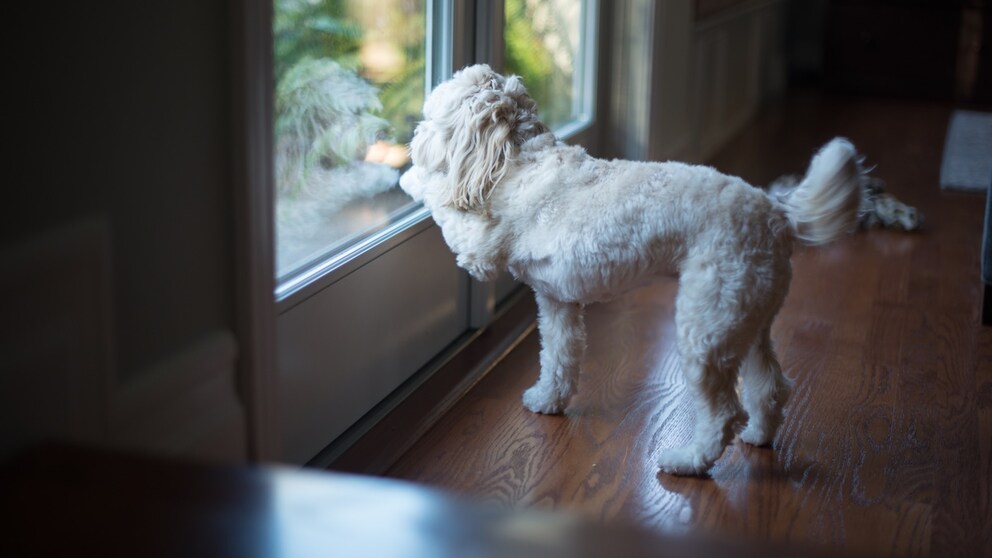
Dogs that can’t stay alone don’t always suffer from true separation anxiety—often it’s unconscious signals from their owners that reinforce the behavior. Dog trainer Katharina Marioth explains how to tell if a dog is truly panicking or just seeking attention.
The question of whether a dog suffers from true separation anxiety or is merely “acting out” when left alone is complex, according to dog trainer Katharina Marioth. “The issue starts with the owner,” she emphasizes. Separation anxiety can have various causes: Some dogs have never learned to be alone, while others have had bad experiences as puppies. Often, the problem arises because people unconsciously reinforce clingy behavior. “Sometimes it’s misguided herding or even resource-guarding behavior—the person is then ‘guarded’ as a ‘resource,'” Marioth explains.
True Separation Anxiety Manifests in Severe Panic Reactions
A typical example of such behavior is when dogs follow their owners around the house. Many people initially find this cute, but Marioth sees it as a problem: “Such a dog can’t relax. It never truly rests but constantly scans where its person is. This is long-term stress for the dog—not cute.”
True separation anxiety manifests in severe panic reactions. “These are the cases where dogs scratch doors and floors, destroy furniture, or, in the worst case, even injure themselves,” the trainer says. More often, milder signs appear: dogs lying rigidly by the door instead of resting comfortably in their spot. This dependency is reinforced when people constantly focus their attention on the dog through constant petting, talking, or looking at them. “That’s when you create human-made problems,” says Marioth.
Also interesting: Dog Trainer Jochen Bendel: “How to Teach Your Dog to Stay Alone”

Dog Destroys Furniture? Expert: “It’s Not Revenge—It’s Panic”

Stress, Anxiety, Aggression–When Dogs Need Psychotropic Drugs
Reducing Eye Contact Can Help
Therefore, consistent but gradual training is crucial. “This is not a situation you can turn around quickly,” she emphasizes. Sometimes training even starts outside, such as with a long leash, where the dog first has to learn to walk a few meters ahead or behind the person without immediately getting stressed. Only then is the dog gradually accustomed to being alone at home.
In everyday life, every dog owner can immediately make some changes. Marioth’s first tip: “Keep your hands to yourself.” If the dog comes onto the sofa, it shouldn’t be automatically petted. It’s equally important to reduce eye contact. A tally on the fridge can help document how often you look at the dog without wanting anything from it. “For many people, that’s the hardest part,” she says. A photo of the dog, visibly displayed, can help redirect your gaze. If dogs “occupy” their owners and always sit on their laps, it may also be helpful to temporarily introduce clear rules: “Sofa off-limits—the dog can lie next to or in front of it, but not on it.”
When to Seek Professional Help
In response to some owners’ concerns that boundaries might be perceived as “coldness,” Marioth replies: “Boundaries are care. The goal is self-regulation, so the dog can remain calm even without constant contact.” Closeness is important, but it should be a choice, not a compulsion. A dog can certainly sleep in the bed—what’s crucial is that it can also be sent out without issue.
Professional help is needed if the behavior is long-established or if the dog reacts aggressively. “If rooms are blocked, people are growled at, or even disciplined with teeth, a professional needs to step in. This is not a DIY project,” Marioth clarifies and summarizes: “Closeness, yet—but first, the dog should learn calm and distance. Important are small steps, clear signals, and a person who provides security instead of constant reassurance.”

About the Expert
Katharina Marioth is the founder of the Stadthundetraining brand and the KEML principle. She is a certified dog trainer and behavioral assessor for dangerous dogs in Berlin. In her daily work, she collaborates closely with veterinarians, scientists, and other specialists on dog-related topics. With her knowledge and skills, she secured the title of Dog Trainer of the Year 2023 on the Sat.1 show “The Dog Trainer Champion.”