

November 18, 2025, 1:06 pm | Read time: 7 minutes
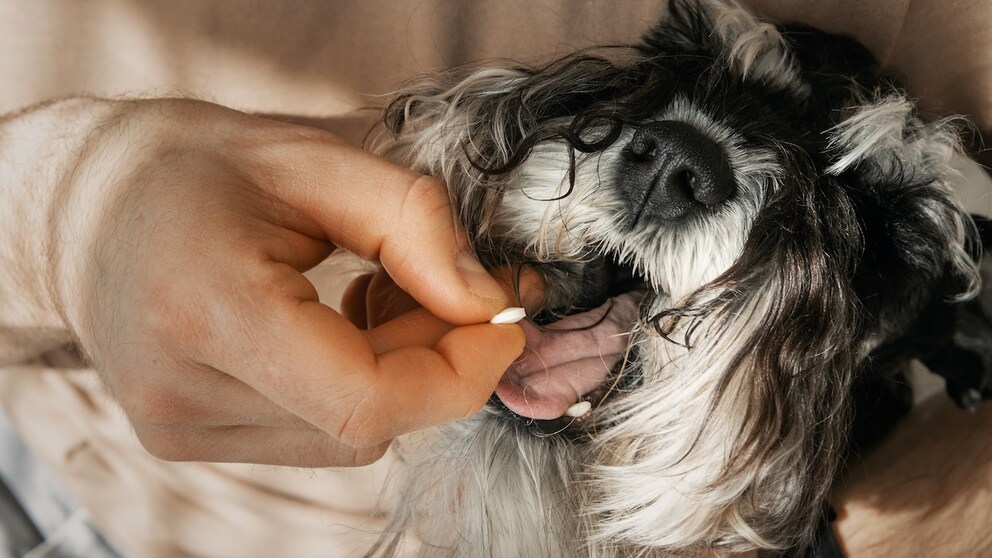
“My dog needs psychotropic drugs”–for many owners, this sentence is a shock. It sounds like failure, like a “broken” animal, like something you’d rather not say publicly. But in reality, it means something entirely different: You’re helping the dog regain balance. PETBOOK author and dog trainer Katharina Marioth explains with a practical example when medication is appropriate for dogs, what it can achieve (and what it can’t), and how to responsibly integrate it into daily life.
Why Dogs Sometimes Need Medication
Emotions are not just a matter of training–they are also biochemically controlled. When fear, panic, or aggression take over, a dog’s brain can no longer regulate what would normally be typical reactions. In such cases, a veterinarian specializing in behavioral therapy may decide that psychotropic drugs are necessary to restore the ability to learn.
Common reasons include:
- Generalized anxiety behavior (constant tension, trembling, severe flight behavior)
- Separation anxiety
- Compulsive behavior (e.g., constant licking, tail chasing)
- Aggression from fear or loss of control
- Traumatic experiences, such as with rescue dogs
Important: Medications are not a substitute for training–but often a prerequisite for training to be effective.
When Stress Blocks the Brain
Chronic stress changes the brain–even in dogs. If the stress hormone cortisol remains elevated, the hormones serotonin and dopamine become imbalanced. The result: The dog can no longer relax and is constantly on high alert.
Psychotropic drugs can help restore this balance. However, they do not work like a sedative, as many believe. With them, the brain can finally relearn that safety is possible.
Case Study: Lotte–An Anxious Dog with Joy for Life
Lotte, a four-year-old mixed-breed rescue dog, came to her owner Sarah after spending two years in a foreign shelter. It quickly became apparent that Lotte was afraid of almost everything–cars, men, loud voices, darkness, even her own reflection. “I could hardly take her outside,” Sarah recalls. “As soon as we were outside, she would lie flat on the ground, trembling and panting. No treat helped. She was simply unreachable.”
After several weeks of training with positive reinforcement and gradual acclimatization, the situation remained unchanged. Sarah sought help from a veterinarian specializing in behavioral therapy. The diagnosis: generalized anxiety disorder.
Lotte received a low-dose SSRI therapy combined with targeted behavioral training. After about four weeks, the first change was noticeable: “She could suddenly eat again when we were outside. She looked at me instead of just freezing.”
After three months of training with the support of medication, Lotte could take short walks without panic and began to build trust with strangers. After a year, the medication was gradually tapered off–Lotte remained stable. “I thought psychotropic drugs were a failure. But they were the key to my dog being able to learn that the world is safe again,” Lotte’s owner summarizes.
Which Psychotropic Drugs Are Available for Dogs and How They Work (Selection)
| Drug Class | Active Ingredients | Effect |
| SSRIs (Selective Serotonin Reuptake Inhibitors) | Fluoxetine, Sertraline | Promote serotonin balance–commonly used for anxiety and compulsive disorders |
| Tricyclic Antidepressants | Clomipramine | Have anxiolytic and stabilizing effects |
| Benzodiazepines (short-term) | Diazepam, Alprazolam | For acute panic phases–not for long-term use |
| Supplementary Preparations | L-Theanine, Alpha-Casozepine, CBD, Tryptophan | Milder support, some available over the counter |
Important: Selection and dosage should always be in the hands of a veterinarian. No medication should be given without medical supervision! Veterinarians always choose the lowest effective dose and combine it with behavioral therapy.
How Training and Medication Work Together
Medications alone do not change learning experiences–they only create the conditions for it. It is the combination of medication and behavioral therapy that has a long-term effect. The ideal process is as follows:
- Veterinary examination to rule out organic causes (e.g., thyroid issues, pain).
- Medication stabilization to open a learning window, not to “calm” the dog.
- Training with positive reinforcement to build trust and impulse control through gradual desensitization.
- Regular review & adjustment–veterinarian and trainer work hand in hand.
Support Through Daily Life & Nutrition
Nutrition, routines, and rest management also play a significant role. They can support the effect of psychotropic drugs in dogs.
Nutrition Tips:
- Tryptophan-rich diet (e.g., turkey, salmon, cottage cheese) → supports serotonin production
- Omega-3 fatty acids → promote neuronal regeneration
- Maintain feeding routines → security through predictability
Daily Tips:
- Always same rituals for walks, feeding, sleeping
- Create rest zones, no constant play
- Low-stress walks with familiar stimuli
- No pressure: Progress is not linear
The Biggest Hurdle: Shame and Misunderstandings
Many owners are afraid to talk about the medications or psychotropic drugs their dog needs–for fear of judgment. However, anxiety disorders or compulsive behavior are not character issues but medically explainable conditions.
Just as a dog with arthritis receives pain medication, a dog with an anxiety disorder can receive help for the brain. The difference is that with psychological issues, the suffering is not immediately visible–but it is just as real.
How to Find the Right Veterinarian
If you believe your dog needs more than traditional training, it’s important to seek professional help–from the right experts. Not every veterinarian is automatically a behavior expert. Specifically look for veterinarians with additional qualifications in behavioral therapy or behavioral medicine.
Here’s how to proceed:
- Ask specifically about qualifications: “Do you also work in behavioral therapy?” or “Do you have experience with medication support for anxiety disorders?”
- Search in professional directories like the Society for Veterinary Behavioral Medicine and Therapy (GTVMT) or the veterinary chambers of the federal states–where additional designations “behavioral therapy” are listed
- Get recommendations: Ask dog trainers or in reputable dog groups for personal experiences.
- Pay attention to the quality of the conversation: A good veterinarian listens, explains calmly, asks about living conditions, feeding, stress triggers–and doesn’t just prescribe pills on suspicion.
If you feel that your dog is understood and you as the owner are taken seriously, you are in the right place.
This Is How the Collaboration Between Veterinarian and Trainer Should Look
The best support arises when medical and behavioral therapy expertise go hand in hand. The roles and tasks should be clearly distributed: The veterinarian for behavioral therapy is responsible for diagnostics, medication selection, physical examination, and progress monitoring. The dog trainer or behavior consultant handles the implementation of the training strategy, daily training, and the emotional stabilization of the dog.
You as the owner also have an important role in this collaboration: You observe and document the success of the treatment and training and provide feedback to both professionals. Medications and training are two sides of the same coin–only together can sustainable change occur.
How It Works in Practice:
- Create a common basis: Trainer and veterinarian discuss together which behavior should be changed and which situations trigger stress.
- Transparent communication: The trainer reports changes in behavior (“Dog reacts more calmly to strangers”)–the veterinarian adjusts dosage if necessary or checks for side effects.
- Consistent wording: Both speak the same language and do not give contradictory instructions.
- Long-term plan: Medication discontinuation or dose reduction only occurs after consultation and in combination with stable training successes.

Why Your Dog’s Thyroid Can Change Its Behavior

When Dogs Suddenly Eat Objects: Causes and Treatment of Pica Syndrome
Checklist: How to Recognize a Good Interdisciplinary Team
- The veterinarian explains clearly why a medication is necessary
- The trainer respects medical boundaries and does not push for “discontinuation”
- Both emphasize that behavior is learned and changeable
- You are actively involved–as the most important reference person for your dog
- There are regular follow-ups (e.g., every 4–6 weeks)
Conclusion: Psychotropic Drugs for Dogs Are Not a Taboo, but a Bridge
Psychotropic drugs are not about “fixing” the dog, but helping it finally feel safe again–inside and out. If your dog needs medication, it doesn’t mean you’ve failed–on the contrary: You’ve paid attention instead of ignoring the fear.
Psychotropic drugs, in combination with training, nutrition, and a stable environment, can open the path to genuine quality of life–for both dog and human. Dogs with emotional imbalances need no shame, but structure. Only when veterinarian, trainer, and owner form a team can your dog heal biologically, emotionally, and behaviorally.