

November 21, 2026, 10:58 am | Read time: 6 minutes
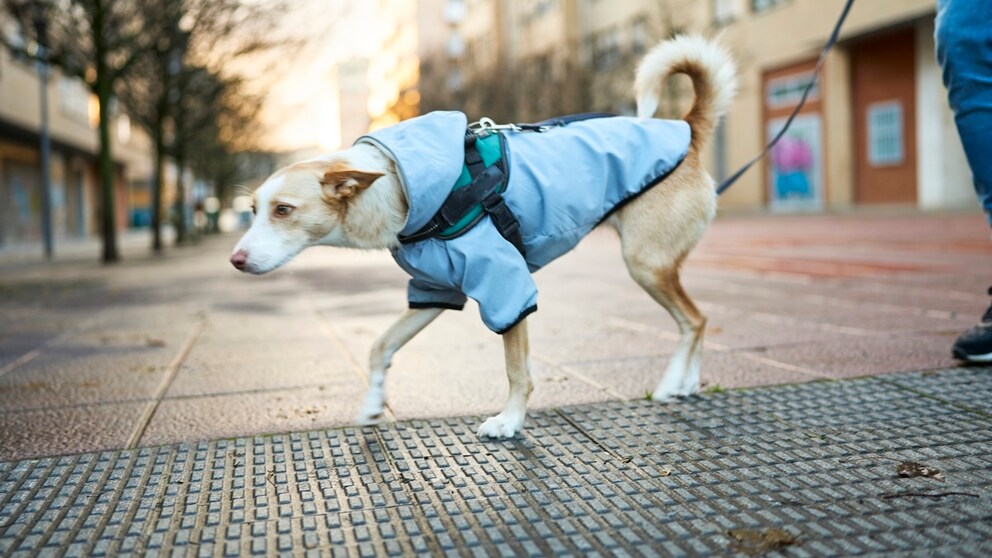
Rain, wind, and cool temperatures can also affect dogs. Despite their fur, a raincoat can be beneficial for some four-legged friends. A veterinarian explains to PETBOOK which dogs benefit from this and what owners should consider.
Does My Dog Need a Raincoat?
Do dogs need clothing? This question is often debated as heatedly among dog lovers and critics as political issues. One side argues that people who dress their dogs are overly humanizing them; after all, dogs have fur for a reason. The other side believes that dogs can get cold when it’s too chilly outside, and fur, no matter how thick, won’t keep out a downpour. So, what’s the answer?
At this point, I’d like to chime in, as I also have a dog who isn’t particularly fond of rain. Nevertheless, I occasionally put a rain jacket on my dog. Back then, he had only been with me in Hamburg for about two weeks, was not yet fully grown, and had previously lived on the streets of Croatia. He was not acclimated and showed it quite clearly by stopping in the middle of our rainy walk and standing at the edge of the sidewalk like a stubborn mule. I quickly bought him a rain jacket, and in the afternoon, we took a long walk in the pouring rain. With the rain protection, my dog clearly felt more comfortable.
“Dogs from animal shelters in warm countries appreciate a rain and/or winter coat,” says veterinarian Alice Holzapfel from the DR. SAM veterinary portal. According to her, certain behavior patterns indicate a dog’s preferences: “All dogs that prefer to stay warm at home, are reluctant to go outside in bad weather, and start shivering quickly when it rains or is windy should wear a raincoat.”
Which Dogs Need a Raincoat?
If your dog often puts on a poker face, making it hard to tell if he would appreciate clothing, you can use the following criteria to decide. Dogs that are more affected by rain than others include:
- Puppies and very young dogs – their immune systems are not yet strong, and they are more sensitive to cold and wet conditions
- Dogs with arthritis – they need extra warmth and react to weather changes and moisture
- Dogs with back problems
- Dogs with underlying conditions or disabilities that prevent them from moving like healthy dogs and regulating their body temperature accordingly
“In general, dogs that belong to specific breeds without an undercoat, such as greyhounds, short-haired hunting dogs, and small breeds with curly or short fur, benefit from a raincoat,” says veterinarian Alice Holzapfel. These dogs get wet to the skin and can catch a cold more easily. Older dogs also appreciate staying dry, according to the veterinarian. “Even when it’s very windy, a jacket can provide protection—especially if some joints are aching with age, it’s highly recommended.”
A Matter of Fur: Undercoat and Its Protective Effect
Some dogs have no issues with rainy weather. This is especially true for breeds with a dense undercoat. The undercoat, located beneath the topcoat, has a warming effect and protects against cold and wet conditions. Dogs with very short fur, which have little or no undercoat, such as Dobermans, Pinschers, Chihuahuas, or Weimaraners, get cold faster in the rain. For these dogs, a raincoat is recommended.
What Should I Consider When Buying a Raincoat?
Dog clothing is a whole industry in itself—hence the selection of raincoats and umbrellas is virtually endless. There are lined dog coats that protect not only against wetness but also against cold, as well as classic raincoats without lining. Depending on whether your dog is also sensitive to cold, you should decide for or against a lining.
When buying, make sure the raincoat fits well and does not restrict your dog’s freedom of movement. The coat should be neither too large nor too tight. Also, pay attention to the following:
- The armpits must provide your dog with enough freedom of movement and not be too stiff.
- Small dogs should have a warm, lined, waterproof belly flap to prevent them from getting cold from the ground.
- Your dog’s field of vision should not be impaired by the coat. Dogs need their sensory perception!
Note: Even if you’re thrilled with the new raincoat, your dog might not share your enthusiasm. It often takes a while for your dog to get used to the garment. After a few weeks, this should be the case.
Also interesting: The Optimal Raincoat for Dogs – 11 Products Compared
How Do I Get My Dog Used to a Raincoat?
Your dog doesn’t like his rain jacket? As is often the case, dogs can be persuaded. He will most likely get used to the new garment if you make the jacket literally “tasty” for him. Give your dog a treat when you put the jacket on him, pet him, and praise him. This way, he will soon associate the rain jacket with something positive. Many dogs only come to appreciate the coat once they understand that it protects them from cold and wet conditions.

The Best Raincoat for Your Dog – 11 Products Compared

Does My Dog Need a Winter Coat?
Prefer Short Walks in the Rain
We often take a specific route with our dog out of habit. In the rain, you should feel free to deviate from the routine and keep the walk short. This not only protects your four-legged friend from cold and illness—your immune system will thank you too. Maybe you can even wait a bit to see if the rain lets up? Then you might not even need the jacket.
Conclusion
Even if you fear silly remarks, raincoats for dogs can be quite useful and have their place. Especially cold-sensitive dogs without an undercoat benefit from additional protection and are safer from cold and wet conditions. Observe your dog closely to see how he behaves in wet weather. Most dogs clearly show how much rain bothers them and whether they need extra protection. If your dog doesn’t share your enthusiasm for the new rain protection, there’s no need to despair: With a little positive reinforcement, that can change quickly.