


January 11, 2026, 3:17 pm | Read time: 4 minutes
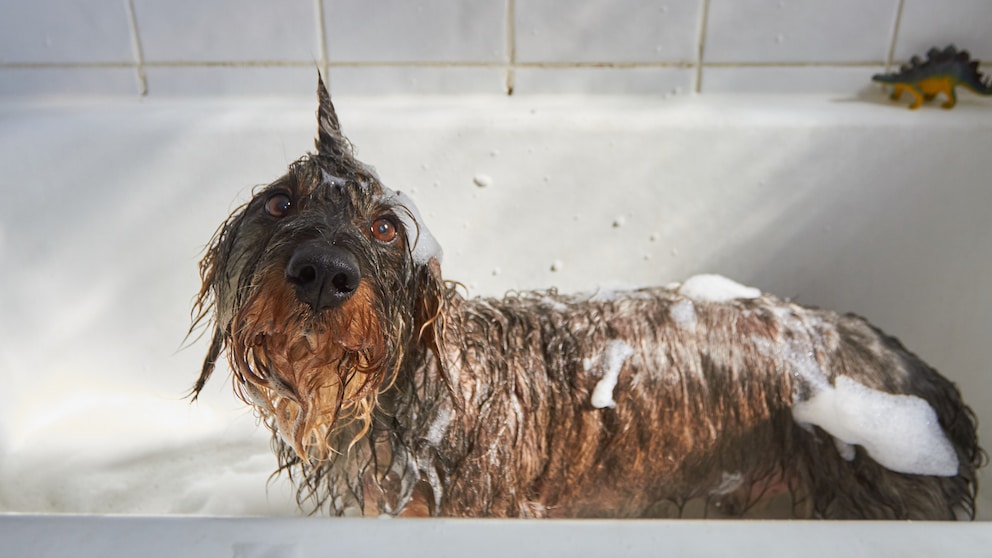
Rain, mud, snow, and road salt—the cold season regularly poses the same question for dog owners: Does the dog need another bath already? While we humans can simply change wet clothes, dogs literally bring winter home in their fur. But for many four-legged friends, a bath in the tub is anything but pleasant. PETBOOK reveals how bathing can be stress-free.
Does a Dog Really Need to Be Bathed in Winter?
In general, dogs need to be bathed much less frequently than many owners think. Dogs have self-cleaning fur, consisting of an undercoat, topcoat, and a protective layer of oils. This natural protection helps repel dirt and prevents moisture from reaching the skin easily.
Bathing too often can damage this protective layer and dry out the skin, leading to itching, dandruff, or skin irritations. For healthy dogs, the recommendation is: as often as necessary, as rarely as possible. In many cases, it’s sufficient in winter to clean only the paws and legs instead of bathing the entire dog.1
Why Many Dogs Find Bathing Stressful
For humans, showering is routine—for dogs, however, it’s often an unusual situation. Smooth surfaces, unfamiliar noises, and the sensation of water on their skin can cause anxiety. The combination of a slippery bathtub and a loud showerhead is particularly overwhelming for many animals.
The more uncertain a dog feels, the higher the stress level rises. It’s crucial to make the environment as comfortable and predictable as possible.2
Secure Stand: Avoiding Slipping in the Bathtub
A secure stand is the most important prerequisite for relaxed bathing. Without sufficient grip, dogs can easily slip in the bathtub, leading to insecurity or even panic. Non-slip mats or large towels that completely cover the tub floor can help. A stable, secure surface provides the dog with support, conveys safety, and alleviates the fear of slipping.
The Showerhead Is Often the Biggest Stress Factor
Many dogs react particularly fearfully to the shower spray. The unfamiliar noise, water pressure, and sudden impact on the fur can quickly seem threatening to sensitive dogs. Therefore, it is often more helpful to skip the showering. Instead, the bathtub or a wash basin can be pre-filled with warm water to gently wet the fur with hands. Alternatively, a cup, such as a toothbrush cup, can be used to carefully pour water over paws and legs.
Licking to Combat Stress
Additionally, a positive distraction can help reduce stress and provide the dog with a sense of security. A lick mat with liverwurst or dog paste has proven particularly effective. The consistent licking has a calming effect, releases endorphins, and distracts the dog from the bathing process. Many dogs remain significantly calmer and are easier to handle during the bath.

The Right Shampoo for Dog Bathing
A common grooming mistake is using children’s or human shampoo. However, a dog’s skin is quite different from human skin. While the pH value of human skin is about 5.5, it is around 7.5 for dogs.
Incorrect products can damage the natural acid mantle, dry out the skin, and cause itching. Therefore, only use special dog shampoo—and even then, only if the dog is really dirty or smells unpleasant.
Also of interest: Hair Expert Margot Schmitt: “A Dog is Not a Scented Pillow”

What Puppy Owners Should Watch for in Fall and Winter

Can Cats Actually Swim?
Thorough Drying After Bathing Is Essential
Especially in winter, careful drying is particularly important. If the fur remains damp, the dog can quickly become chilled or catch a cold. Paws and legs should always be thoroughly dried with a towel. If the entire dog is wet, a hairdryer can also help—but only if the dog tolerates the noise. Always use a low setting with minimal heat and keep a safe distance to avoid startling or overheating the dog.
Alternatively, the dog can be kept warm without a hairdryer and allowed to dry in a calm, sheltered environment. In any case, it’s important to consistently avoid drafts to prevent the dog from getting cold.
Conclusion: Relaxed and Clean Through the Winter
Not every muddy walk requires a full bath. Especially in winter, it’s often enough to clean only the dirty areas. Paws, legs, and belly can be quickly cleaned—without shampoo, without stress, and without much effort.
Bathing a dog in winter doesn’t have to be a struggle. With a non-slip surface, gentle water application, the right care, and a bit of patience, coat care can be much more relaxed. By not bathing your dog unnecessarily often, you protect their skin and fur–and ensure that the winter months remain stress-free for both sides.