

October 7, 2025, 4:22 am | Read time: 8 minutes
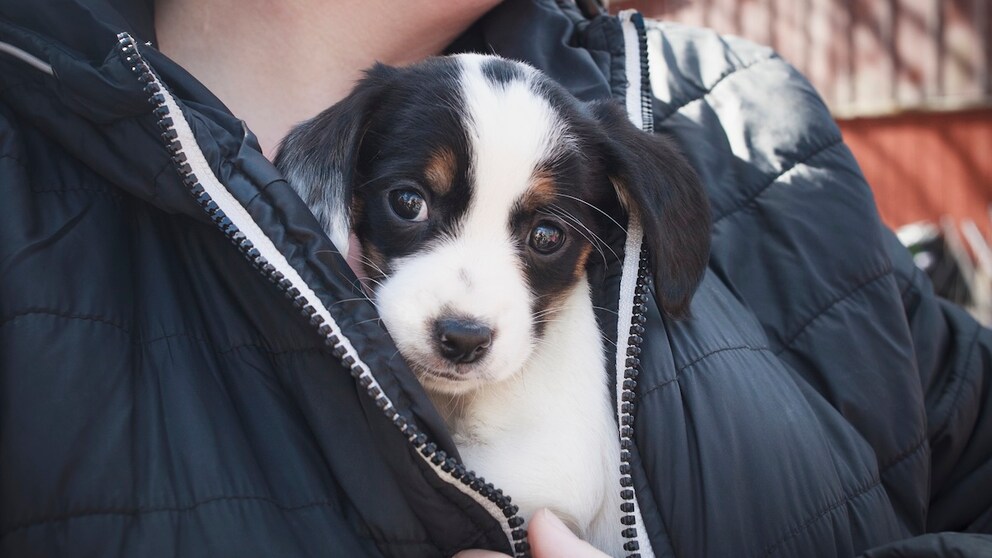
When a puppy moves in during fall or winter, it brings some challenges: Cold, darkness, and wet conditions can quickly overwhelm young dogs. Dog trainer Katharina Marioth explains what owners should really pay attention to now. Being prepared not only strengthens your puppy’s health but also lays the foundation for a balanced, confident dog.
A puppy moves in—and with it begins an exciting time full of firsts. Many dog owners especially look forward to the new family member in fall or winter: cozy evenings, walks through colorful leaves, or the first snowball fight together. But what sounds so romantic also presents challenges.
Puppies growing up in the cold months have very different starting conditions than summer puppies. Hypothermia, infection risks, fewer social contacts, or darkness can overwhelm young dogs, while often making them more resilient.
Hypothermia–The Underestimated Danger
Puppies do not yet have fully developed fur and have a lower ability to regulate their body temperature. Small breeds and dogs with little undercoat are particularly at risk in fall and winter. Signs of hypothermia include:
- Shivering and tense posture
- Tucking in the tail and paws
- Refusing to continue walking
- Pale mucous membranes and apathy
Tip: Keep walks short in wet and frosty conditions and use a light, warming puppy coat for sensitive or very young dogs. Also, ensure a warm, draft-free resting place in the house.

My Experience: A Coat Is Essential
“Our dog Yumi was born in August and is a typical fall puppy. Unfortunately, we massively underestimated how much such a small body needs to be kept warm at first—even for long-haired breeds. Yumi, as a Pomeranian, had a lush coat within weeks—but her belly was bare. My stance back then was: My dog will never be dressed. But when the vet said: ‘Mrs. Schneider, you have to put something on the little one, she’s freezing her belly off and will get a bladder infection,’ I started buying her a coat and wool sweater. Unfortunately, it was too late, and Yumi got a terrible cough that plagued her for almost five weeks. Since then, I know: A coat is mandatory for puppies in fall and winter!”
Fall and Winter–Peak Season for Infections
A weak immune system makes puppies more susceptible to infections. Wet autumn leaves, muddy grounds, and cold air increase the risk of diarrhea, respiratory diseases, or skin inflammations.
Typical sources of danger:
- Puddle water: Often contains bacteria, parasites, or road salt residues.
- Wet fur: If the dog doesn’t dry properly, it can promote skin problems.
- Contacts on cold ground: Puppies like to sit down—and can easily get a bladder infection.
Tip: Thoroughly dry your puppy after each walk—including between the toes. Provide a soft, dry blanket as a resting place, and don’t let your puppy drink standing water in fall and winter.
Overwhelm in the Darkness
Fall and winter puppies often make their first environmental and socialization experiences in the dark. Streetlights, car headlights, flashlights—all of this can unsettle them. At the same time, these dogs learn from the start to deal with unfamiliar stimuli, which often makes them more stress-resistant in the long run.
How to help your puppy:
- Choose illuminated, quiet paths for walks in the first weeks.
- Gradually introduce it to new sounds and lights.
- Stay calm and composed—your demeanor transfers to the puppy.
Extra: Winter puppies often develop good composure in traffic because they are confronted with darkness and lights from an early age.
Fewer Dog Contacts Mean More Responsibility
In summer, you encounter dogs everywhere. In fall and winter, fewer dog owners—whose pets offer puppies valuable social contacts—are out. This can make socialization more difficult—especially in the crucial imprinting phase up to the 16th week.
Tip:
- Plan play and training meetings with other dogs, such as in puppy schools.
- Pay attention to the quality of contacts: Prefer short, positive encounters over wild tussles.
- Also, build contacts with people in various outfits (hats, scarves, winter jackets often seem unfamiliar to puppies).
Safety in the Dark: Visibility Protects
Short days mean long dark periods—and thus a greater risk of accidents. Puppies are small and hard to spot. Visibility not only protects against cars but also against cyclists or joggers.
Essential equipment:
- Light collar or reflector harness: Makes the puppy visible from a distance.
- Reflective leash: Increases safety in traffic.
- Flashlight or headlamp for you: Facilitates orientation.
Don’t Forget Paw Care
Road salt and grit can severely irritate puppy paws. Small cracks or sore pads hurt and often lead to licking and inflammation.
Paw checklist for winter:
- Trim the fur between the toes to prevent ice from sticking.
- Wash the paws with lukewarm water after walks.
- For sensitive dogs: Use paw protection balm.
Training in Cold: Quality Over Quantity
Long stays outdoors are often too exhausting for puppies in the fall or winter. At the same time, they need training and activity. The solution: shorter, structured sessions outside—and meaningful activities indoors.
Training ideas for fall and winter puppies:
- Indoors: Small scent games, “sit,” “down,” “stay” in short sequences, gradual buildup of staying alone.
- Outdoors: Short leash walks focusing on orientation to the person, encounter training with environmental stimuli.
- Impulse control: Calm waiting before going out strengthens self-control and makes everyday life easier.
We have compiled even more ideas for you here: Indoor Activity Ideas for Winter and Rainy Days
Training for Housebreaking in Fall and Winter
Housebreaking is a central learning goal for every puppy—but in fall and winter, it can be a particular challenge. Cold, rain, and darkness make puppies reluctant to go outside. Some prefer to sit in the warm apartment rather than the wet garden. Here, patience and consistency are key.
How to succeed anyway:
- Fixed rhythm: Take your puppy outside immediately after sleeping, eating, playing, and whenever it becomes restless—even if it’s uncomfortable.
- Right place: Always lead it to the same spot in the garden or outside so it quickly understands: “This is my bathroom.”
- Reward immediately: As soon as it relieves itself outside, give a treat or lots of praise. The moment must be clearly linked.
- Emergency in the rain: Many puppies refuse to go in wet conditions. A small, dry shelter (such as a pavilion or a corner with an overhang) helps until the dog becomes more confident.
- At night: Be prepared for frequent outings. A young puppy cannot hold its bladder for long. So keep a leash and shoes ready by the door.
Tip: Stay calm if an accident happens. Scolding only makes the dog insecure, and it may secretly relieve itself next time.
Training Against Jumping–Even with Wet Paws
Especially in fall and winter, when dog owners often wear thick jackets and light coats, jumping is doubly unpleasant. Wet or muddy paws can ruin clothing. Therefore, it’s worth establishing clear rules from the start.
How to train “no jumping”:
- Ignore instead of scolding: Many dogs jump out of joy and to get attention. If you push it away or scold, it’s still “contact”—a reward. Instead, calmly turn away and only pay attention to the dog when all four paws are on the ground. Then feel free to reward that.
- Offer an alternative: Actively reward your puppy for another behavior, such as “sit.” If it comes to you and sits down, immediately give a treat or pet it. It learns: Staying calm is worth it.
- Training with visitors: Ask friends or family members for help. Keep the puppy on a leash when someone comes in. If it jumps, it is ignored. If it stays with all paws down, it gets attention.
- Consistency is key: Everyone in the household should follow the same rules. If only one person tolerates jumping, the puppy will be confused.
Extra: Puppies that spend a lot of time indoors in fall or winter are often full of energy. Ensure sufficient activity (scent games, chew items, training sessions) so they don’t jump on all the two-legged family members out of sheer exuberance.
How Long a Dog Can Stay Outside in Subzero Temperatures

Which Wellness and Care Treatments for Dogs Are Beneficial in Winter
The Right Equipment for Puppies in Fall and Winter at a Glance
Besides love and patience, young dogs need a bit of extra equipment in the cold season:
- Warming dog coat for sensitive breeds
- Reflective collar/harness for safety in the dark
- Waterproof mat or blanket for breaks outside
- Indoor toys to keep them occupied in bad weather
- Towels for quick drying after rain or snow
Conclusion: How Your Puppy Can Get Through Fall and Winter Well
A puppy in fall or winter means extra responsibility—but also many opportunities. While cold, darkness, and wet conditions bring challenges like hypothermia, infections, or overwhelm, winter puppies learn from the start to handle environmental stimuli flexibly and stress-resiliently.
By focusing on warm retreats, safety in the dark, targeted training, and loving but consistent upbringing, you lay the foundation for a confident, healthy dog.
Housebreaking, polite greetings without jumping, and building basic signals are just as important as protection from cold and infections. With patience and a clear daily rhythm, fall and winter puppies develop into strong companions—and give their humans plenty of unforgettable moments.

About the Author
Katharina Marioth is the founder of the brand Stadthundetraining and the KEML principle. She is an IHK- and government-certified dog trainer and behavioral assessor for dangerous dogs in the state of Berlin. In her daily business, she works closely with veterinarians, scientists, and other specialists on dog-related topics. With her knowledge and skills, she secured the title of Dog Trainer of the Year 2023 in the Sat.1 show “The Dog Trainer Champion.”