

November 25, 2026, 8:21 am | Read time: 6 minutes
Dogs often seem like fluffy invitations to pet them–especially for people who are fond of the four-legged friends. But this is where the misunderstanding begins: Not every dog wants to be touched, and many people misinterpret dog signals. So if you want to approach a dog–even your own–you should first find out what is allowed, what might be problematic, and how to play it safe.
Never Pet Dogs Without Asking
With unfamiliar dogs in the park or on a walk in the field, it’s better to refrain from petting: “A stranger should not simply approach a dog and want to touch it,” says Barbara Schöning, a specialist in behavioral science and one of the authors of “Dogs–Everything You Need to Know.”
Since you don’t know which body parts an unfamiliar dog likes or dislikes being touched, it might feel threatened: “I don’t know if the unfamiliar dog interprets touching as a threat, then becomes afraid and possibly reacts aggressively,” says Schöning.
Better to Just Observe Unfamiliar Dogs
Therefore, you should only observe unfamiliar dogs. This might be difficult, but “Dogs are not on the planet for us to touch them,” says Justina Lempe, founder of the Free Dog School Berlin and author of “My Dog–My Friend: The Training Book for Teens.”
Even if a dog in the park approaches a stranger, it doesn’t necessarily mean it wants to be petted. Dogs are simply curious. Therefore, you should also avoid touching it: “I would let an unfamiliar dog sniff and then possibly move on,” advises Schöning. Even if you are familiar with dogs, it’s better to refrain from petting or at least ask the owner for permission first.
Protecting Your Own Dog
But what should I do as an owner if someone pets my dog without asking and I don’t want that? Schöning recommends the following response: “My dog doesn’t appreciate being petted.” However, some people don’t accept this explanation. “I would simply say: My dog has fleas or he bites,” says Rene Luczyk, owner of the dog school “Pfotentreff” in Olfen. Schöning also finds a white lie acceptable in this case.
First Interpret Signals, Then Pet the Dog Properly
When visiting dog owners, contact with the animals is usually longer than during a chance encounter in the park, and the dog becomes more familiar over time. Then you might try to pet the dog gently.
But you should definitely pay attention to a few signals: If the dog wants to be touched, you can tell, according to Schöning, by the dog appearing relaxed, especially in the face, and perhaps even pressing against the person. When petting, the dog’s body should be relaxed under your hand.
Puppies Prefer to Play
For example, when visiting dog owners, you can sit at the table and watch how the dog reacts. It might crawl under the table and slowly approach the person. Since dog signals are not easily recognizable for people without dog experience and for children, they should be especially cautious. This also applies to puppies, who, according to Luczyk and Lempe, often bite hands. “Young dogs prefer to play,” explains Justina Lempe.
Mistakes to Avoid When Petting
If it’s clear that the dog wants to be petted, the experts recommend avoiding the following mistakes:
- Don’t Lean Over the Dog: It’s best to crouch down for petting instead of leaning over the dog, as it might perceive this as a threat.
- No Strong Forward Movements: It’s often said to let the dog sniff your hand first. Lempe finds this unnecessary, as dogs can smell well even from two meters away: “From the dog’s perspective, it’s very rude because it’s a forward movement into their personal space.” They would then show calming signals, like yawning or licking their nose, because they want more distance.
- Don’t Stare at the Dog: Dogs can interpret direct staring as provocation. You can read more about this in this PETBOOK article.
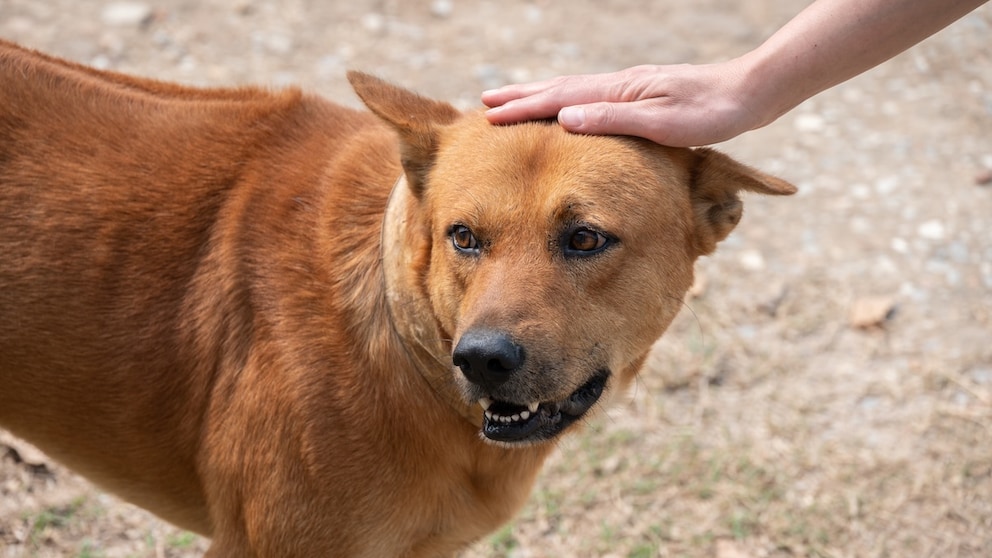
- Don’t Pet the Dog’s Face, Head, or Belly: These are very sensitive and vulnerable areas for the dog. It’s better to start by petting the dog’s back.
- Don’t Hug the Dog: The dog feels confined and this can make it aggressive. “I don’t just hug a stranger,” says Luczyk.
- Don’t Pet the Dog While Eating: This can cause the dog to start gulping or even bite because it wants to protect its food.
- Don’t Pat the Dog’s Side: For Luczyk, this is an absolute no-go! “It’s a terrible habit.” No dog likes it and it can lead to internal injuries in the worst case.
Also interesting: The Effect of Cuddling with Dogs on the Brain
How to Pet Dogs Properly
While you shouldn’t touch certain areas on an unfamiliar dog, with your own dog, anything is allowed that it enjoys. “The owner usually knows best where and how their dog likes to be touched. There’s no right or wrong,” says Schöning. If the dog likes it, owners can also pet their dog on the belly and head, according to Rene Luczyk.
Many dogs, according to Justina Lempe, lie on their backs and present their bellies, which is a clear sign that they want to be petted there. Even if they lay their head on their owner or seek other physical contact, cuddling is welcome.

Almost everyone makes these mistakes when petting cats

How Your Cat Shows When It Wants to Be Petted–and When It Doesn’t
How Dogs Show They Don’t Want to Be Petted
If the dog is tense, you should definitely not pet it. This is first shown by a tense face, often also by a slightly turned head, before the body becomes tense as well. In professional terms, these are called calming signals. “As soon as the dogs turn away, they want out of the situation,” explains Rene Luczyk. Another signal of rejecting petting is when the dog shifts its weight to the other side.
Squinting eyes, ears pointed backward, or completely motionless dogs are also not a good sign: “Many dogs freeze when something is uncomfortable for them,” says Justina Lempe. This is a clear sign that many don’t see, and then they wonder why the dog suddenly snaps. Lempe recommends dog lovers wait until the dog initiates contact with them.
Always “Make Sure It’s Not Too Much for Them”
According to Schöning and Lempe, you can even hug and kiss your own dog if it tolerates it. You should just make sure it’s not too much for them. Also, the four-legged friend should be relaxed. This is more likely indoors on the sofa than outside where there’s a lot of activity. You shouldn’t pet your dog when it’s showing bad behavior, as this could signal to the dog that its behavior was correct. “The dog can understand this as reinforcement,” says Luczyk.
According to Schöning, it’s also not good to startle the dog from sleep because you want to pet it. If you want to give your dog a particularly pleasant petting experience, Lempe has an “absolute insider tip, but it’s gross”: You can rub the dog’s ear and then let it lick the earwax. “All dogs love that,” says the dog trainer.
With material from dpa