

November 3, 2026, 4:02 pm | Read time: 5 minutes
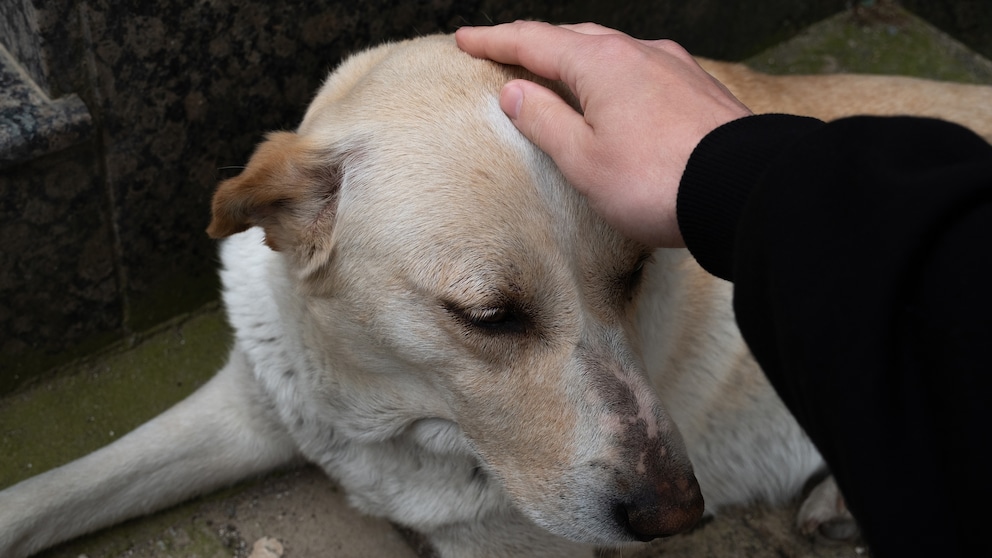
Surely your dog has also bumped its head hard or collided with another dog while playing, appearing dazed. PETBOOK author and canine health consultant Philine Ebert has summarized when this might be a concussion and how owners should react.
Can Dogs Suffer a Concussion and How Can It Happen?
Yes, dogs can get a concussion just like humans. As long as nothing seems to have happened, a blow to the head is often not given much thought. However, when the head is struck, any jolt can affect the dog’s brain to varying degrees, from a concussion to a traumatic brain injury.
A concussion diagnosis means a temporary impairment of brain function caused by a fall, blow, impact, or accident that causes the brain to hit the hard inside of the skull. Consequently, the brain tissue can be damaged, and after severe blows to the head, it can even swell to a life-threatening extent.
Possible Causes of a Concussion
- A kick to the head from a larger animal (such as a cow or horse) or a human
- Impact against a hard object (such as a bicycle, car, lamppost, tree) or a hard surface (such as a wall, window, mirror)
- An accident while playing, romping, running, or fighting with another dog
- A car accident as a passenger in a vehicle, for example, due to a sudden stop, often without proper restraint
- Dog sports accidents
- Falling from a great height (such as out of a window, off a wall), a fall on a mountain, or a fall down stairs
How Can I Tell if My Dog Might Have a Concussion?
Since our dogs cannot express what is wrong or hurts, there are specific signs that may indicate a concussion. The main indicators are neurological deficits and sudden behavioral changes. While some dogs show signs immediately, other symptoms may not become noticeable until hours or days later. If the following symptoms occur after a head injury or trauma, a veterinarian should be consulted immediately.
Also interesting: Can dogs have headaches?
Symptoms That May Indicate a Concussion
If your dog shows one or more of these symptoms, you should seek veterinary help as soon as possible:
- Balance disorders and loss of movement, such as staggering, circling, stumbling, unsteady walking and standing
- Vomiting, excessive drooling, nose or ear bleeding
- Lethargy and drowsiness: the animal behaves apathetically, listlessly, sluggishly, extremely tired, disoriented, and phlegmatic
- Loss of consciousness, behavior, and orientation, such as the dog suddenly not recognizing its familiar surroundings
- Changed head posture, stiff or limp limbs
- Rapid breathing or breathing problems
- Tremors, seizures
- Short-term unconsciousness, lack of reflexes
- Changes in pupils and uncontrolled eye movements: such as different pupil sizes, flickering eyes, lack of or slowed reaction to light, uncontrolled eye twitching, or light sensitivity
First Aid and Immediate Measures
If a concussion is suspected, every second counts. Similar to humans, it is especially important to ensure that a dog with a head or neck injury moves as little as possible. Both humans and animals should remain calm despite the shock. Ideally, the dog should lie still, possibly supported by a blanket. Unnecessary movements should be avoided. Only the head should be slightly elevated compared to the body to reduce brain pressure.
To prevent further damage from the animal struggling, being improperly positioned, or transported, it is advisable to call a mobile veterinarian or animal rescue in case of acute symptoms. With a stretcher, the dog can be properly transported and immediately treated by a doctor on-site.
Treatment
If the veterinarian diagnoses a concussion and rules out a more serious head injury like a traumatic brain injury, infusions can help quickly and effectively. If the dog has vomited and is possibly dehydrated, the infusion not only regulates fluid intake but also stabilizes blood pressure. In cases of irregular breathing or breathing difficulties, oxygen therapy can be supportive.
The main persistent symptoms of a concussion are usually headaches, nausea, or temporary drowsiness, fatigue, and various behavioral abnormalities. Here, the veterinarian can support recovery with appropriate medications.
Also interesting: Vestibular syndrome in dogs–not a stroke, but similarly dangerous
Why Birds Fly Into Windows and How to Prevent It

Why Woodpeckers Don’t Get Concussions When Pecking
Aftercare and Recovery Time
Once the animal is back home, it needs rest and a lot of care to recover. How long it takes for the dog to fully recover depends on the severity of the concussion. Most animals recover relatively quickly and completely. However, long-term effects or possible complications can still occur days or weeks after a concussion.
Behavioral changes, headaches, or persistent drowsiness are signs that the brain is still impaired. Special care, sensitivity, and close observation of the animal, as well as regular check-ups by the veterinarian, are therefore particularly important.
Conclusion
A concussion in a dog can happen faster than you think and is an absolute emergency. After a blow to the head or an impact, it is one of the most common head injuries. Even during everyday activities like sports or play, a concussion can occur without being immediately noticed. Take the slightest signs seriously and call for help or see a veterinarian or animal clinic at the slightest suspicion of head trauma.

About the Author
Philine Ebert began to delve deeper into pets, specifically their health and nutrition, after her dog turned her life upside down. Since 2023, she has been working independently as a certified health, nutrition, and BARF consultant for dogs.